 I’m from Ouarzazate, two hours up the Draa Valley from Zagora. This is my corner of Morocco — the same river, the same palm groves, the same southern light. So while I’ll be honest that I’m writing about a town I know from the region rather than one I’ve lived in, I can tell you what Zagora actually is, who it’s for, and the one thing it’s genuinely famous for that most guides bury.
Here’s the short version: Zagora is the practical gateway to the Draa Valley desert, best known for a single road sign that has become a symbol of the whole Moroccan south. It’s not a glamorous town. But the journey to reach it, and the desert beyond it, are the real draw.
What Zagora Actually Is
Zagora is a modest administrative town in southeastern Morocco, sitting at the lower end of the Draa Valley — the longest river valley in the country, lined with one continuous palm oasis for hundreds of kilometres.
It’s not a place you visit for the town itself. Zagora is a base. People come here to reach the desert dunes south of it, to start a camel trek or a 4×4 trip, or simply as a stop on the long road south from Ouarzazate and Marrakech.
The town has the things you’d need — hotels, a market, restaurants, ATMs, a fuel stop — but the magic is what surrounds it, not the centre itself. Set your expectations there and you won’t be disappointed.
The Famous Sign: “Tombouctou 52 Jours”
If Zagora is known for one thing, it’s this: a painted sign on the southern edge of town showing a camel caravan and the words “Tombouctou 52 Jours” — Timbuktu, 52 days.
That’s how long the camel caravans once took to cross the Sahara from here to Timbuktu in Mali, carrying salt, gold, and goods along the old trans-Saharan trade routes. Zagora was a real departure point for those journeys.
The sign you see today is a recreation, and yes, it’s touristy. But it captures something true: this town genuinely sat at the edge of the known world, where the cultivated valley ended and the open desert began. It’s the most photographed spot in Zagora for good reason.
Zagora vs Merzouga: The Honest Comparison
This is the question that actually matters, and most guides dodge it. If you want to experience the Moroccan Sahara, should you go to Zagora or Merzouga?
Here’s the honest answer from someone who knows both regions:
Merzouga has the postcard dunes — Erg Chebbi, the towering golden sand sea that everyone pictures when they think “Sahara.” If your dream is enormous cinematic dunes, Merzouga delivers them better.
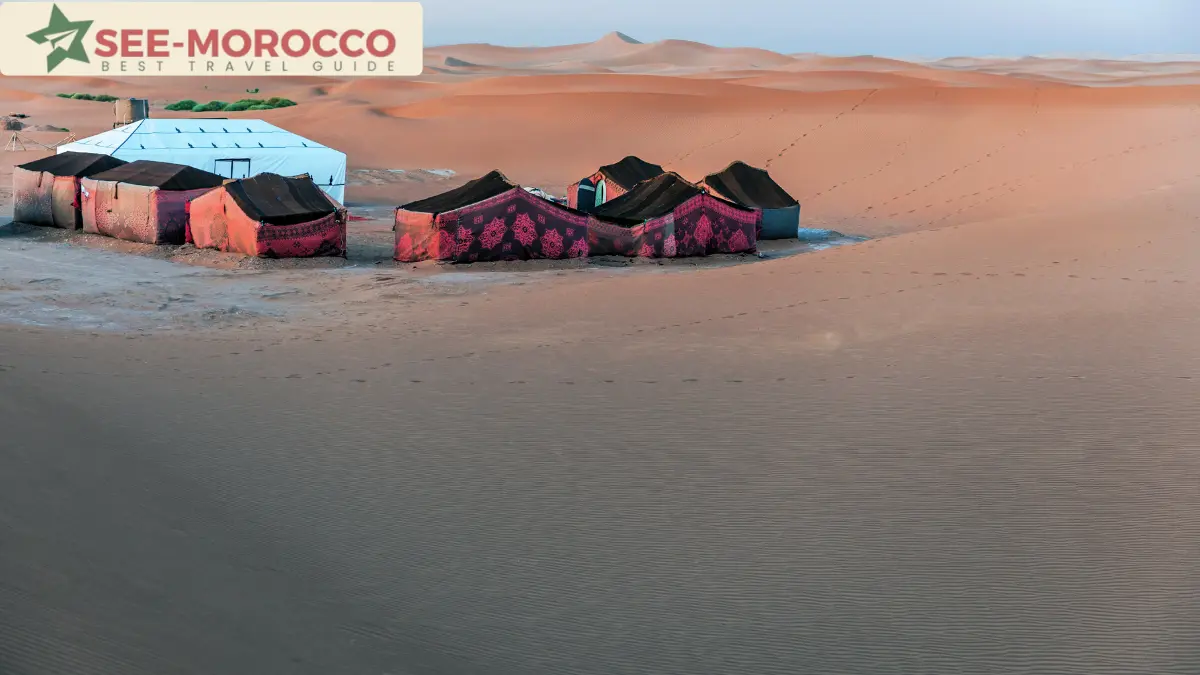
Zagora’s desert is different. The dunes here are smaller and more scattered; the famous big dune sea, Erg Chigaga, is actually much further south near M’hamid, not at Zagora itself. What Zagora offers instead is accessibility — it’s closer to Marrakech and Ouarzazate, making it the realistic choice for a short 2-day desert trip when you don’t have time for the longer haul to Merzouga.
My honest take: if you have only one or two nights and you’re short on time, Zagora works. If the dunes are the whole point of your trip and you have the days, Merzouga or the deep desert at Erg Chigaga is worth the extra travel.
Getting to Zagora
Zagora sits at the end of a long but spectacular drive. The route itself is part of the experience.
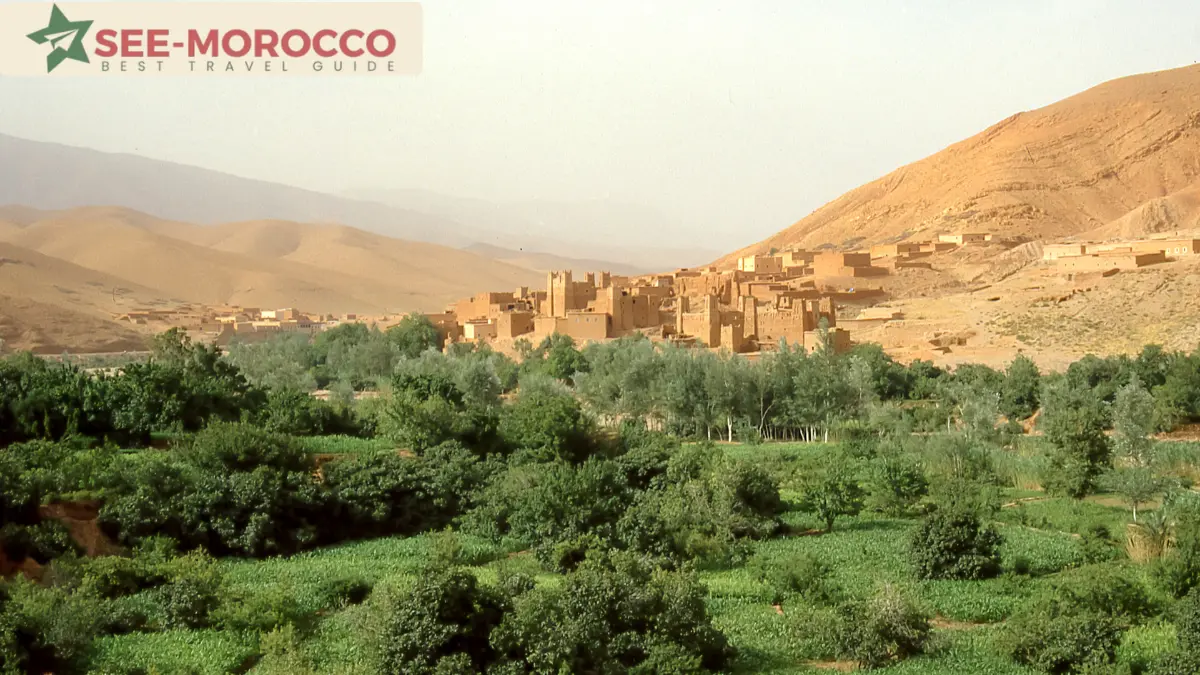
From Ouarzazate: Around 2.5–3 hours south, following the Draa Valley. This is the scenic stretch — palm groves, kasbahs, and the Anti-Atlas mountains. If you’re coming from Marrakech, you’ll pass through Ouarzazate anyway.
From Marrakech: A long day — roughly 7–8 hours — crossing the High Atlas over the dramatic Tizi n’Tichka pass, then down through Ouarzazate. Most people break this journey rather than doing it in one push. Here’s what to know about the Atlas crossing.
Options:
- Supratours / CTM buses run from Marrakech and Ouarzazate — affordable and reliable, but slow.
- Shared grand taxis connect Ouarzazate to Zagora for those comfortable with the local way of travelling.
- Rental car gives you the freedom to stop in the Draa Valley, which is the best part. The road is paved and in good condition.
- Organised desert tour — most Marrakech-based 2 or 3-day desert tours use Zagora as their destination precisely because of the shorter distance.
What to Do in and Around Zagora
 The town is a base, so the best things are mostly just outside it.
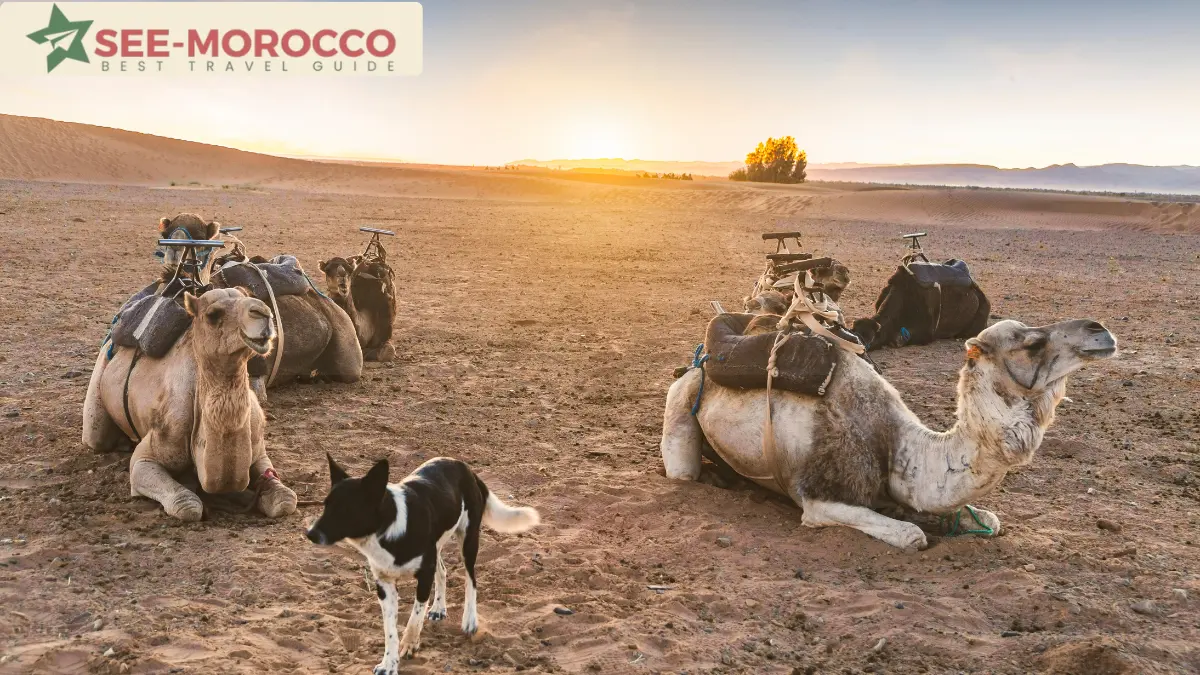
Camel trek into the dunes — the classic Zagora experience. Short treks head out in the late afternoon to a desert camp for the night, returning the next morning. One night under the stars is enough to get the feeling; you don’t need more.
Stay at a desert camp — ranging from simple Berber tents to more comfortable setups with proper beds and meals. The appeal is the same everywhere: silence, stars, and a fire. The night sky here, far from any city light, is genuinely extraordinary.
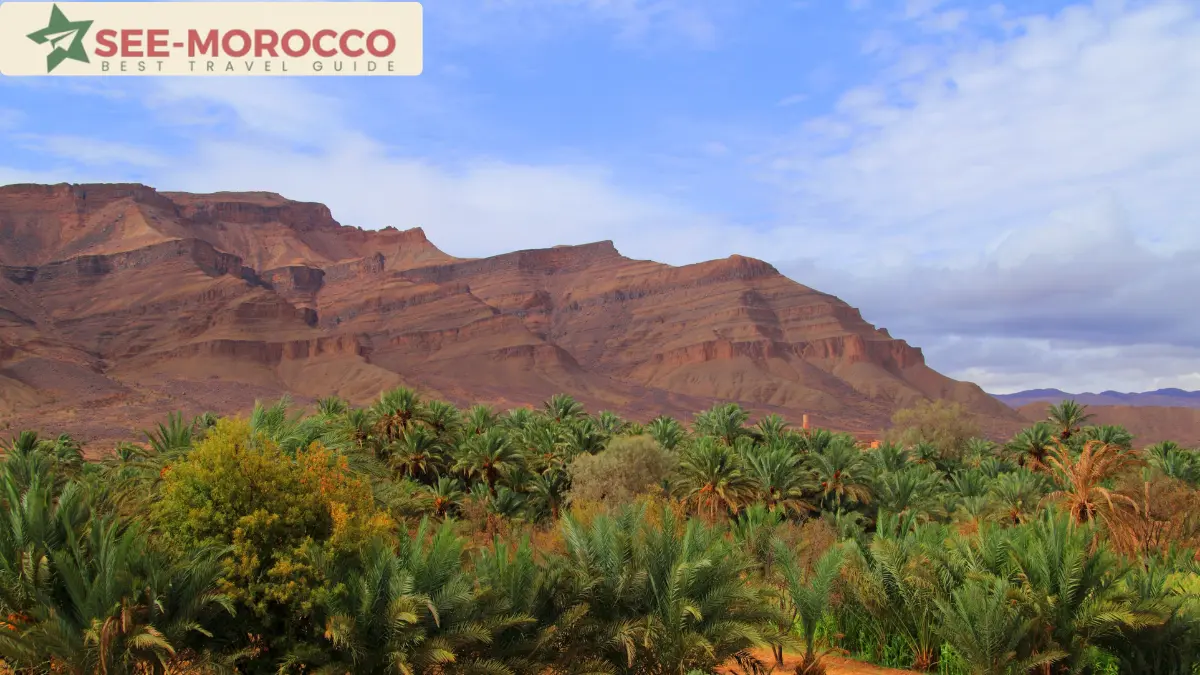
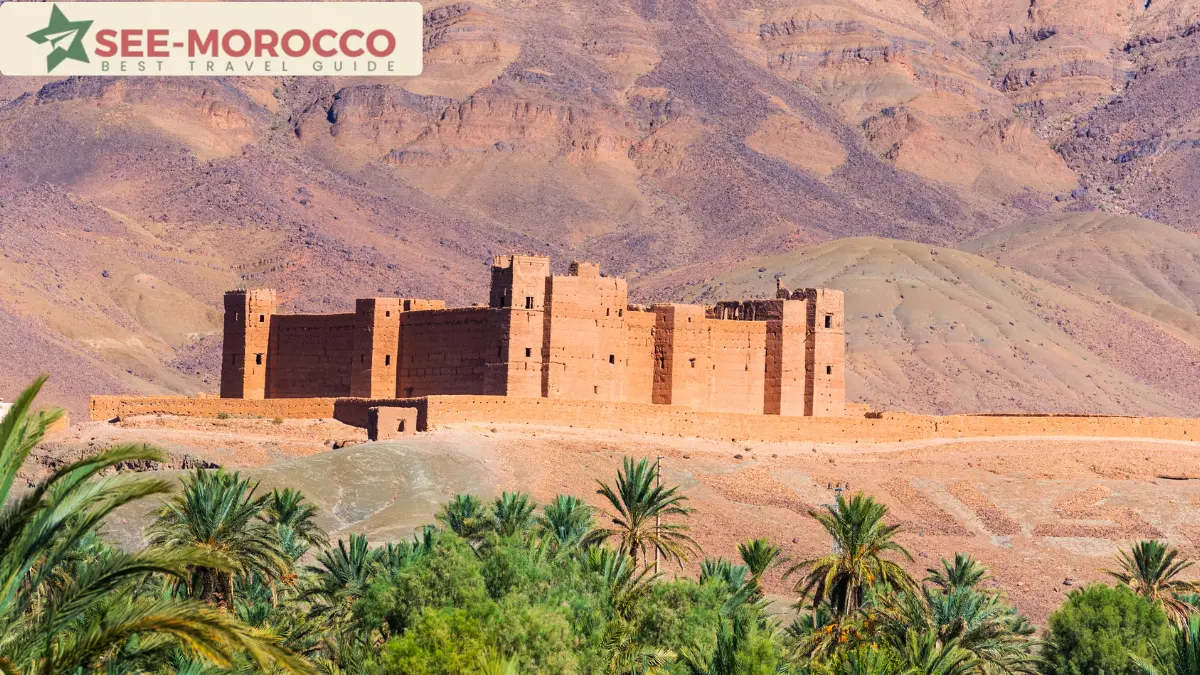
Explore the Draa Valley palm groves — honestly, this is underrated. The drive between Agdz and Zagora winds through one of the most beautiful oasis landscapes in Morocco, with old mud-brick kasbahs and endless date palms.
The Saturday and Sunday souk — Zagora’s market days bring in people from across the valley. It’s a working local market, not a tourist show, which is exactly why it’s worth seeing.
Visit a kasbah — the valley is dotted with old fortified ksour. They’re not as famous as Aït Benhaddou near Ouarzazate, but they’re real and far less crowded.
Best Time to Visit Zagora
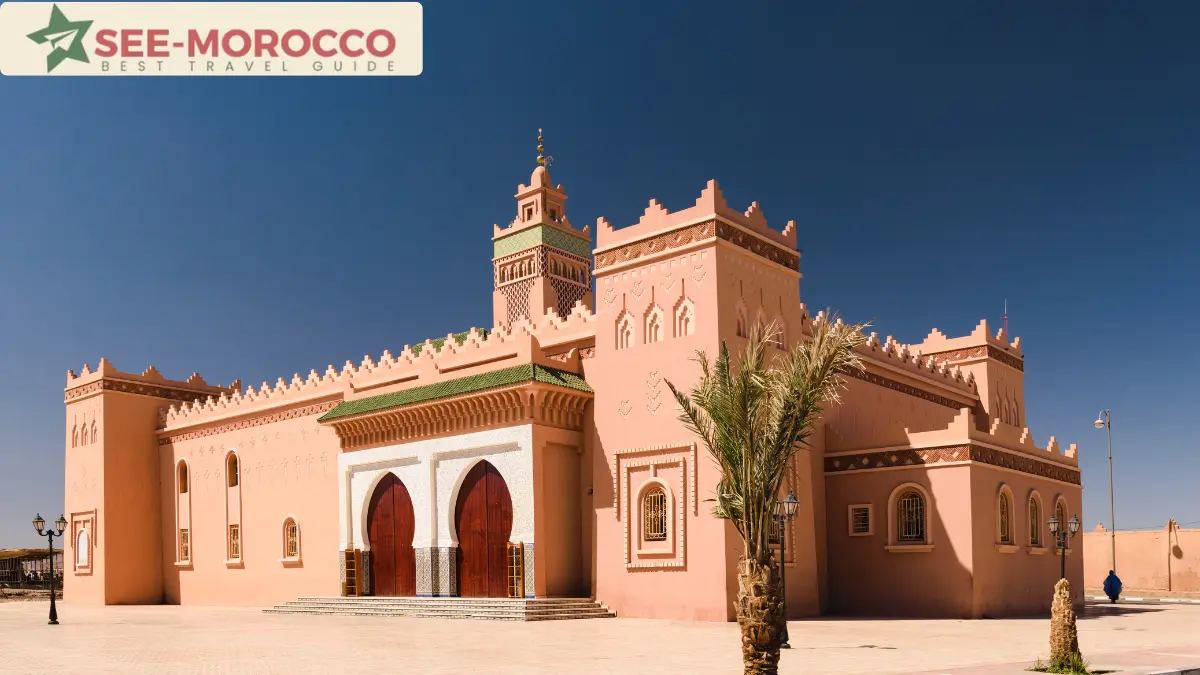
This matters more here than almost anywhere in Morocco, because the desert climate is unforgiving.
Best: October to April. Mild, pleasant days and cool nights — ideal for desert trips. This is the season to come.
Avoid: June to August. Summer in the Draa Valley is brutal, regularly pushing 40°C and beyond. A camel trek in that heat is genuinely unpleasant and even risky. Locals slow down in summer for a reason.
Note on nights: Even in the pleasant seasons, desert nights get cold — sometimes near freezing in winter. If you’re camping, bring warm layers. People consistently underestimate this.
Practical Tips
- Bring cash. ATMs exist in Zagora town but become scarce once you head into the desert.
- Dress for the desert. Sun protection by day, warm layers by night, and shoes you don’t mind filling with sand.
- Book desert camps through your accommodation or a reputable operator, not a stranger who approaches you. The same advice applies across Morocco — see my safety guide if you’re new to the country.
- Don’t overplan Zagora itself. One night in the desert and the drive through the valley is the experience. The town is a means, not the destination.
- Stay hydrated. It sounds obvious, but the dry desert air dehydrates you faster than you expect.
Is Zagora Worth Visiting?
Honestly? It depends on your trip.
If you’re already heading south from Ouarzazate, or you want a desert experience without the longer journey to Merzouga, Zagora is absolutely worth it — for the Draa Valley drive, the “52 days to Timbuktu” history, and a night under the desert stars.
If your entire reason for coming is the giant cinematic dunes, you may prefer Merzouga or the deep desert beyond M’hamid.
What Zagora gives you is the gateway feeling — the real edge of the Sahara, the point where the green valley runs out and the sand begins. For a lot of travellers, that’s exactly the moment they came to Morocco for. Here’s how it fits into a wider desert route.
FAQ — Zagora, Morocco
What is Zagora known for? Zagora is best known as a gateway to the Draa Valley desert and for its iconic “Tombouctou 52 Jours” sign, marking the old camel caravan route to Timbuktu. It’s a popular base for short Sahara trips from Marrakech and Ouarzazate.
Is Zagora worth visiting? Yes, if you want an accessible desert experience or you’re travelling south through the Draa Valley. It’s especially worth it for a short 2-day desert trip. If giant dunes are your main goal, Merzouga may suit you better.
Zagora or Merzouga — which is better for the desert? Merzouga has the bigger, more famous dunes (Erg Chebbi). Zagora is closer to Marrakech and better for shorter trips. Choose Zagora for accessibility, Merzouga for the classic towering sand sea.
How do I get to Zagora? From Ouarzazate it’s about 2.5–3 hours by road through the Draa Valley. From Marrakech it’s a long 7–8 hour drive over the Atlas. Buses (CTM, Supratours), shared taxis, rental cars, and organised tours all serve the route.
What is the best time to visit Zagora? October to April, when days are mild and nights are cool. Avoid the summer months (June–August), when desert heat regularly exceeds 40°C.
How many days do you need in Zagora? One or two nights is usually enough — typically one night at a desert camp plus the journey through the valley. Zagora is a base rather than a destination you linger in.
Is Zagora safe for tourists? Yes. Like most of southern Morocco, the region is very safe in terms of crime. The real considerations are practical: desert heat, hydration, and using reputable desert operators.
What is the “52 days to Timbuktu” sign? It’s Zagora’s famous landmark — a sign showing a camel caravan and the words “Tombouctou 52 Jours,” referring to the 52-day camel journey across the Sahara to Timbuktu along the historic trans-Saharan trade route.
Planning a desert trip and not sure whether to choose Zagora or Merzouga? Leave a comment below — I answer every one personally.