I haven’t been to Merzouga myself. I’m from Ouarzazate — the gateway city to the south — and I know the road toward Merzouga well, but I’ve never made it all the way to Erg Chebbi. What I can tell you is what I’ve heard from the tourists who have, consistently, over years of conversations: the dunes are real, the silence at night is real, and a common regret in guest reviews is staying one night instead of two.
This guide is built on that knowledge — the road south, the region’s geography, and what visitors actually report finding when they get there.
What Merzouga Actually Is
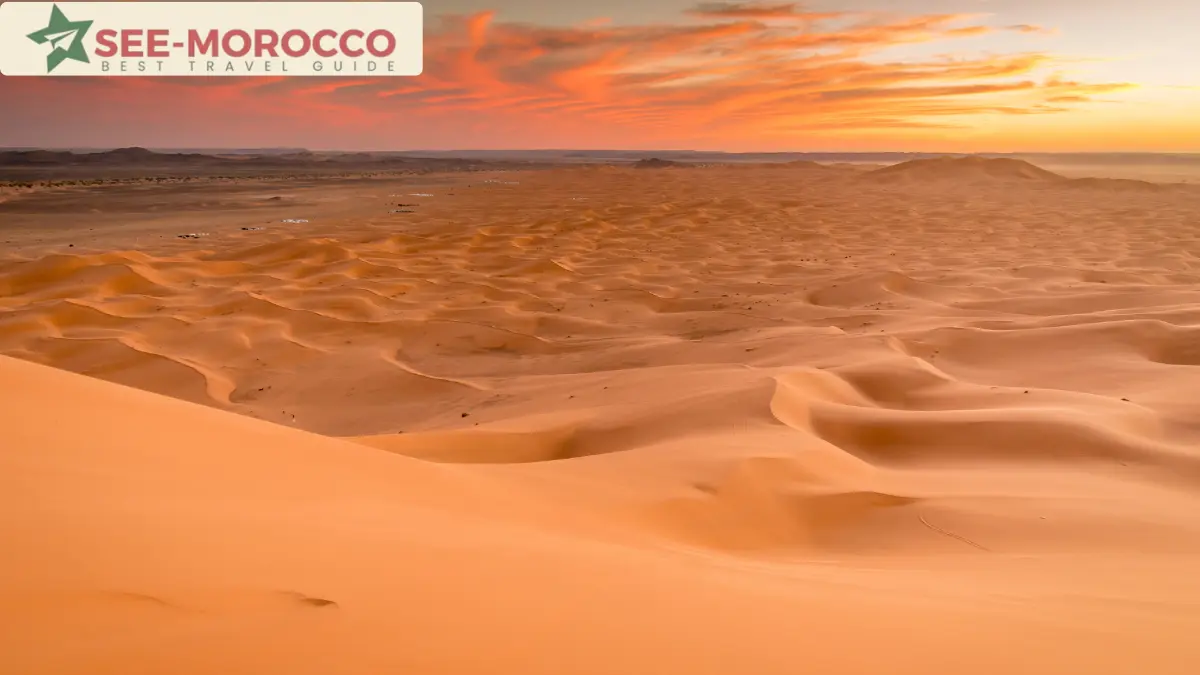
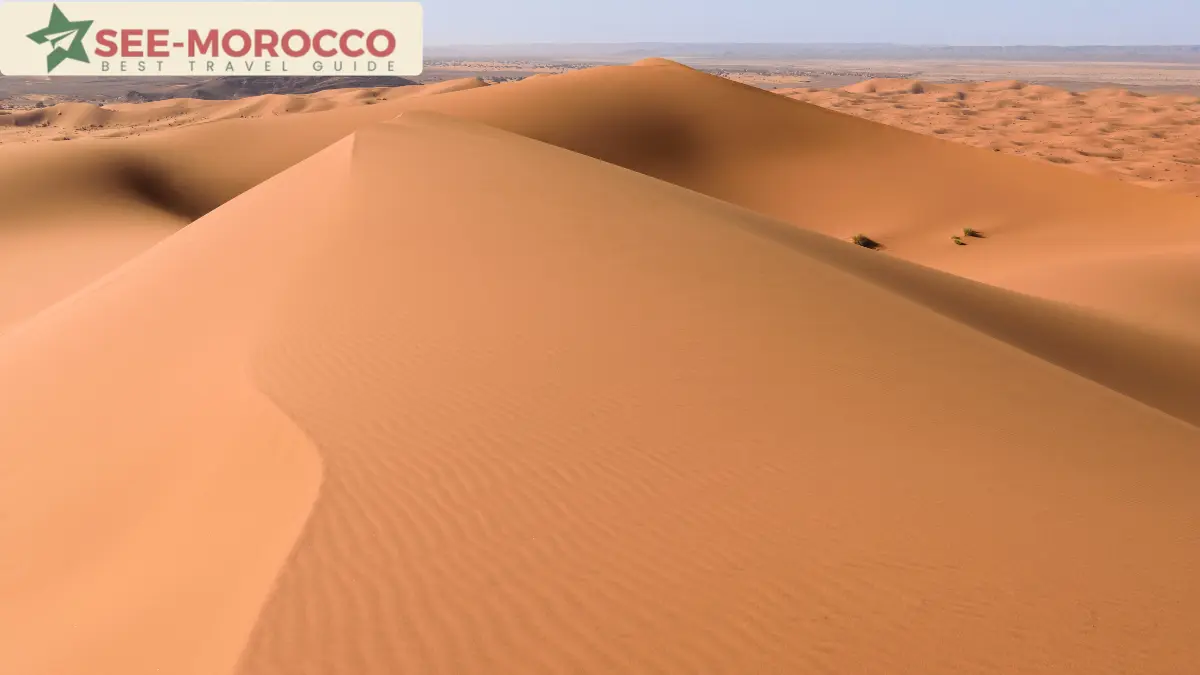
Merzouga is a small village at the edge of Erg Chebbi — one of Morocco’s two major sand dune systems (the other being Erg Chigaga, further west and harder to reach). The dunes rise to around 150 meters at their highest point and stretch for roughly 22km.
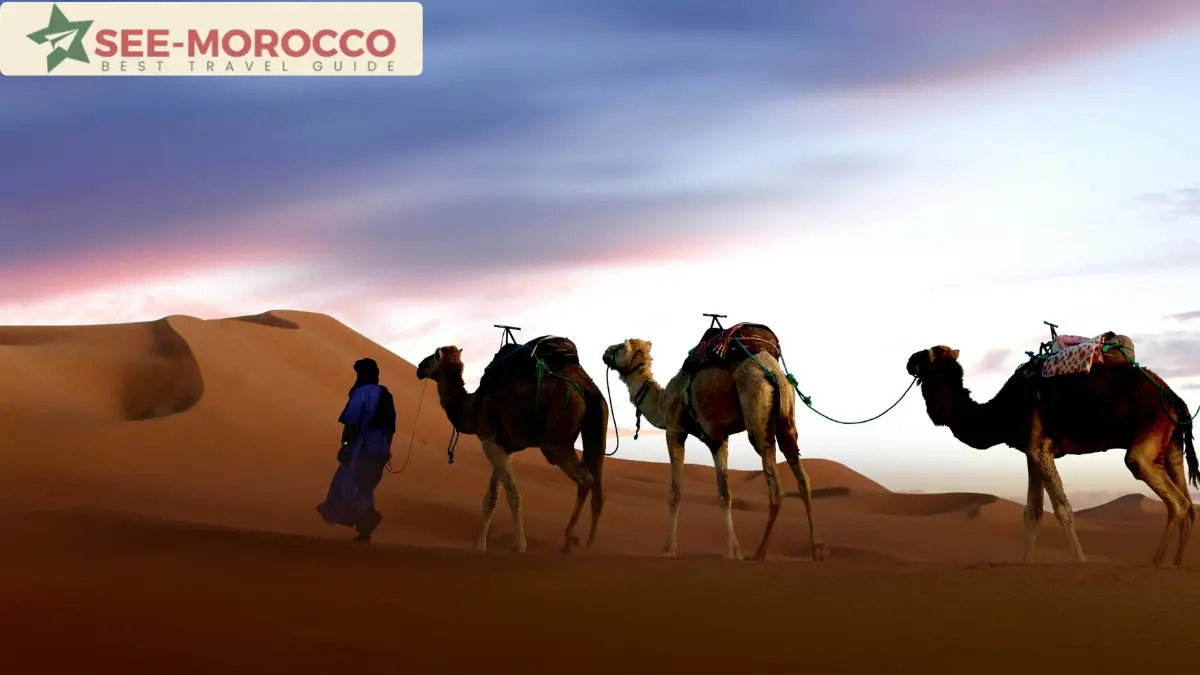
This is what most people picture when they think “Moroccan Sahara.” The orange dunes, the camel silhouettes at sunset, the desert camp at night — that’s Erg Chebbi. If you’ve seen photos of the Moroccan Sahara, they’re almost certainly from here.
The village itself is small and exists almost entirely to serve visitors. The dunes are the reason to come.
The Road There: What the South Looks Like
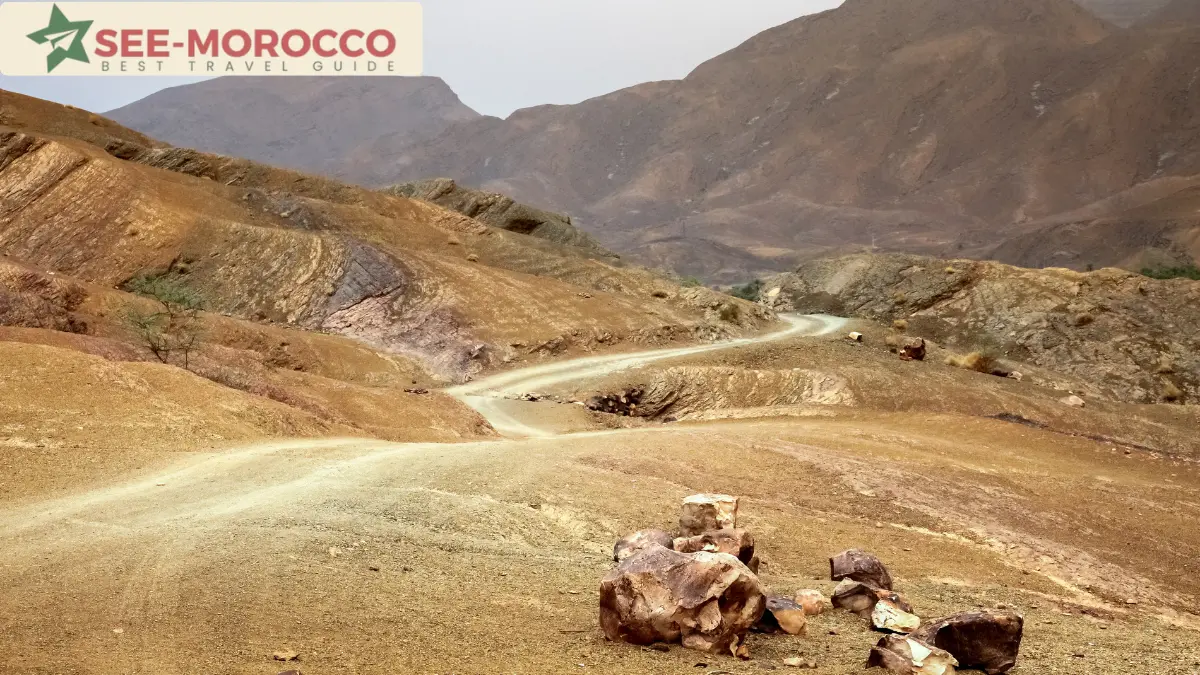
The most common route to Merzouga runs through Ouarzazate, then east through the Draa Valley and Todra Gorge area, then south toward Rissani and finally Merzouga. This is a full day’s drive from Marrakech — 7 to 8 hours minimum, usually broken into two days with a stop in Ouarzazate or Dades Gorge.
I know this road. The landscape changes completely as you head east and south from Ouarzazate — palm groves in the valleys, kasbahs on every hill, the Atlas foothills giving way to flat hammada (rocky desert), and then the dunes appearing on the horizon. That approach, when the dunes first come into view after hours of flat stone desert, is something visitors consistently mention.
→ Dades Gorge guide → 10 days in Morocco itinerary
What Visitors Report Finding
Based on conversations with tourists who’ve done this trip and recent guest reviews:
The dunes: Bigger than expected, consistently. People who’ve been to other desert destinations say Erg Chebbi stands out for scale and color — particularly at sunrise and sunset when the light turns the sand deep orange.
The camel ride: Very common. Usually an hour at sunset to a desert camp. People describe it as genuinely atmospheric despite being completely predictable — the pace, the silence, the view from higher up.
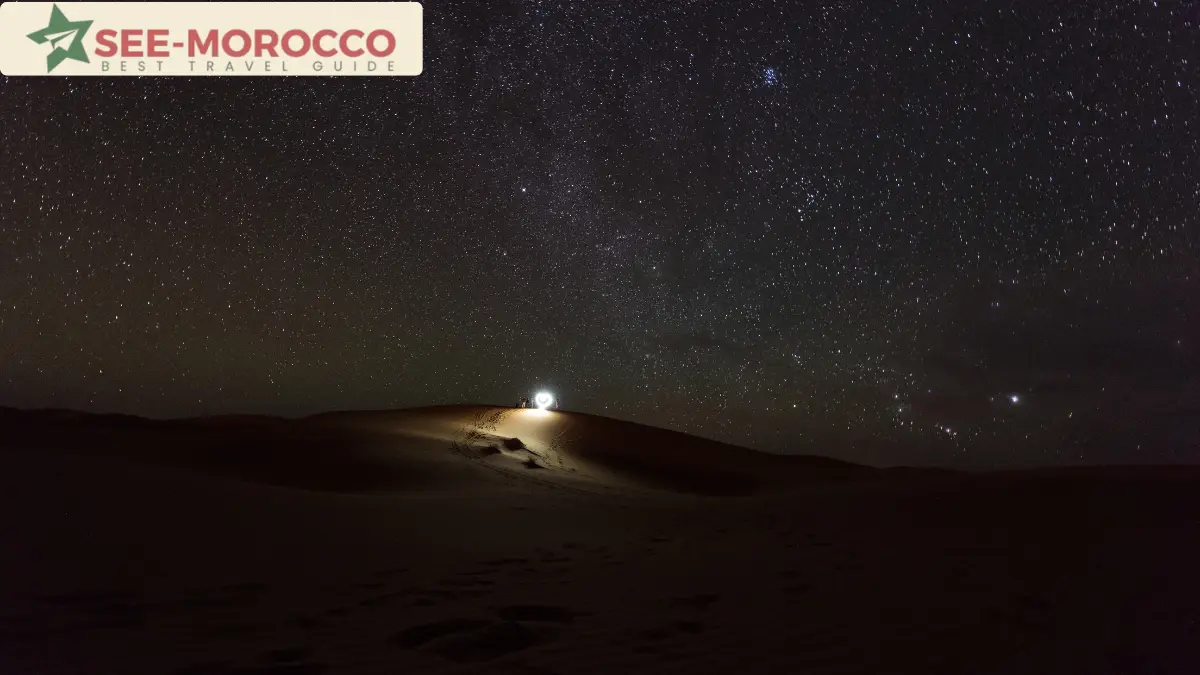
The night: The thing most mentioned. No light pollution, the Milky Way visible, the quiet of the desert after the camp settles down. Some tourists have told me it was the best night’s sleep of their trip: no city noise, nothing to hear.
The camps: Range from basic to luxury. The better ones have proper beds in canvas tents, Moroccan food, and music around a fire. The cheaper ones are more rustic. Worth spending a bit more if you’re only doing one night.
The regret: Almost everyone says they should have stayed two nights. One night is enough to see it — two nights is enough to feel it.
Merzouga vs Zagora: Which Sahara?
Both are in the Moroccan south, but they’re different experiences.
Erg Chebbi (Merzouga): Taller dunes, more dramatic landscape, more tourist infrastructure. Farther from Marrakech (~8 hours). The classic Sahara experience.
Zagora: Smaller dunes, closer to Marrakech (~5-6 hours via Ouarzazate), the famous “Tombouctou 52 jours” sign. Better for shorter itineraries. More accessible but less dramatic.
If you have 10 days and can reach Merzouga, go there. If you have 7 days and the Sahara is one stop among many, Zagora is the practical choice.
Practical Notes
Getting there: Rental car is the most flexible option for the south. CTM buses run to Rissani (near Merzouga) but the schedules require planning. Organized tours from Marrakech are the most popular option for those without a car.
How long to stay: Minimum one night in a desert camp. Two nights is better. Three gives you time to explore the surrounding villages and the quieter parts of the dunes.
Best time: October to May. Summer in the Sahara is extreme — temperatures regularly exceed 40°C and can reach 50°C. Not recommended.
What to bring: Light layers for the day, warmer layers for the night (desert temperatures drop significantly after sunset), sunscreen, and cash (the camps and village are cash-only).
FAQ
Is Merzouga worth the long drive? Yes, if you have the time. The dunes are more impressive than most people expect, and the desert night is consistently the highlight tourists mention most. The drive itself through the south is also worth doing.
How far is Merzouga from Marrakech? Roughly 560km, about 7-8 hours by car. Most people break it into two days, stopping in Ouarzazate or Dades Gorge.
What’s the difference between Merzouga and Zagora? Merzouga has taller, more dramatic dunes and is farther from Marrakech. Zagora is closer and better for shorter itineraries. Both are real Sahara, but Erg Chebbi is more visually striking.
Do I need a guide in Merzouga? Not strictly. The village and dunes are easy to navigate. For a desert camp stay, the camp will organize the camel ride and everything else. A guide helps for exploring the surrounding area and Berber villages.
What should I pack for Merzouga? Light clothes for the day, a warm layer for the night, sunscreen, sunglasses, and cash. Sandals are fine for the dunes — shoes fill with sand immediately.
Is Merzouga safe? Yes. The main risk is the heat if you visit in summer, which is why October to May is strongly recommended.