Introduction
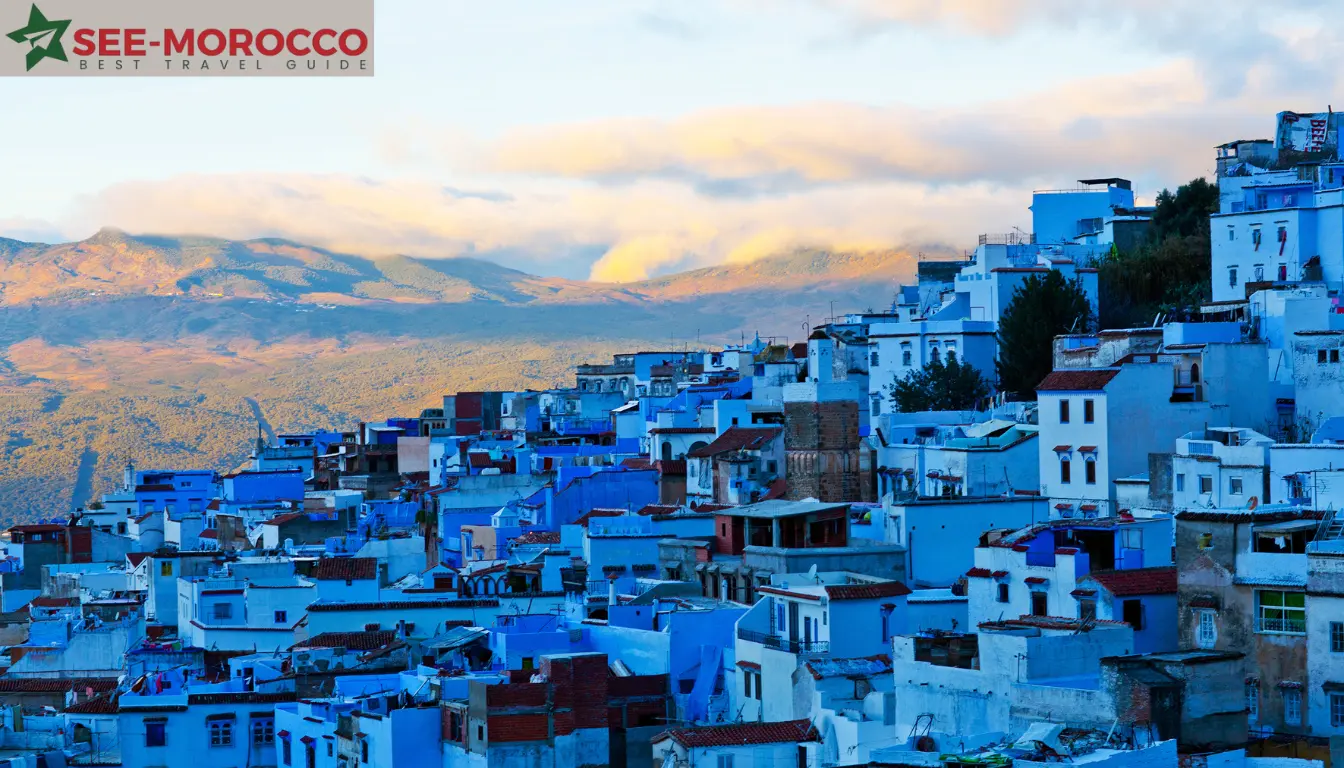
Chefchaouen is a small town in the Rif Mountains of northern Morocco where most walls, doors and staircases in the old medina are painted in shades of blue. It’s one of the most photographed places in the country, and one of the few that mostly lives up to its pictures.
This guide is researched, not based on a personal visit. I’m Moroccan, from Ouarzazate in the south, a long way from the Rif. I’ve checked prices, routes and opening details against recent sources and visitor reports, and I flag anything that changes often.
Is Chefchaouen Worth Visiting?
Yes, with the right expectations.
Chefchaouen is small. You can see the main medina in a day, two if you slow down. There’s no nightlife and no grand monuments. You come to wander, take photos, sit on a terrace with mint tea and enjoy cooler mountain air. If you want a big-city experience, you’ll be disappointed. If you want calm and colour, it’s a good stop.
Most travellers spend one or two nights here and combine it with Tangier or Fes.
Why Is Chefchaouen Blue?
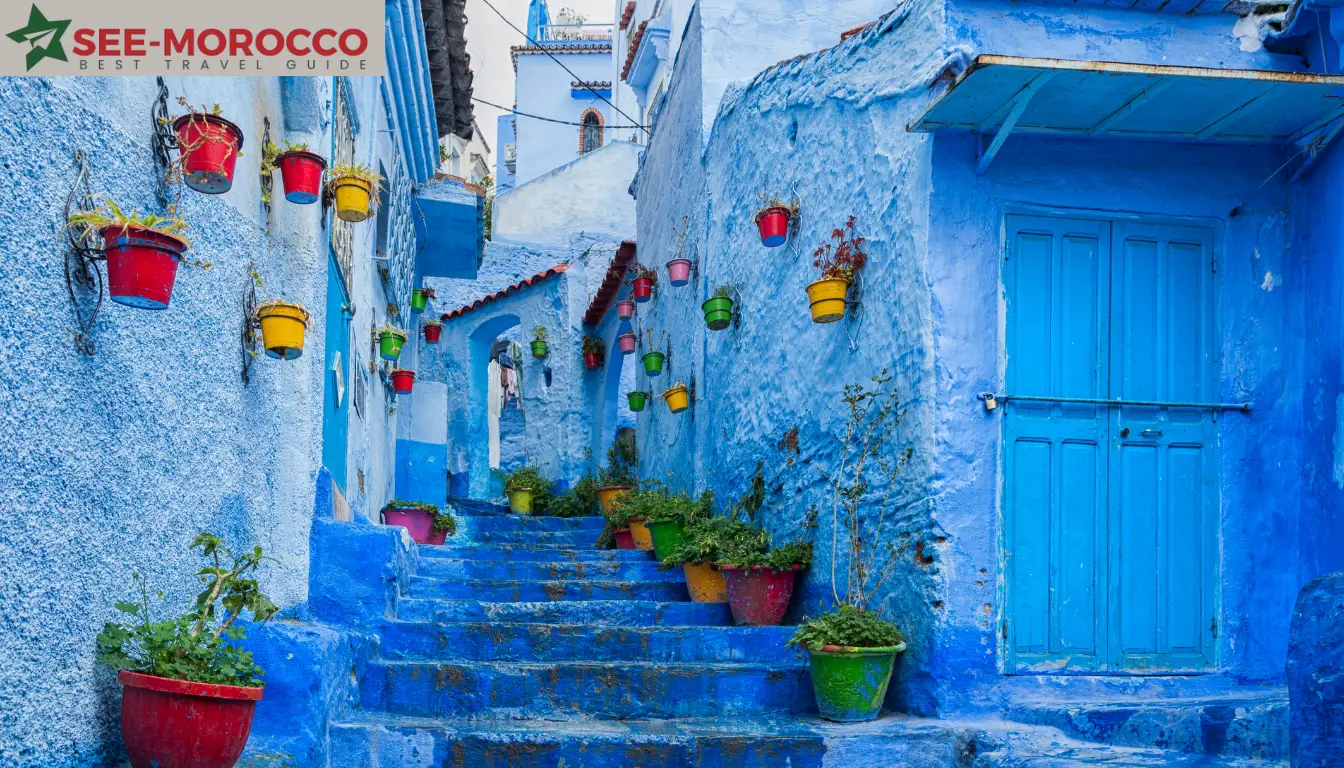
Chefchaouen was founded in 1471 as a fortress against Portuguese raids, and later took in Muslim and Jewish refugees from Spain. For most of its history it wasn’t especially blue. There’s no single documented reason for the colour, but these are the explanations you’ll hear most:
- The Jewish community. The most common account links the blue to Jewish residents, often dated to the 1930s, for whom blue symbolised the sky and the divine.
- Mosquitoes and heat. A popular local belief says blue keeps mosquitoes away and the walls cooler. It’s folklore rather than proven fact.
- Tourism. Whatever the origin, the blue now draws visitors, and the town keeps repainting it.
The honest answer: probably a mix, and the blue is now maintained on purpose.
How to Get to Chefchaouen
Chefchaouen has no train station and no airport. You arrive by road.
- From Tangier: about 2–2.5 hours. CTM buses run the route; shared grand taxis are faster but cost more per seat. Tangier is also the nearest airport with international flights.
- From Fes: about 4 hours by bus. The usual route for a northern loop (Fes → Chefchaouen → Tangier).
- From Marrakech: no direct practical option. It’s a long journey, usually via Fes. Build it into a multi-city trip rather than doing it in one day.
- From Casablanca: around 5–6 hours by road, often with a connection.
Tip: in high season, book CTM tickets a day or two ahead on the official CTM website. Popular departures sell out.
Things to Do in Chefchaouen
Walk the Medina
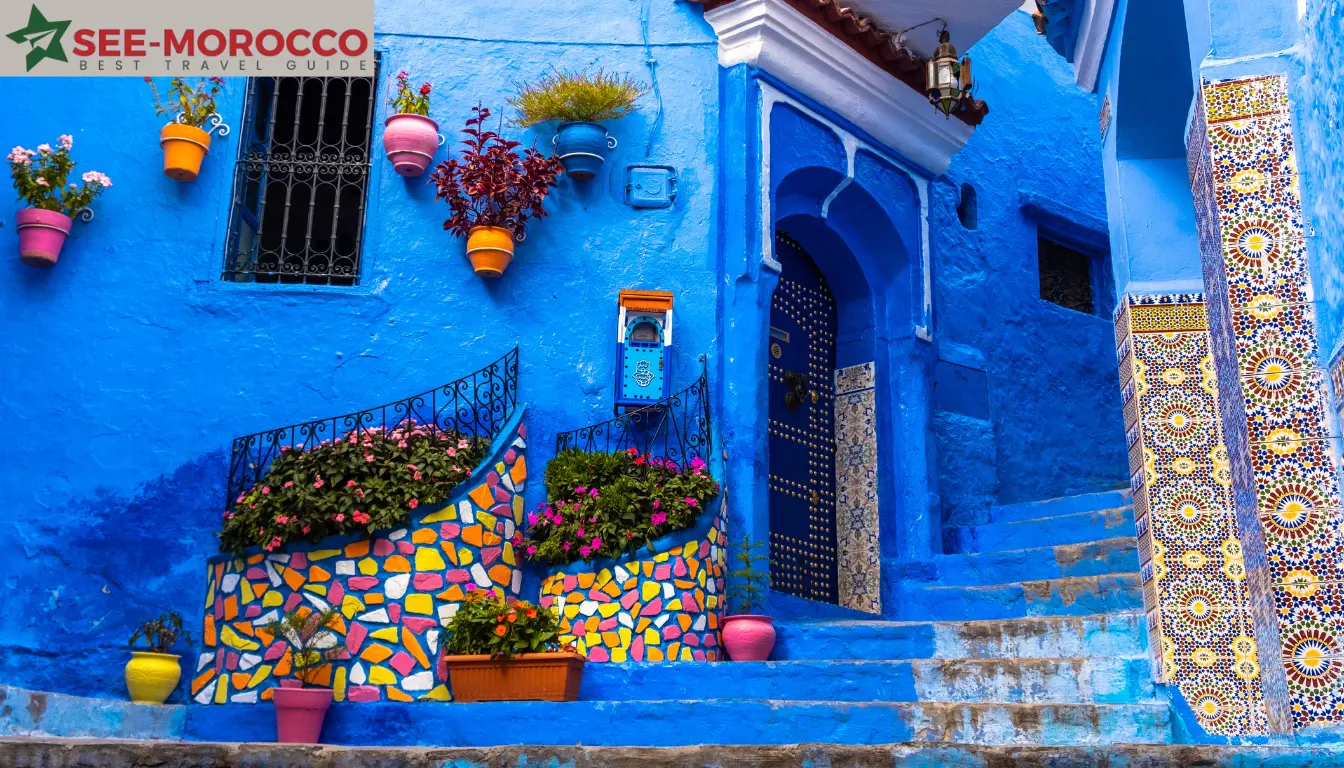
The medina is small enough that you won’t stay lost for long, which makes it ideal for wandering. Early morning is the quietest time, before day-trip groups arrive.
Plaza Uta el-Hammam
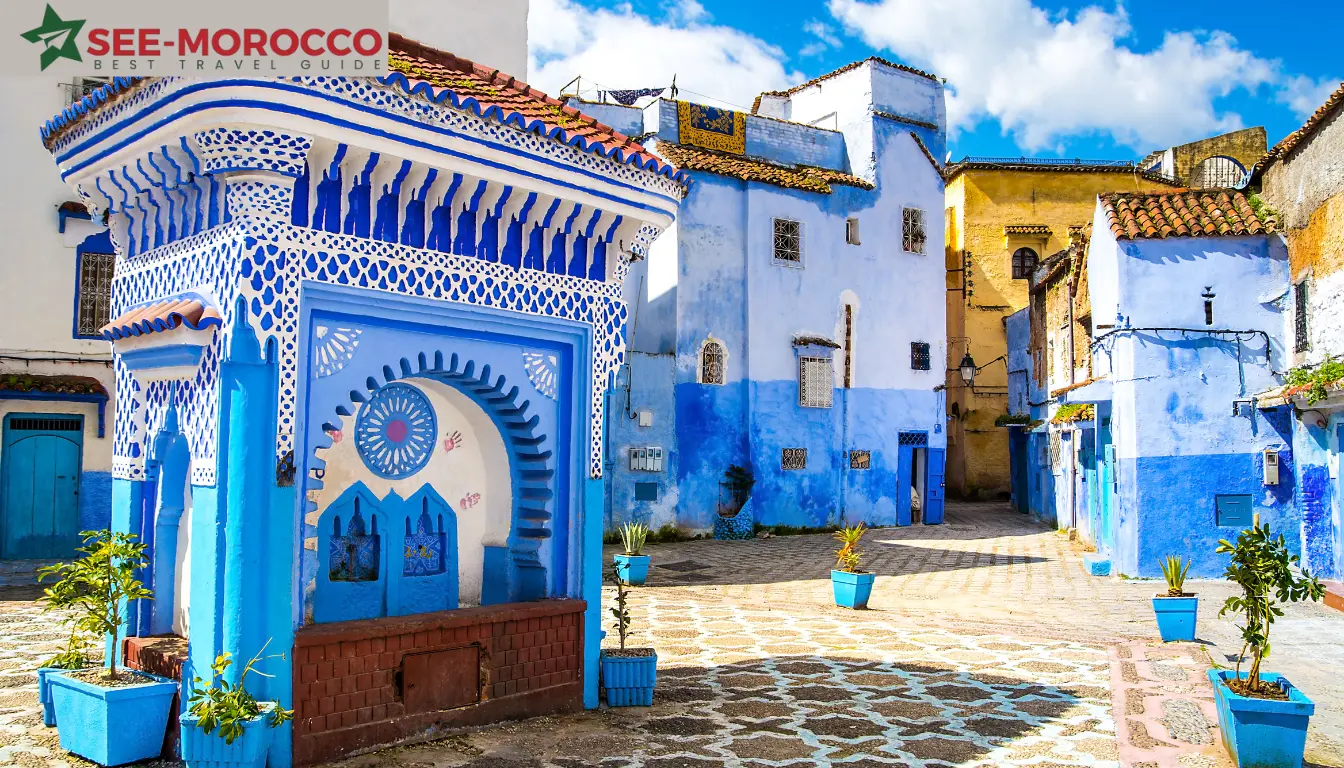
The main square, lined with cafés and restaurants, with the red-walled Kasbah and the Grand Mosque and its octagonal minaret. Café prices here are higher; you’re paying for the location.
The Kasbah and Ethnographic Museum
A 15th-century fortress on the main square with Andalusian-style gardens, a small ethnographic museum, old prison cells and a tower with views over the rooftops. Recent visitor reports put the entry fee at around 60 MAD, cash only. Many find the museum modest; the garden and the tower view are the main reasons to go. Allow about an hour.
Walk Up to the Spanish Mosque
A free walk uphill east of the medina, roughly 30–40 minutes each way, to a disused mosque with a view back over the whole town. Sunset is the classic time, and the busiest. Wear proper shoes; the path is uneven.
Ras el-Maa
The spring at the edge of the medina where the town’s water comes from. Not dramatic, but a pleasant short walk from the centre.
Day Trip to Akchour
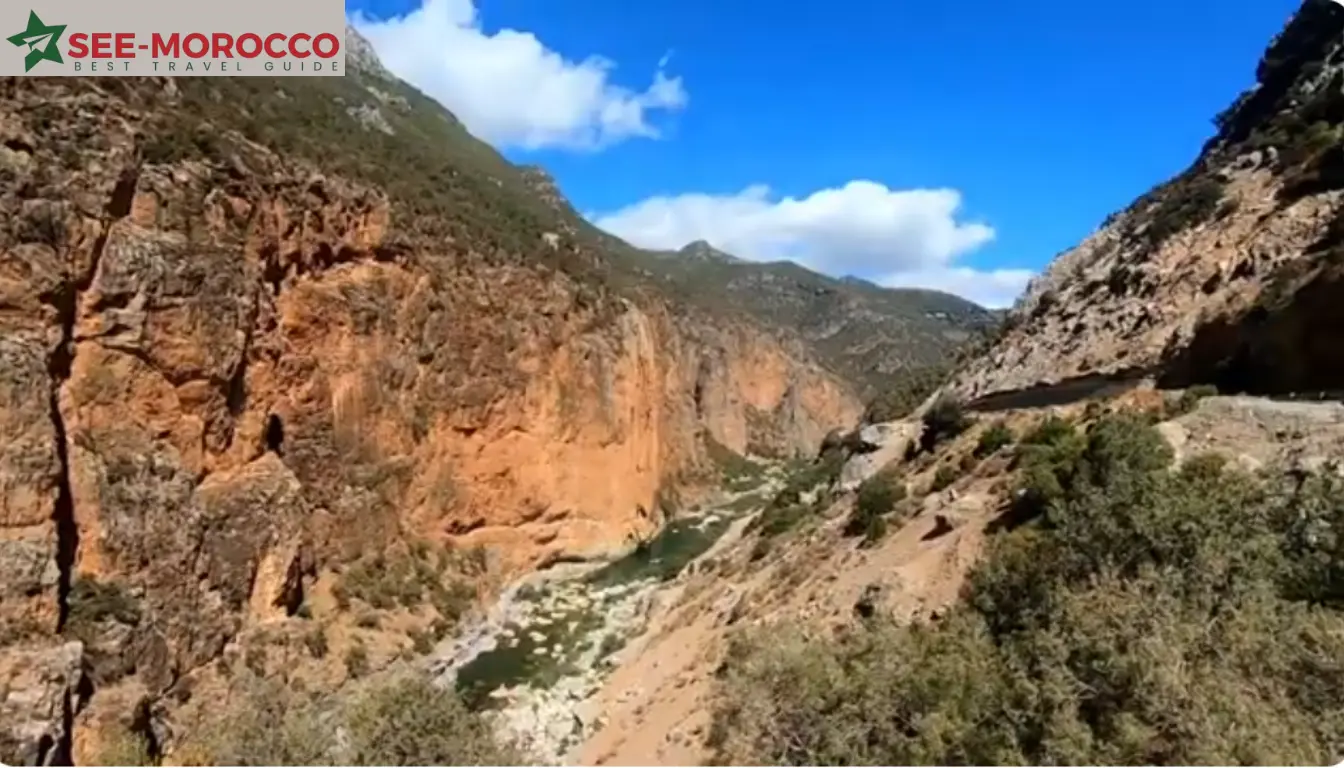
About 45 minutes away by shared taxi, Akchour has waterfalls, river pools and trails in Talassemtane National Park, including the walk to the natural rock arch known as “God’s Bridge”. Go early, bring water and wear hiking shoes.
Shopping in the Souks
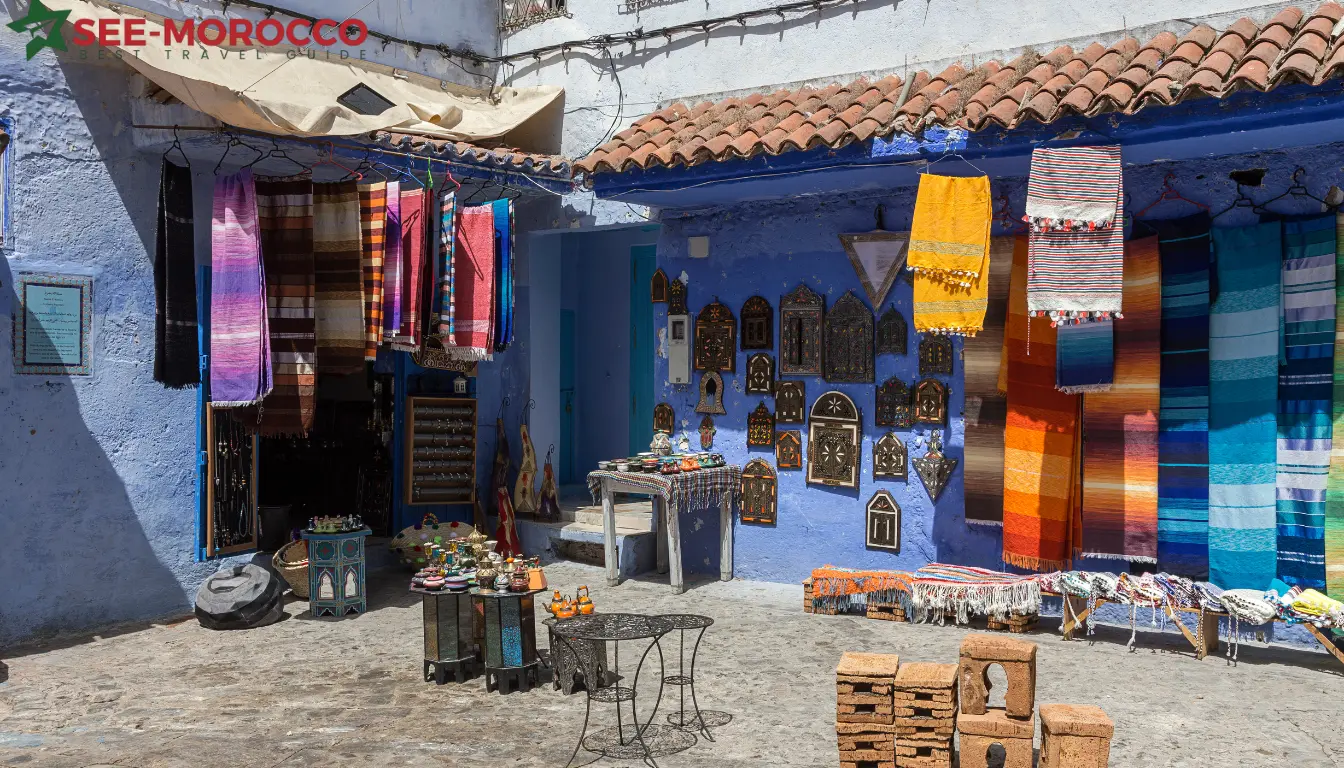
Chefchaouen’s shops are generally described as calmer than the big souks of Marrakech or Fes. Look for:
- Wool blankets and scarves, from the Rif weaving tradition
- Local goat cheese, a regional speciality
- Leather goods and woven baskets
Tips: haggling is normal; keep it friendly. Pay in dirhams. If someone attaches himself to you as a “guide” and leads you to a shop, his commission is in your price.
Where to Stay in Chefchaouen
Stay inside the medina if you can. You’ll be in the middle of the blue streets early and late, when day-trippers have gone.
- Budget: hostels and simple guesthouses, many with rooftop terraces.
- Mid-range: family-run dars and small riads in the medina, usually with breakfast. The best value for most travellers.
- Higher-end: a few restored riads with courtyards and boutique interiors.
My recommendation: a mid-range guesthouse with a roof terrace. Sunset mint tea over the rooftops is the experience; you don’t need a luxury riad for it.
What to Eat in Chefchaouen
Food in the Rif is simpler and more rustic than in Fes or Marrakech.
- Goat cheese, often with bread, olive oil or honey
- Bissara, a thick fava bean soup, a cheap and filling breakfast
- Tagine, as everywhere in Morocco
- River trout from the surrounding mountains appears on some menus
Small places away from the main square are usually cheaper than the cafés on Plaza Uta el-Hammam.
Best Time to Visit
Chefchaouen sits in the mountains, so it’s cooler and wetter than much of Morocco.
- Spring (April–May): mild and green. The best time for most visitors.
- Autumn (September–November): comfortable, with fewer crowds than summer.
- Summer (June–August): warm and busy, including with Moroccan holidaymakers. Book ahead.
- Winter (December–February): cold and rainy, occasionally with snow on the peaks. Quiet and cheaper.
During Ramadan, daytime food options shrink and the town’s rhythm changes; worth knowing on a first visit.
Chefchaouen on a Budget
- Transport: CTM bus instead of private transfers.
- Sleep: hostels and simple guesthouses; travel in spring or autumn for better rates.
- Food: eat away from the main square; bissara costs very little.
- Free things: the medina, the Spanish Mosque walk and Ras el-Maa cost nothing.
- A few words of Darija: “Bshhal hada?” (how much is this?), “Ghali bzaf” (too expensive), “Shukran” (thank you).
Is Chefchaouen Safe?
Chefchaouen is generally considered one of Morocco’s calmer towns for visitors. Use normal precautions with your belongings and stick to lit streets at night.
The surrounding Rif region is known for cannabis cultivation, and you may be offered hashish in the street. Decline and keep walking: buying or carrying it is illegal. For the bigger picture, see Is Morocco Safe?
Solo travellers, including women, generally report feeling comfortable here. Modest dress (shoulders and knees covered) is the norm.
A Few Cultural Notes
- Ask before photographing people. Many residents, especially older ones, don’t want to be photographed.
- Say “Salam” when you enter a shop.
- Remember it’s a real town. The blue walls are people’s homes, not a film set.
FAQ: Chefchaouen
Is Chefchaouen worth visiting?
Yes, if you like slow wandering and photography. Plan one or two days and combine it with Tangier or Fes.
Why is Chefchaouen painted blue?
There’s no single documented reason. The most common explanations are the town’s Jewish community, a folk belief about mosquitoes and heat, and, today, tourism. The blue is now maintained on purpose.
Is there a train to Chefchaouen?
No. Chefchaouen has no train station or airport. Arrive by bus or shared taxi, most easily from Tangier (about 2–2.5 hours).
How do you pronounce Chefchaouen?
Roughly “shef-SHAH-wen”.
How many days do you need in Chefchaouen?
One full day covers the medina, the Kasbah and the Spanish Mosque. Two days lets you add Akchour.
How much is the Kasbah entry fee?
Recent visitor reports put it at around 60 MAD, cash only. Check at the gate.
Is Chefchaouen safe for tourists?
Generally yes. Take normal precautions and decline any offer of hashish.
Is Chefchaouen too touristy?
It gets busy at midday with day-trippers. Stay overnight to see it early in the morning and in the evening, when it’s much quieter.
Planning a trip to Chefchaouen? Ask in the comments and I’ll help you fit it into your route.