A riad Marrakech looks like a blank wall from the street — no sign, no lobby, no windows facing outside. You knock on a wooden door, it opens, and everything changes.
I grew up studying in Marrakech and walked past riads hundreds of times without ever seeing inside. I’ve talked to tourists who’ve stayed in them and read a lot of guest reviews, and the same surprises, good and bad, keep coming up. I haven’t stayed in one myself, so I’ll be clear about what comes from my own knowledge of the city and what comes from those conversations.
Here’s the honest picture.
What a Riad Actually Is
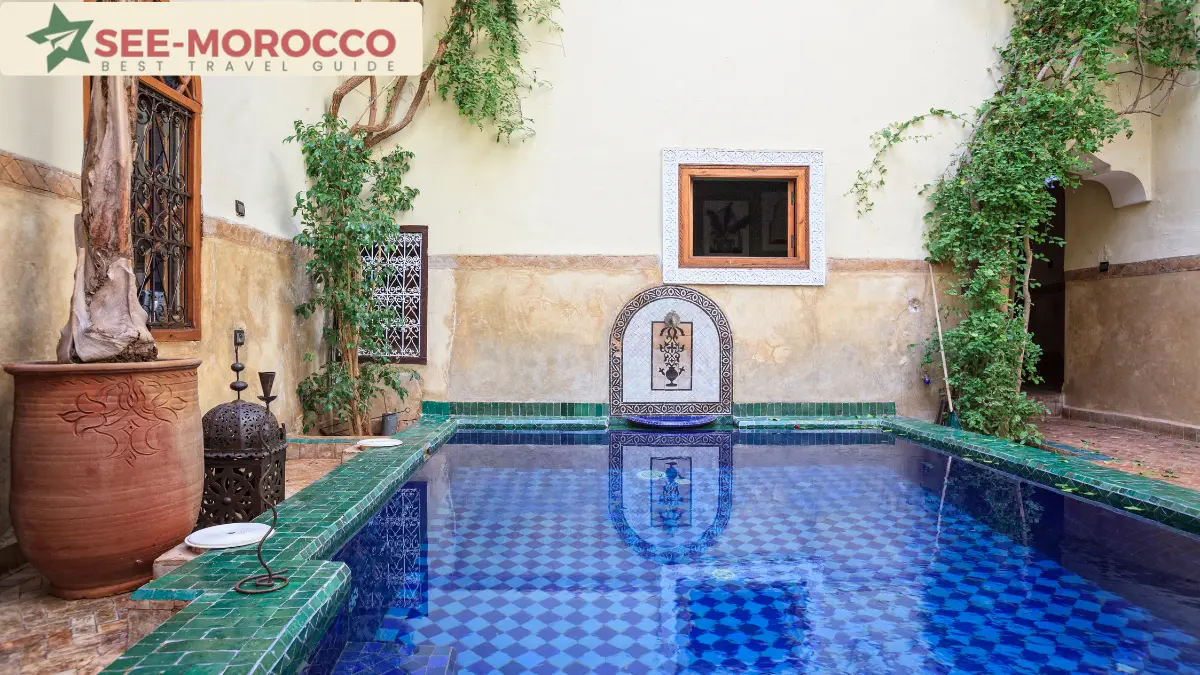
A riad is a traditional Moroccan house built around a central interior courtyard. The word comes from the Arabic for garden. The courtyard — not the street-facing walls — is the heart of the building: open to the sky, usually with a fountain, tiled floors, and plants.
All the rooms face inward. From outside, you see nothing. From inside, you’re in a completely different world.
This design has been in Marrakech for centuries. It wasn’t built for tourists — it was how wealthy Moroccan families lived, with the home turned away from the street for privacy. Many of these houses fell into disrepair in the 20th century and have since been restored, mostly by European buyers, and converted into boutique hotels.
What Makes a Riad Marrakech Different from a Hotel
The main difference isn’t the decor — it’s the scale and the silence.
Riads are small. Most have between 5 and 15 rooms. There’s no lobby crowd, no conference wing, no check-in queue. The staff know your name by the first morning.
The courtyard creates a strange acoustic effect: despite being in the middle of the Medina — one of the noisiest places in Morocco — riads are quiet inside. The walls are thick, the layout turns inward, and once that wooden door closes behind you, the street disappears.
It’s one of the things visitors mention most. They expect Moroccan decoration (they get it), but they don’t expect actual quiet in the heart of the Medina.
The Architecture Up Close
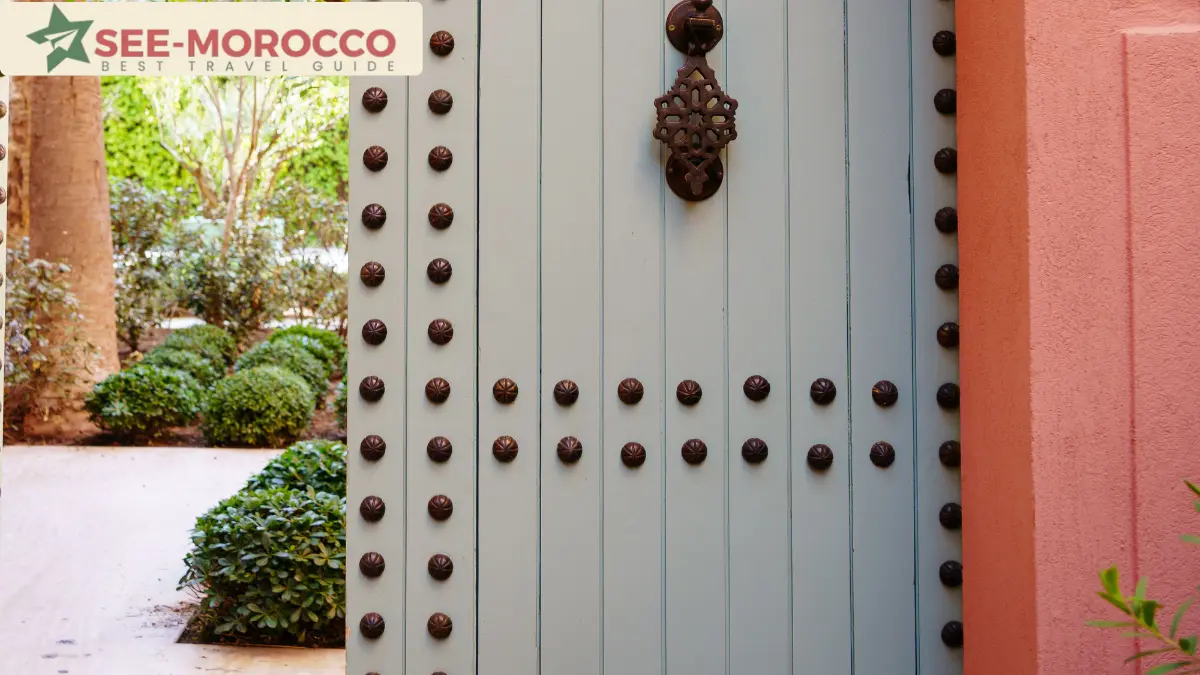
From outside, riads give nothing away — plain rendered walls, a heavy wooden door, maybe a brass knocker. The street has no idea what’s behind it.
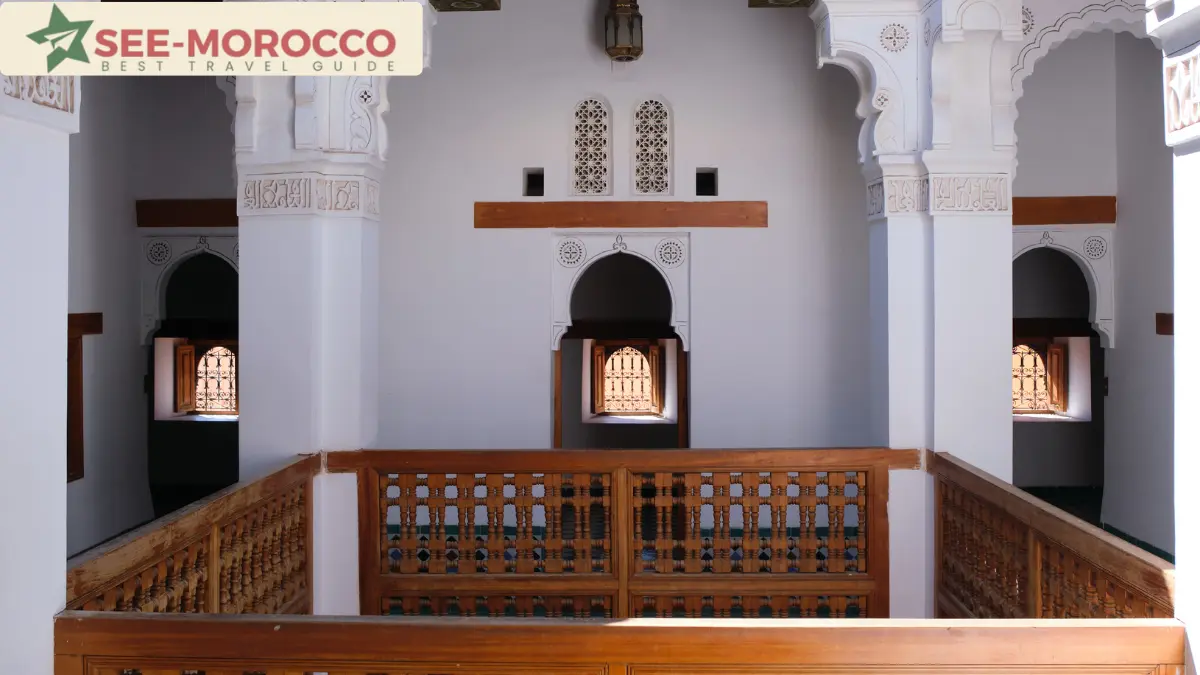
Inside, the details are the point. Zellij tilework covers the lower walls and floors — thousands of hand-cut ceramic pieces in geometric patterns, each one placed individually. Above the tiles, carved plasterwork (tadelakt and stucco) covers the upper walls. Cedarwood screens and painted ceilings finish the rooms.
This craftsmanship — zellige, plaster carving, cedarwood joinery — is what Marrakech’s artisan quarters have produced for centuries. A restored riad is essentially a museum of that work, except you sleep in it.
What to Expect When You Stay
Based on what tourists consistently describe:
The arrival: You’ll often walk the last stretch to the riad on foot — streets in the Medina are too narrow for cars. The riad will usually give you a map or GPS pin, but expect to get slightly lost. This is normal.
The courtyard: This is where breakfast is served, where you sit between outings, where the day slows down. Most riads have a fountain running. Some have small orange or lemon trees growing around it.
The rooms: Decorated in Moroccan style — carved headboards, fabric wall hangings, tadelakt bathrooms. Sizes vary a lot between riads; read reviews about specific room sizes before booking.
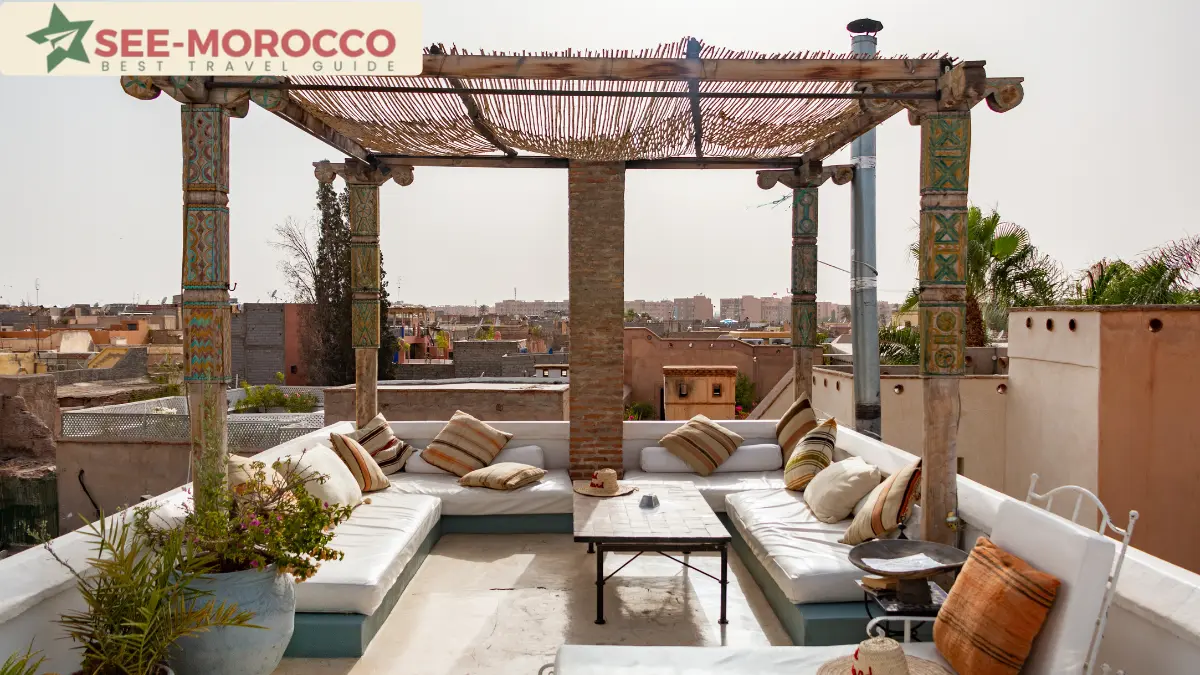
The rooftop: Almost every riad has one. Views over the Medina rooftops, mint tea, sunsets. This is consistently the thing tourists mention most.
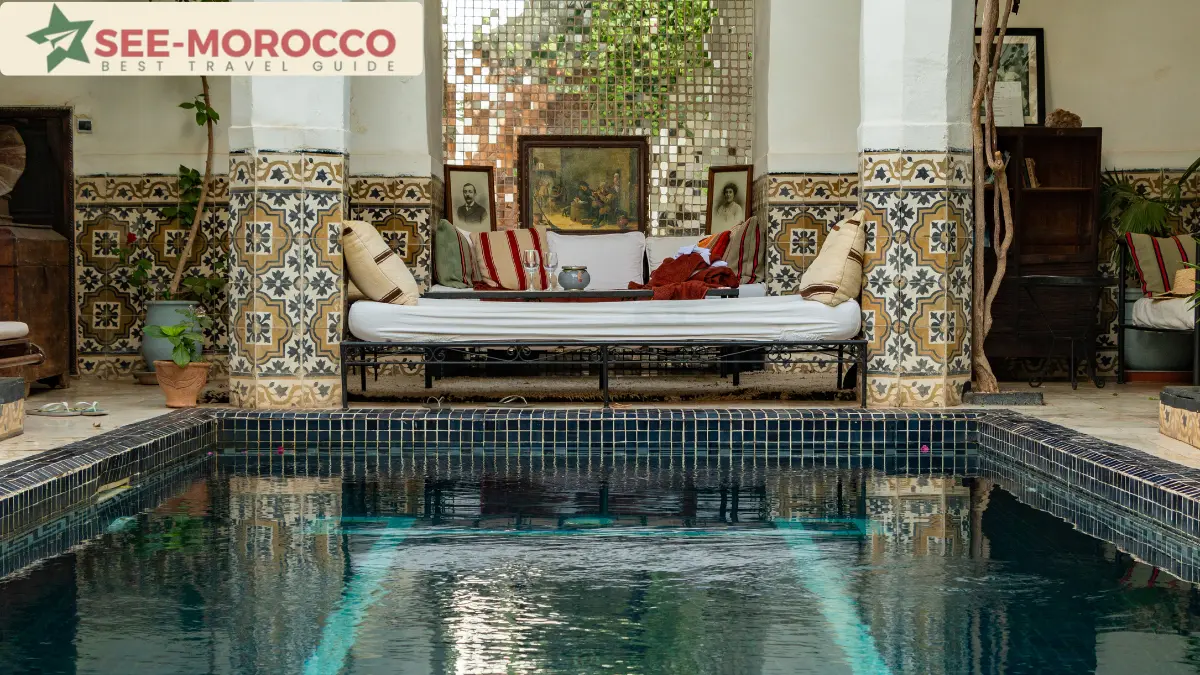
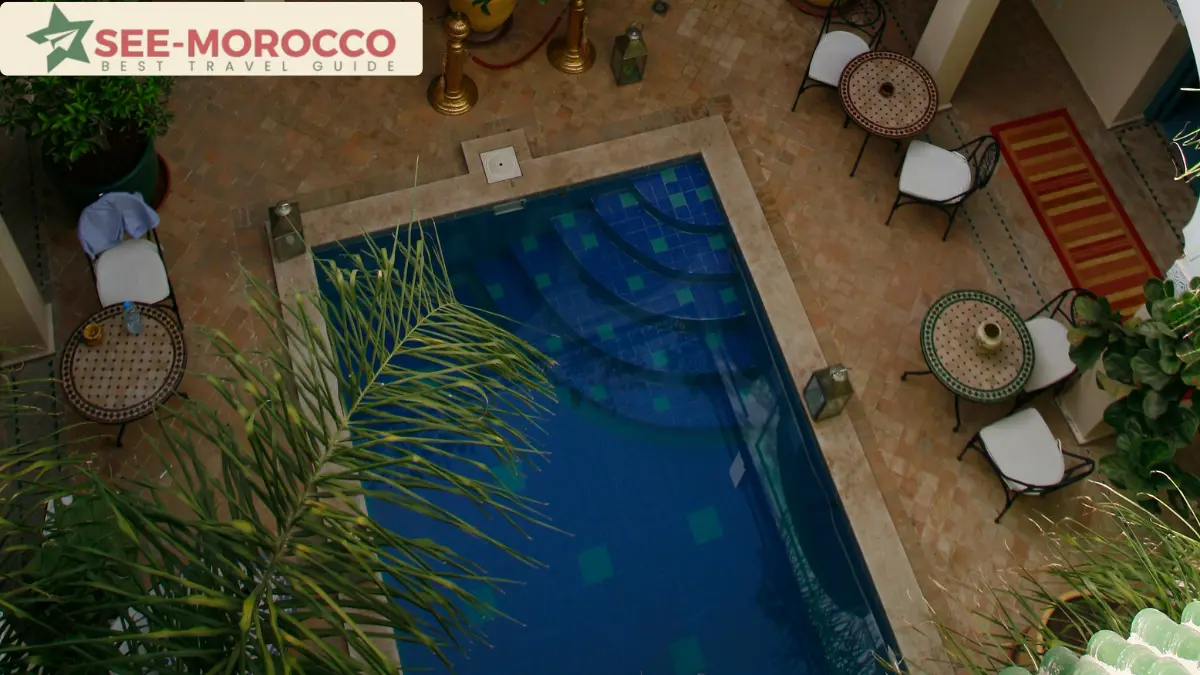
The pool: Not all riads have one. Those that do are usually either plunge pools in the courtyard or small rooftop pools. If a pool matters to you, confirm the size before booking — “pool” covers a lot of ground.
The hammam: Many riads offer traditional hammam treatments on-site. Worth doing if you haven’t tried one.
How to Choose the Right Riad
Location within the Medina: Riads closer to Jemaa el-Fna are more convenient but noisier at night. Those deeper in the souks are quieter but harder to find. Check how many minutes the riad says it is from the main square, and read reviews about the walk.
Size: Smaller riads (5–8 rooms) feel more personal; larger ones (12–15 rooms) are more like boutique hotels. Depends on what you want.
Pool or no pool: Decide upfront. Many riads don’t have one.
Breakfast included: Most include it. The typical Moroccan riad breakfast — bread, msemen, honey, amlou (argan oil and almond paste), mint tea — is genuinely good. Worth confirming it’s included.
Reviews about navigation: This comes up constantly. Some riads are genuinely hard to find on your first try. Check if they offer a pickup service from a nearby landmark or clear GPS instructions.
Is a Riad Worth It?
For most tourists, yes — if they stay in the Medina. The combination of location, silence, and authenticity is hard to match with a standard hotel in the same area.
The tradeoff is logistics: no car access, possible navigation confusion, smaller rooms than equivalent-price hotels in Gueliz.
If you’re staying in Gueliz or Hivernage, a riad doesn’t make as much sense — most riads are in or near the Medina, and that’s exactly where their value comes from.
FAQ
What is a riad Marrakech? A traditional Moroccan house built around a central interior courtyard, now mostly used as boutique hotels. The design is inward-facing — plain walls outside, ornate courtyard inside.
Are riads in Marrakech expensive? They range from budget-friendly to very expensive. A basic restored riad can cost less than a standard hotel room; luxury riads with pools and spas are significantly more. Price depends mainly on size, pool, and location.
Where are most riads located in Marrakech? The vast majority are in the Medina — Marrakech’s old walled city. Some are near the Kasbah district. Very few are in Gueliz or Hivernage.
Do all riads in Marrakech have pools? No. Many do, but pool sizes vary enormously — from small courtyard plunge pools to proper rooftop pools. Always confirm before booking if a pool matters to you.
Is it hard to find a riad in Marrakech? Can be, especially on arrival. Medina streets are narrow and don’t always appear correctly on maps. Good riads provide GPS coordinates, a WhatsApp contact, or a staff member to meet you nearby.
What’s the difference between a riad and a hotel in Marrakech? Scale and atmosphere. Riads are small (usually under 15 rooms), inward-facing, quiet despite the Medina location, and architecturally distinctive. Hotels are larger, more standardized, and mostly located outside the Medina.
What should I look for when booking a riad? Location within the Medina, whether a pool is included and its actual size, room size (varies a lot), navigation instructions, and recent reviews. Book directly with the riad when possible — you’ll often get better communication.