I drove out to the Dades Gorge from Ouarzazate, my home town, heading northeast through Boumalne Dades. The first thing that surprises you on that road isn’t the canyon — it’s the green. Fields run right up to the edge of the tarmac, and the Dades River threads through the valley floor, water moving past the palms and the mud-brick villages. In the dry Moroccan south, that ribbon of green is its own kind of beautiful.
Then the walls close in, and you understand why people come.
This is my honest guide to the Dades Gorge — what it’s actually like, how to do it, and the part that the polished travel articles tend to leave out. I’ve made this drive; what follows is what I actually saw.
What the Dades Gorge Actually Is
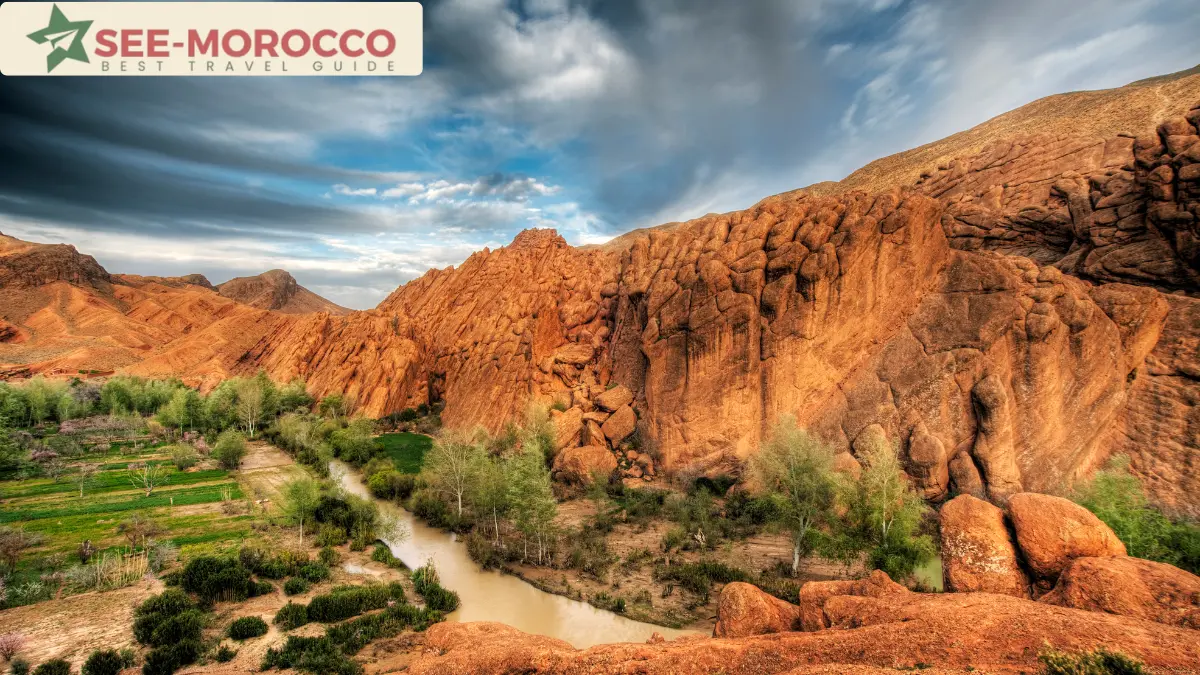
The Dades Gorge is a deep canyon in the High Atlas, carved over a very long time by the Dades River. The rock walls rise dramatically on both sides — in places the cliffs tower hundreds of metres above the river running below.
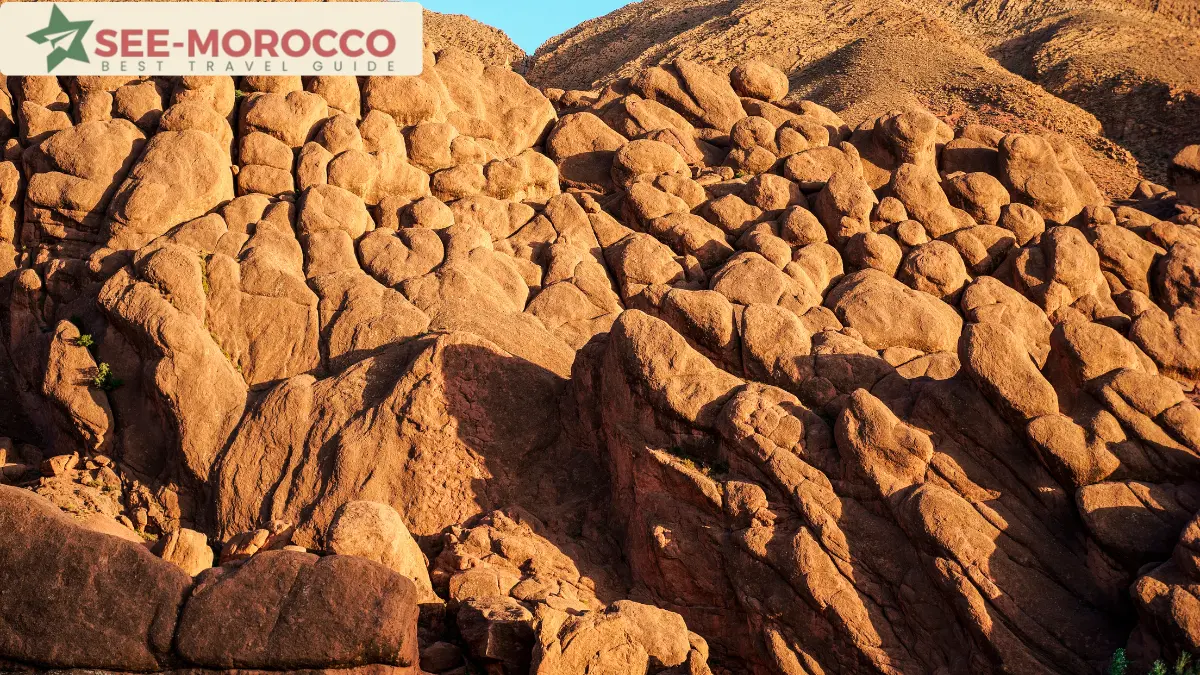
What makes it special isn’t just the scale. It’s the strangeness of the rock. In one stretch you’ll see huge, smooth, bulbous formations that look as though they were sculpted by hand — locals call them the “Monkey Fingers” (or monkey toes). They weren’t carved by people at all; wind and water shaped them over millennia. But standing under them, it’s genuinely hard to believe nature did that alone.
The Famous Road: Hairpins and Heights
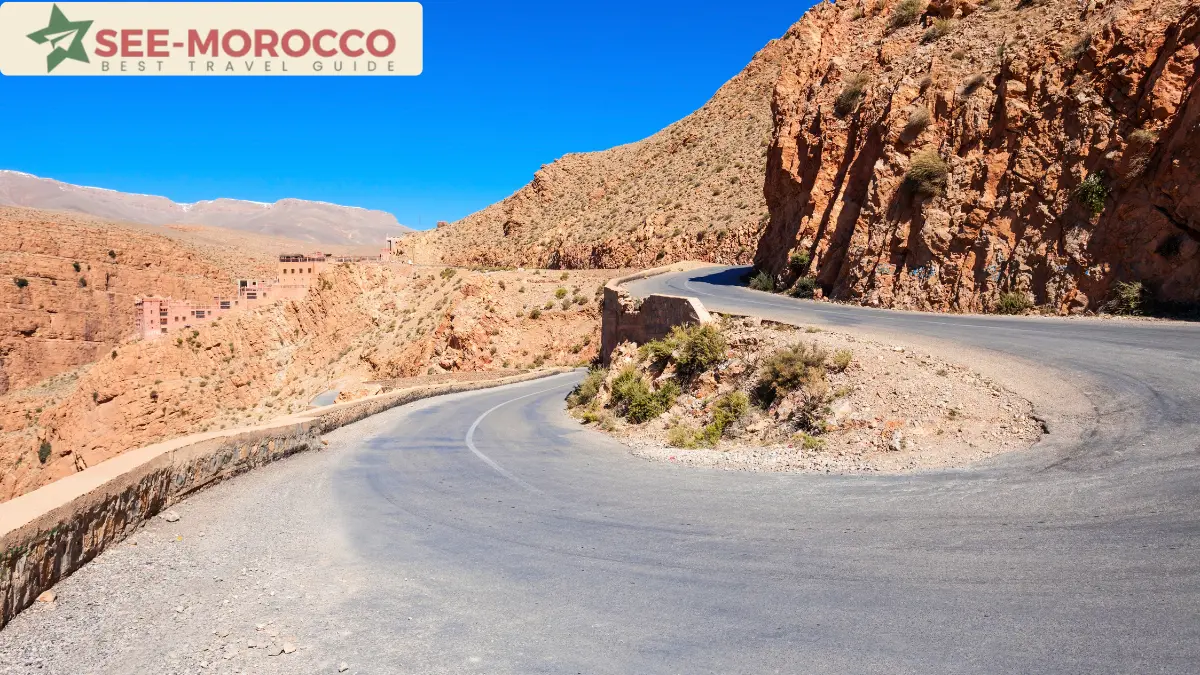
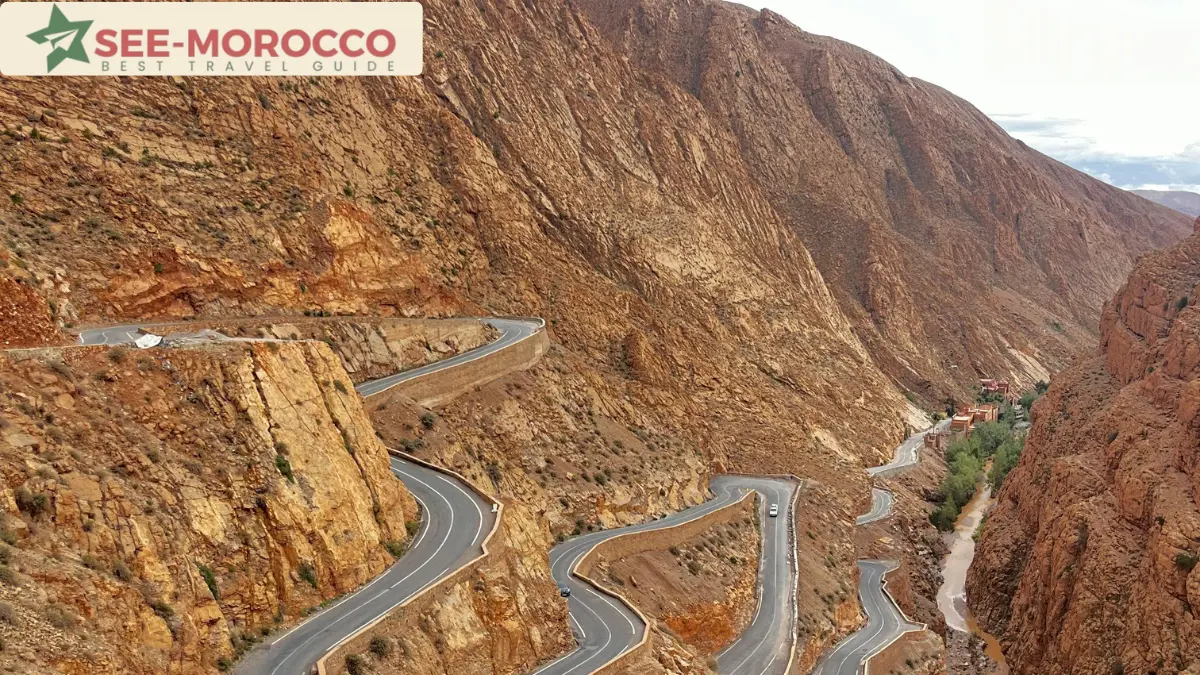
The signature image of the Dades Gorge is the road itself — a series of tight switchbacks zig-zagging up the canyon wall. You’ve probably seen the photo even if you didn’t know where it was.
Driving it is something else. As we climbed those bends, the feeling was a mix of real enjoyment and a little bit of fear — the views opening up over the canyon are stunning, but the hairpins are sharp and the drops are right there beside you. That combination, the beauty and the slight edge of nerves, is exactly what makes the drive memorable.
There’s a café at the top of the climb, perched above the bends, and this is where almost everyone stops. The view back down over the switchbacks is the classic Dades shot. Pull in, order a mint tea, and take it in before carrying on.
Where to Stay: A Local Note
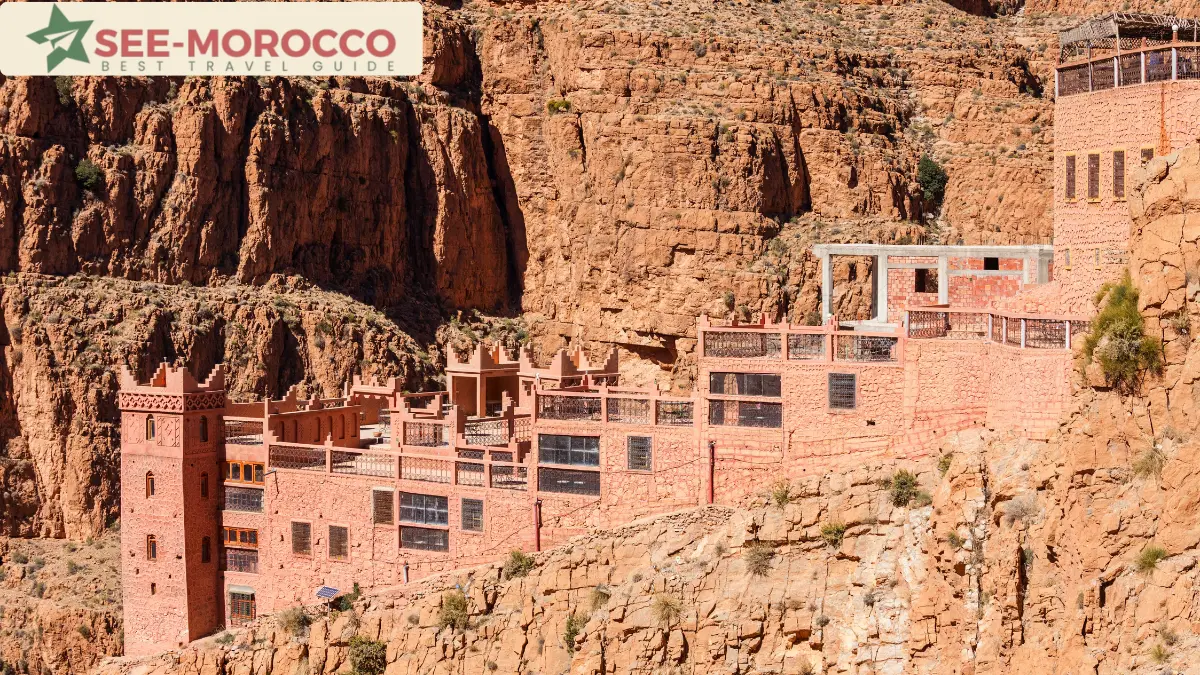
There are plenty of hotels and guesthouses along the gorge, many of them small family-run places facing the canyon. I didn’t stay in one myself — I stopped with someone I know in the area — but the accommodation here is part of the appeal. Waking up inside the canyon, with the walls glowing in the early light and the river below, is the version most day-trippers miss.
If you have the time, stay a night rather than rushing through. The gorge is calmer and far more beautiful early and late, once the tour vehicles have moved on.
Getting There from Ouarzazate
The Dades Gorge sits along the route people call the Valley of a Thousand Kasbahs, and the drive is part of the experience.
From Ouarzazate: Head northeast toward Boumalne Dades — roughly 1.5–2 hours. From Boumalne, you turn up into the gorge itself. Ouarzazate is the natural base for the whole region.
The route: You’ll pass through Skoura’s palm oasis and a string of kasbahs along the way — the road earns its “Thousand Kasbahs” name. Don’t rush it; the valley is half the reason to come.
Options:
- Self-drive is best. The roads are paved and the freedom to stop at viewpoints is worth a lot here.
- Local guides are available in the area, and they know the gorge, the rock formations, and the back roads far better than any map. Arranging one is worth it if you want context beyond the obvious stops.
- Organised tours from Marrakech or Ouarzazate often pair the Dades with the Todra Gorge and the desert.
Dades vs Todra: Which Gorge?
This is the question visitors ask most, since the two gorges are close together and often combined.
Dades is the one with the famous switchback road and the strange “Monkey Fingers” rock formations. It’s wider in places, greener along the valley floor, and the drive itself is the highlight.
Todra is narrower and more dramatic at its tightest point — sheer walls rising close on either side of a narrow gap, popular with rock climbers.
Honestly? If you can, do both — they’re close, and they’re different. If you have to choose, pick Dades for the road and the landscape, Todra for the sheer canyon drama.
Best Time to Visit
Spring (March–May) is the finest time. The valley is at its greenest, the river is fuller, and the nearby Rose Valley blooms (the area is famous for rose-water, harvested in spring).
Autumn (September–November) is also excellent — mild and quieter.
Summer days are hot, though the altitude keeps it more bearable than the desert further south. Winter is mild by day but genuinely cold at night up in the canyon — bring warm layers if you’re staying over.
Practical Tips
- Fuel up in Ouarzazate or Boumalne. Stations get sparse once you’re up in the gorge.
- Drive the hairpins carefully — they’re narrow and busy with the occasional tour bus. Take your time; there’s no rush.
- Stop at the café viewpoint at the top of the switchbacks for the classic photo.
- Carry cash for cafés, guides, and small guesthouses.
- Combine it with the Todra Gorge and the kasbah route for a full southern loop, or push on toward Zagora and the desert.
Is the Dades Gorge Worth Visiting?
Yes — and it’s one of the most underrated stops in southern Morocco.
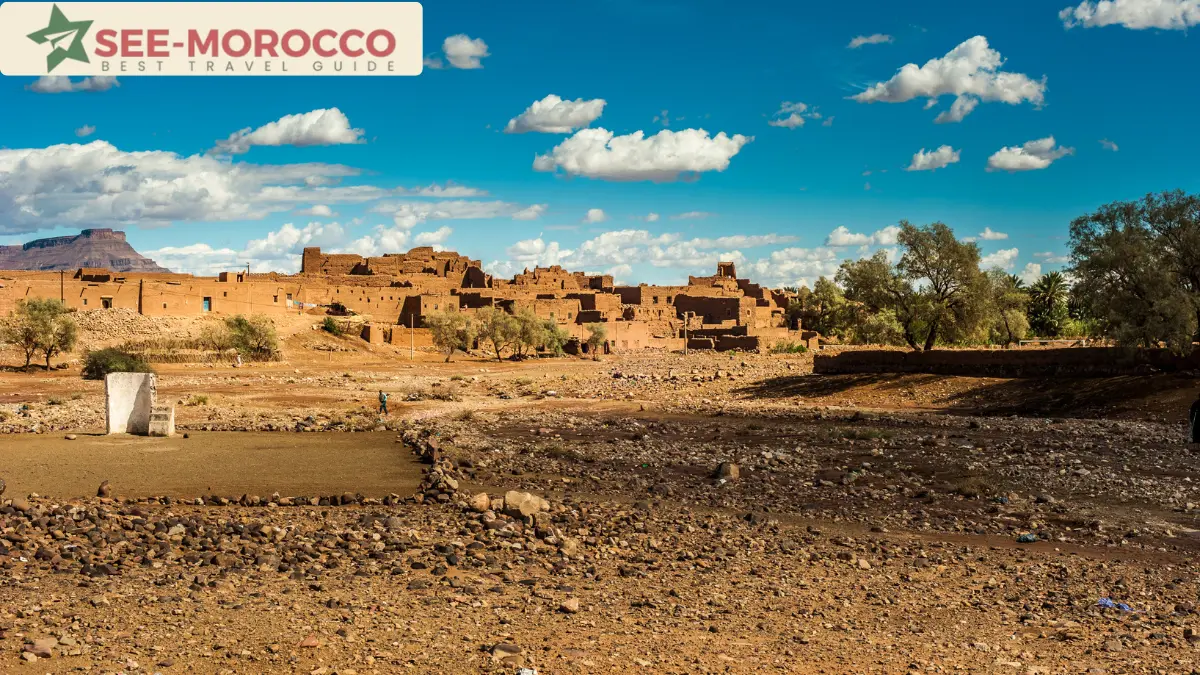
The Dades doesn’t have the single famous landmark that pulls the crowds, which is exactly why it’s worth it. What you get instead is the drive of a lifetime up those switchbacks, the bizarre beauty of the Monkey Fingers, green valley floors against red rock, and villages where life still runs at the pace of the river.
Coming from Ouarzazate, this is one of the routes I’d send any traveller on without hesitation. Take the road slowly, stop at the café at the top, and let the canyon do the rest.
FAQ — Dades Gorge
Where is the Dades Gorge? The Dades Gorge is in the High Atlas Mountains of southern Morocco, reached via Boumalne Dades, about 1.5–2 hours northeast of Ouarzazate along the Valley of a Thousand Kasbahs.
What are the “Monkey Fingers” in the Dades Gorge? They’re large, smooth, finger-like rock formations on the canyon walls, shaped by wind and water over thousands of years. They’re one of the gorge’s most distinctive natural features.
What is the famous Dades Gorge road? It’s a series of tight switchbacks (hairpin bends) climbing the canyon wall — one of the most photographed roads in Morocco. There’s a café at the top with a view back down over the bends.
How do I get to the Dades Gorge from Ouarzazate? Drive northeast toward Boumalne Dades (about 1.5–2 hours), passing Skoura’s palm oasis and the kasbah route, then turn up into the gorge. Self-driving is the best option.
Dades or Todra Gorge — which is better? Dades is known for its switchback road and Monkey Fingers rock formations; Todra is narrower and more dramatic at its tightest point. If possible, visit both — they’re close together and quite different.
What is the best time to visit the Dades Gorge? Spring (March–May) is ideal — the valley is green, the river is full, and the nearby Rose Valley blooms. Autumn is also excellent. Nights get cold in winter.
Is the Dades Gorge worth visiting? Yes. It’s one of southern Morocco’s most underrated drives, with dramatic canyon scenery, strange rock formations, and green valley villages — best experienced by staying overnight rather than rushing through.
Can you stay overnight in the Dades Gorge? Yes — there are many small family-run hotels and guesthouses along the gorge, many facing the canyon. Staying over lets you see it early and late, when it’s quietest and most beautiful.
Planning the Dades and Todra loop from Ouarzazate? Leave a comment below — I answer every one personally.