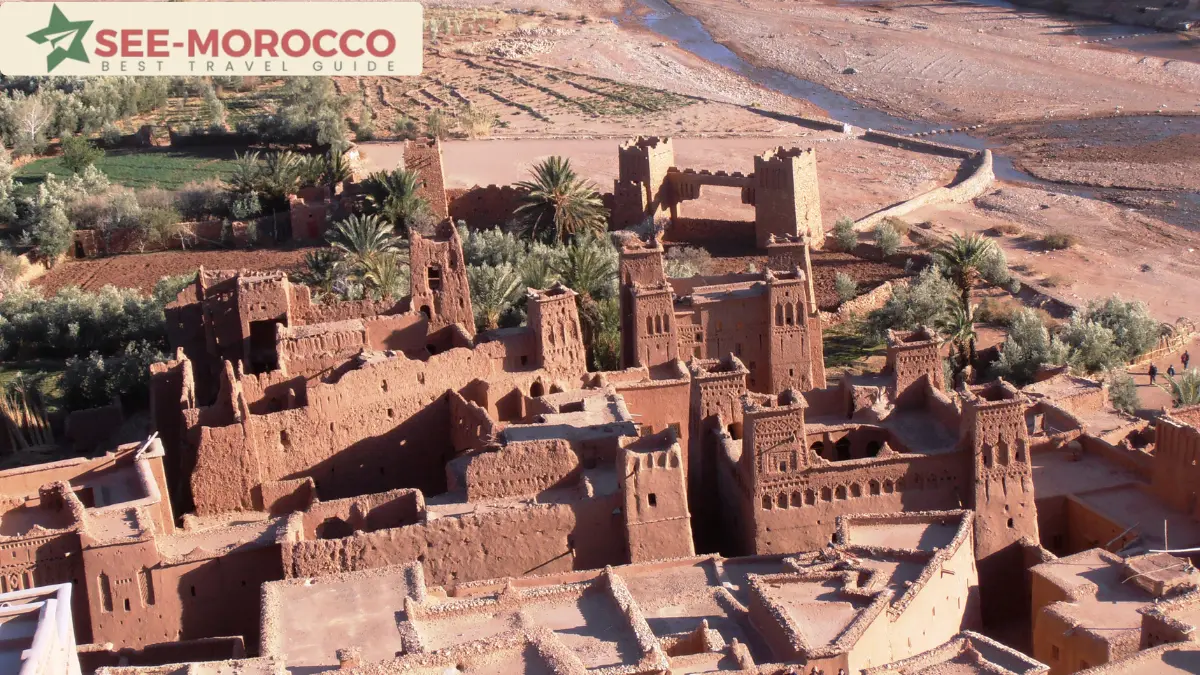
I’m from Ouarzazate, about 30 kilometres from Aït Benhaddou. This is the most famous landmark near my home town — the mud-brick ksar that’s stood in for ancient Jerusalem, Egypt, and a dozen fantasy kingdoms on screen. I first saw it as a kid, the way most people from Ouarzazate do, long before I understood why film crews from all over the world kept showing up to point cameras at it.
So this isn’t a guide written from a guidebook. It’s written from the region that the ksar belongs to. Here’s what Aït Benhaddou actually is, why it matters, and what you should know before you go.
What Aït Benhaddou Actually Is
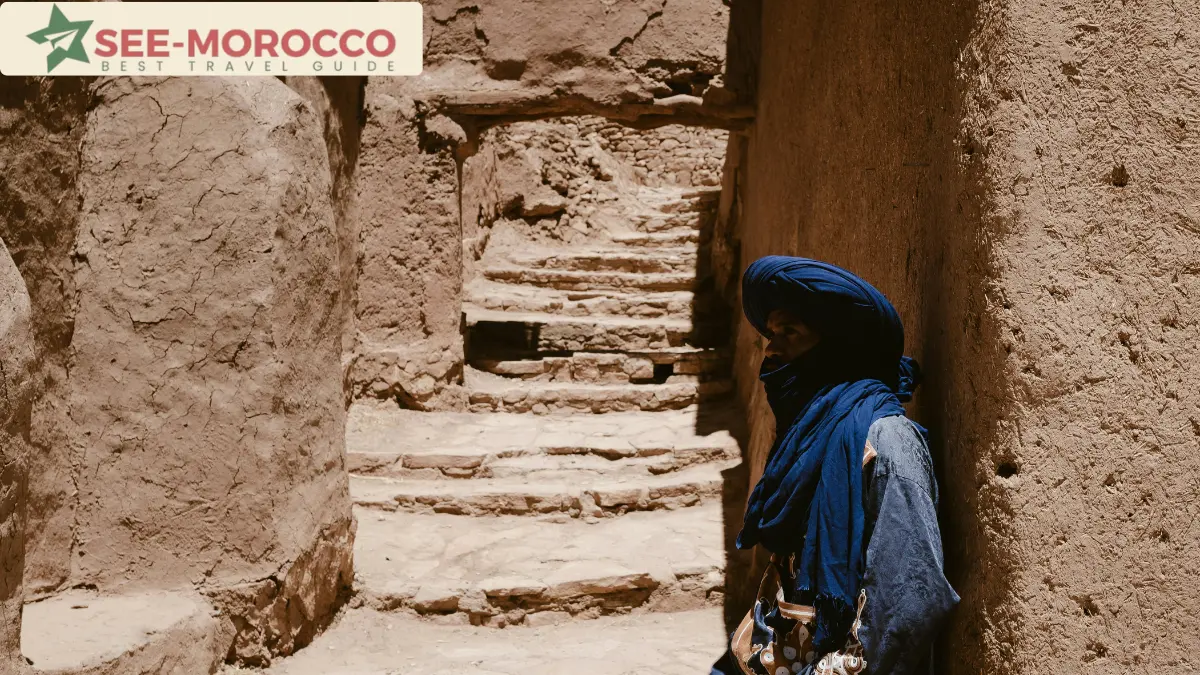
Aït Benhaddou is a ksar — a fortified village of earthen buildings clustered together behind defensive walls — on the old caravan route between the Sahara and Marrakech. It rises up a hillside on the edge of the Ounila Valley, all the same reddish mud-brick colour as the earth it’s built from.
It became a UNESCO World Heritage Site in 1987, recognised as one of the best surviving examples of southern Moroccan earthen architecture.
A common myth, repeated in a lot of online guides, is that the buildings date to the 11th century. The site has been inhabited that long, but most of the structures you see today were built from the 17th century onward. That doesn’t make it less impressive — it makes it more accurate.
Why It’s Famous: The Film History
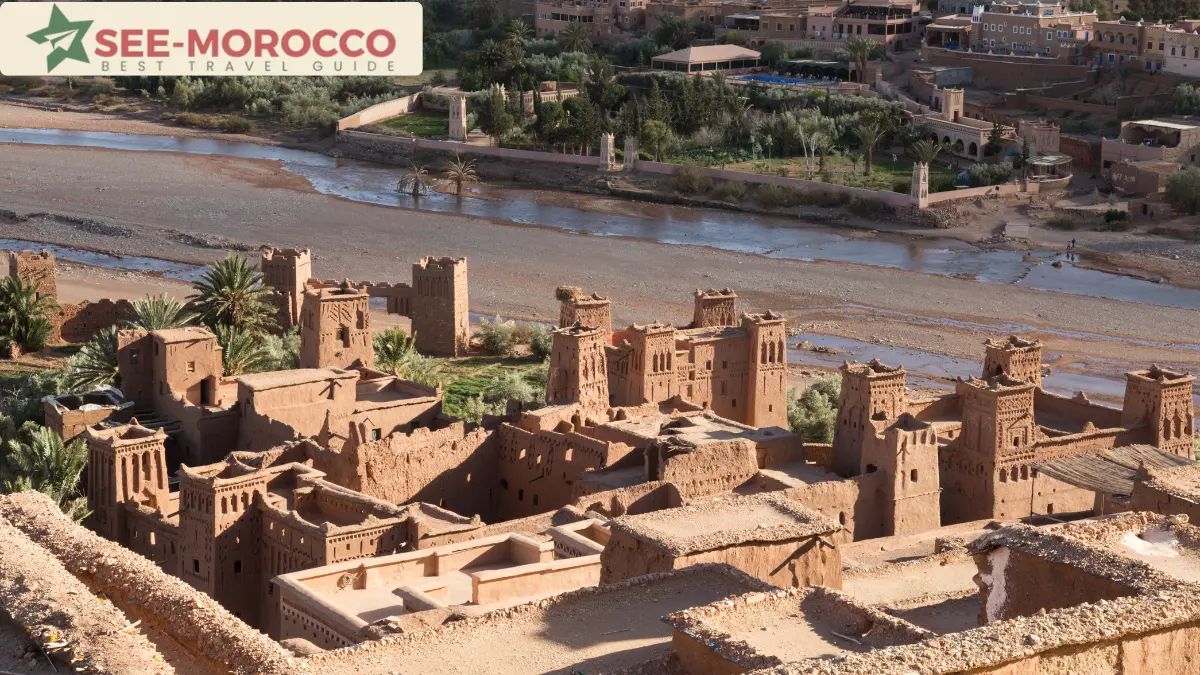
Here’s where my home region comes in. Ouarzazate is the centre of Morocco’s film industry — home to Atlas Studios and CLA Studios, two of the largest studio complexes in the world. Aït Benhaddou, just up the road, has been one of cinema’s favourite backdrops for over fifty years.
A short list of what was filmed here:
- Lawrence of Arabia (1962)
- The Man Who Would Be King (1975)
- The Jewel of the Nile (1985)
- The Last Temptation of Christ (1988)
- The Mummy (1999)
- Gladiator (2000) — the slave-market scenes
- Kingdom of Heaven (2005)
- Game of Thrones — Daenerys’s city of Yunkai
- Prince of Persia (2010)
For people in and around Ouarzazate, this isn’t trivia — many locals have worked as extras, crew, and set builders across these productions. The film industry is part of the region’s living economy, not just its scenery.
Getting to Aït Benhaddou
The ksar sits between Marrakech and the desert, which is why almost everyone passes it on the way south.
From Ouarzazate: About 30 km, roughly 30–40 minutes by road. This is the easy approach, and Ouarzazate makes the best base if you want to take your time. More on Ouarzazate here.
From Marrakech: Around 4 hours, crossing the High Atlas over the spectacular Tizi n’Tichka pass. Most people visit Aït Benhaddou as part of a desert tour heading toward Zagora or Merzouga, and it’s the natural first major stop. What to know about the Atlas crossing.
Options: Organised tours from Marrakech almost always include it. Self-drive is straightforward — the road is paved and well signed. There’s no direct public transport to the ksar itself; the nearest buses stop on the main road and you’d finish by taxi.
Visiting the Ksar: What to Expect
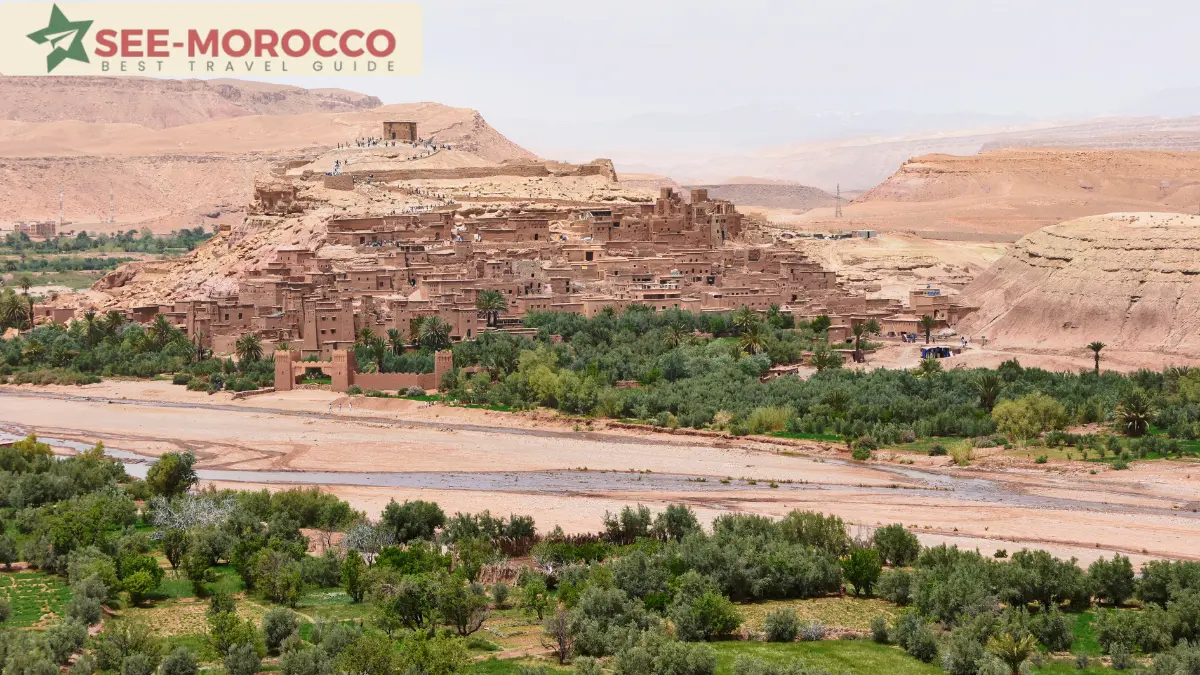
The old ksar sits across a shallow river from the modern village. For most of the year you can simply walk across — there are stepping stones and, when the water is higher, a small bridge upstream.
A handful of families still live inside the old ksar, though most residents have moved to the newer village on the near bank. As you climb the narrow lanes, you’ll pass small shops, a few cafés, and artisans — some genuine, some selling to the tour-bus flow. The climb to the agadir (the old fortified granary) at the very top takes 20–30 minutes at an easy pace.
The view from the top is the payoff: the Ounila Valley spread out below, the palm groves along the river, and the desert hills rolling away toward the south. This is the shot you’ve seen in every film set here.
Best Time to Visit
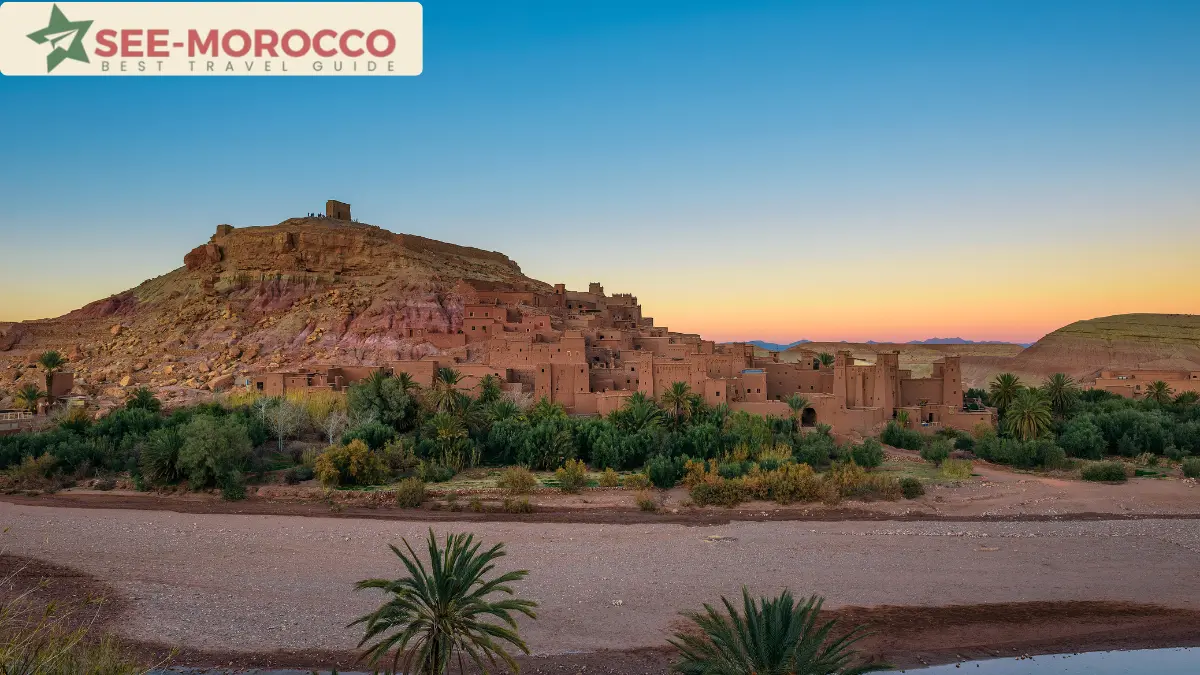
Early morning or late afternoon, without question. Two reasons:
- Light. The mud-brick glows gold at the start and end of the day. Midday sun flattens it.
- Crowds. Tour buses from Marrakech tend to arrive late morning to midday. Get there at opening or stay into the late afternoon and you’ll have a very different, quieter experience.
Season: Spring (March–May) and autumn (September–November) are ideal. Summer middays are punishingly hot in this part of Morocco; winter is mild by day but cold at night.
If you can, stay overnight at one of the small hotels facing the ksar. Watching it change colour at sunset, then light up after the day-trippers have gone, is the version most visitors miss.
Practical Tips
- Entrance: There’s no single official ticket gate for the ksar itself; it’s an inhabited site. Some of the individual kasbahs and the climb may involve a small fee or a tip to a resident guide. Carry small cash.
- Wear proper shoes. The lanes and the climb are uneven earth and stone.
- Crossing the river: Usually easy on foot, but after rain the water rises — check before you commit to stepping stones.
- Guides: Not essential, but a local guide adds real context about the architecture and the film history. Arrange through your hotel rather than accepting the first offer at the entrance.
- Combine it. Aït Benhaddou pairs naturally with Ouarzazate’s Atlas Studios and Taourirt Kasbah, or as the first stop on a desert route south.
Is Aït Benhaddou Worth Visiting?
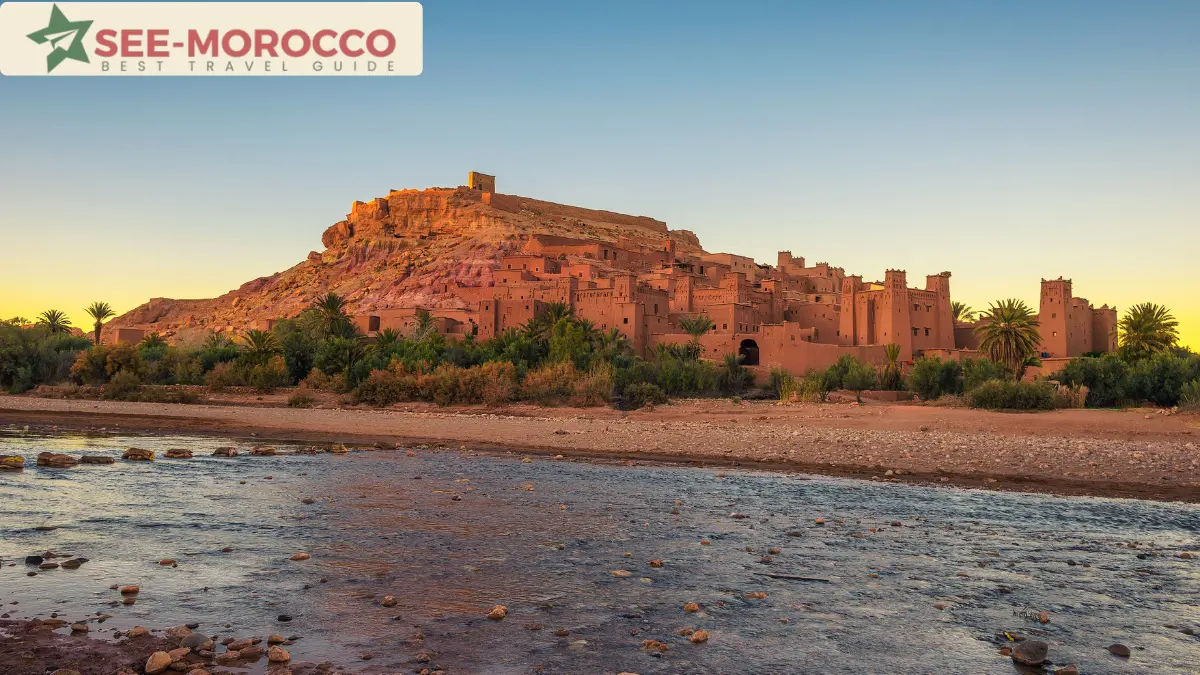
Yes — and not just because it’s on the way.
Aït Benhaddou is the single most striking example of the earthen architecture that defines southern Morocco. It’s genuinely old, genuinely lived-in, and genuinely the place where a huge chunk of desert cinema was shot. The trick is how you visit: arrive early or late, give yourself time to climb to the top, and ideally stay the night.
Do it that way and it earns every bit of its fame. Rush through at midday with fifty tour buses and you’ll wonder what the fuss was about. The ksar rewards the people who slow down — which, from someone who grew up next door, is exactly how it should be.
FAQ — Aït Benhaddou
What is Aït Benhaddou? Aït Benhaddou is a fortified earthen village (ksar) in southern Morocco, near Ouarzazate, on the old caravan route to the Sahara. It’s a UNESCO World Heritage Site famous for its mud-brick architecture and its long history as a film location.
How old is Aït Benhaddou? The site has been inhabited for around a thousand years, but most of the buildings standing today date from the 17th century onward, not the 11th century as is often claimed.
What films were shot at Aït Benhaddou? Many, including Lawrence of Arabia, Gladiator, Kingdom of Heaven, The Mummy, Prince of Persia, and Game of Thrones. Its proximity to Ouarzazate’s film studios makes it one of cinema’s most-used desert backdrops.
How do I get to Aït Benhaddou? It’s about 30 minutes from Ouarzazate and around 4 hours from Marrakech over the Tizi n’Tichka pass. Most visitors come on a desert tour or by self-drive; there’s no direct public transport to the ksar itself.
How long do you need at Aït Benhaddou? Two to three hours is enough to cross the river, explore the lanes, and climb to the granary at the top. Staying overnight nearby lets you see it at sunset and after the crowds leave.
What is the best time to visit Aït Benhaddou? Early morning or late afternoon for the best light and fewest crowds. Spring and autumn are the most comfortable seasons; avoid summer middays, which are extremely hot.
Is Aït Benhaddou worth visiting? Yes — it’s the finest example of southern Moroccan earthen architecture and a genuine film landmark. Visit early or late and take time to climb to the top to get the most from it.
Do people still live in Aït Benhaddou? A few families still live inside the old ksar, though most residents have moved to the modern village across the river. It remains an inhabited site rather than a museum.
Planning to stop at Aït Benhaddou on your way south? Leave a comment below — I answer every one personally.