Errachidia rarely makes it onto Morocco itineraries. I spent a day there in winter with a group of friends, driving in from Ouarzazate, and what stayed with me wasn’t a single landmark. It was how quiet the whole place felt. We stayed the night in town and drove on the next morning.
The Road In: Ouarzazate to Errachidia via Tinghir and Todra Gorge
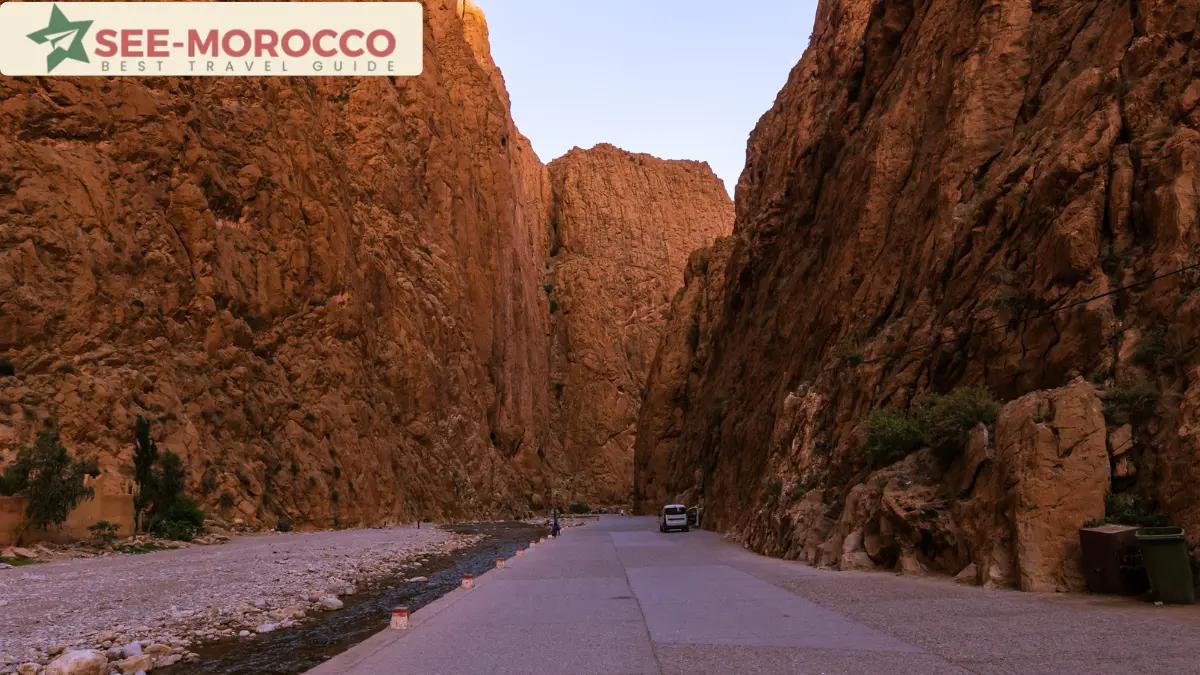
The main road from Ouarzazate to Errachidia runs through Tinghir and is around 300 km. We added the detour into Todra Gorge, and the whole drive took us about 5 hours. The gorge is the part worth slowing down for: the rock walls close in on both sides of the road before the landscape opens up again toward the Ziz Valley.
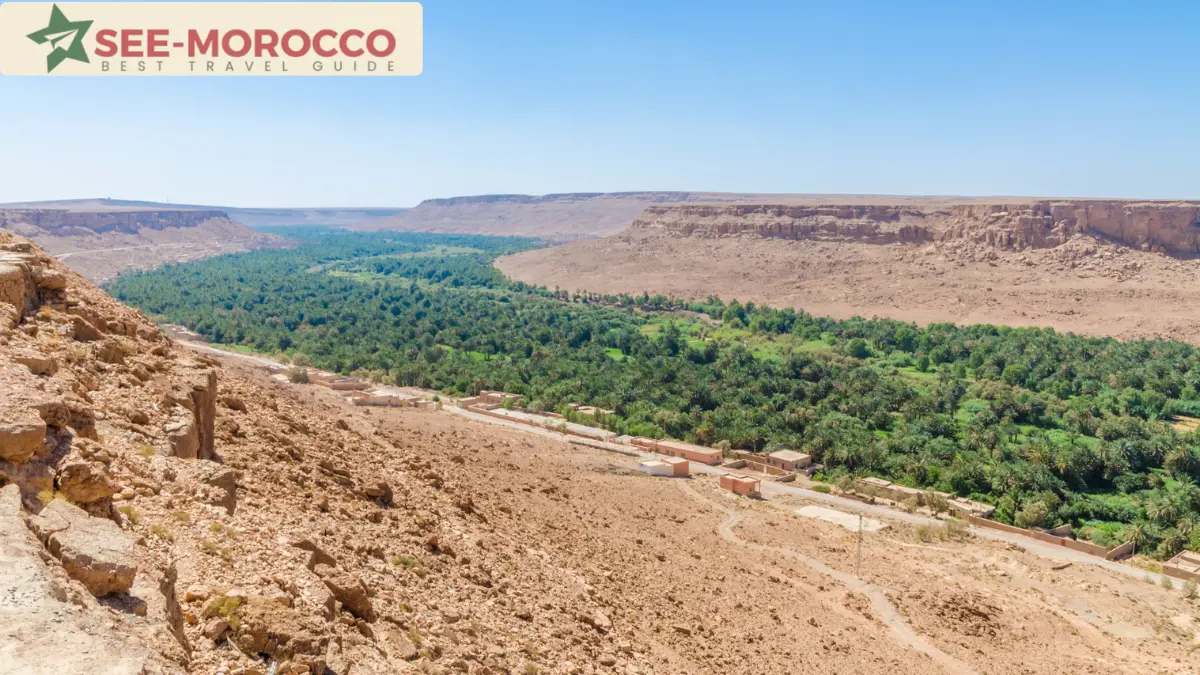
By the outskirts of Errachidia, the scenery had changed completely. The dry, rocky terrain of the drive out of Ouarzazate gave way to palm trees, dense groves along the valley floor, part of the palm oasis that follows the Oued Ziz (Ziz River).
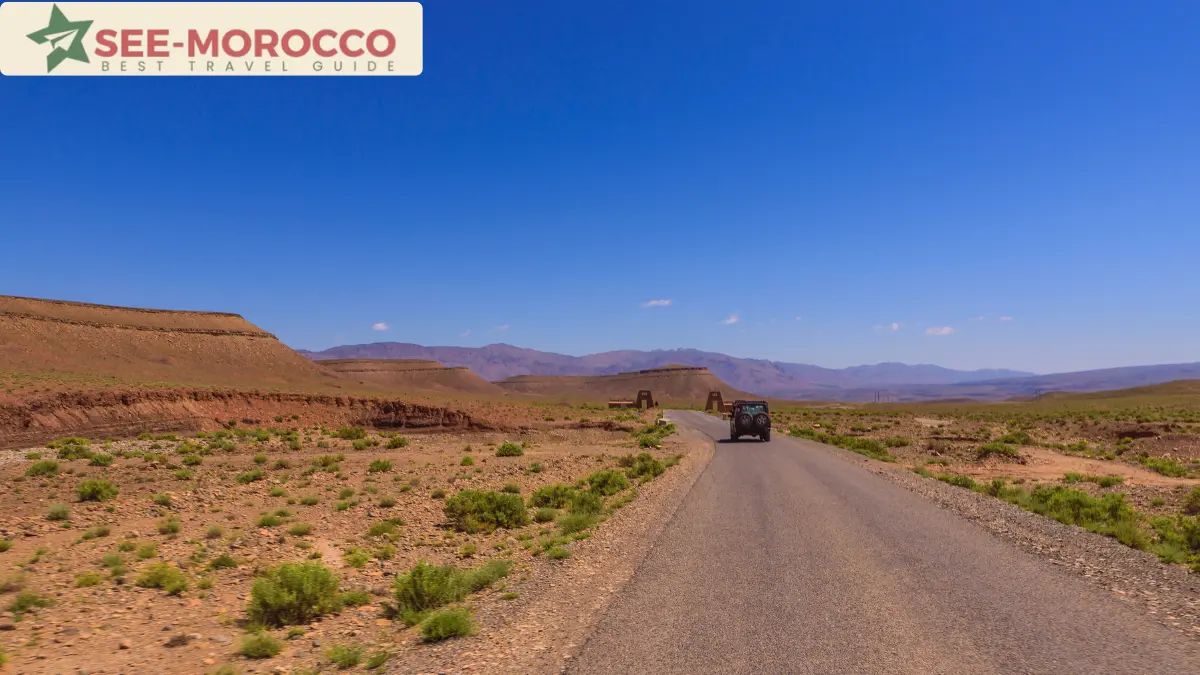
Ziz Valley: A Different Kind of Desert Landscape
What struck all of us was how much green there was. The palms weren’t scattered; they ran in thick bands along the river, with mud-brick villages (ksour) tucked between them. After hours of dry mountain road, that much green felt almost unexpected.
The groves are working farmland, irrigated by channels drawn from the Oued Ziz. Dates are the main crop, and the region is known across Morocco for them.
Source Bleue de Meski: A Detour We Didn’t Have Time For
The Source Bleue de Meski is a natural spring about 16–20 km from Errachidia’s city center, set in a small oasis with a pool, next to the ruins of the old Ksar Meski. We didn’t have time to stop, so I can’t describe it from experience the way I can the rest of this route.
Recent visitor reports describe it as an easy detour if you’re already on the Ziz Valley road, usually combined with a stop in Errachidia rather than visited on its own.
The Quiet
If one word sums up Errachidia for us, it’s quiet. Compared with Ouarzazate, it felt noticeably calmer: fewer crowds, nobody chasing you to sell something, a slower pace. It’s a working town more than a tourist one, and that shows in a good way.
Erfoud: The Fossil Town Down the Road
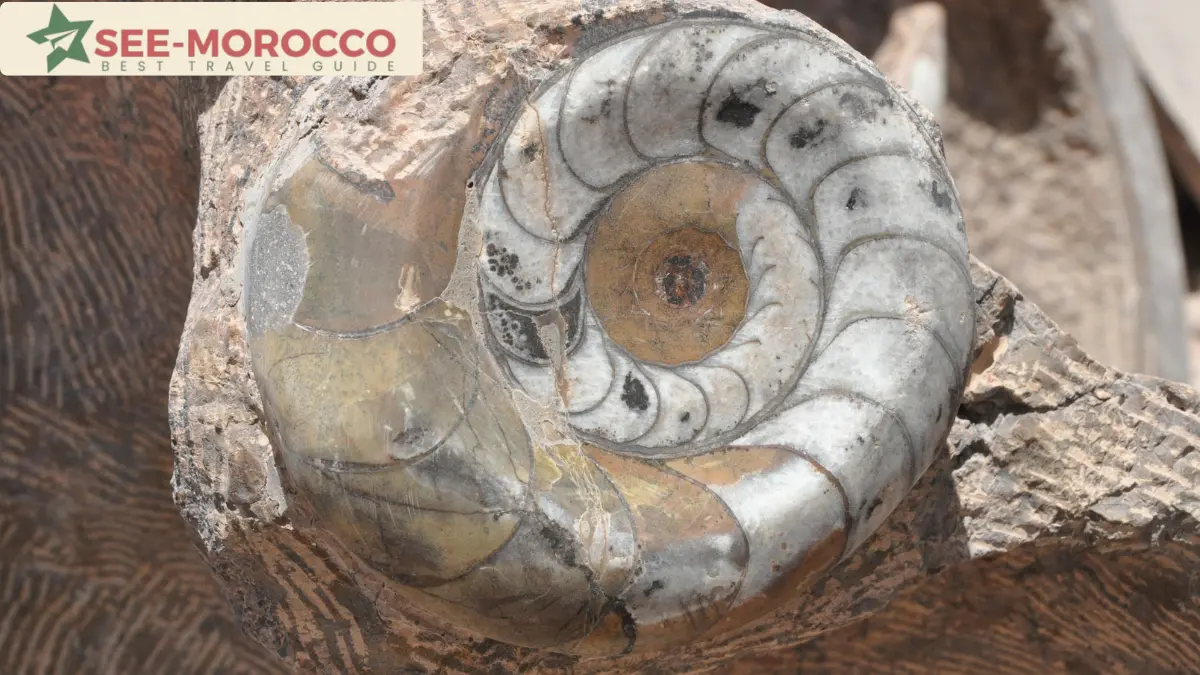
About 75–80 km south of Errachidia on the N13 sits Erfoud. We didn’t stop there on this trip, but the town is known across Morocco for fossils. The surrounding area sits on ancient marine limestone full of fossilized trilobites and ammonites, from a time when this region was under a shallow sea.
Workshops in and around Erfoud cut, polish, and sell these fossils, and the town holds an annual date festival. For most travelers, Erfoud is a practical stop on the N13 toward Rissani, Merzouga, and the Erg Chebbi dunes.
If you’re driving this corridor with some time to spare, a short stop at the fossil workshops is worth it.
Watching the Sunset Over the Valley
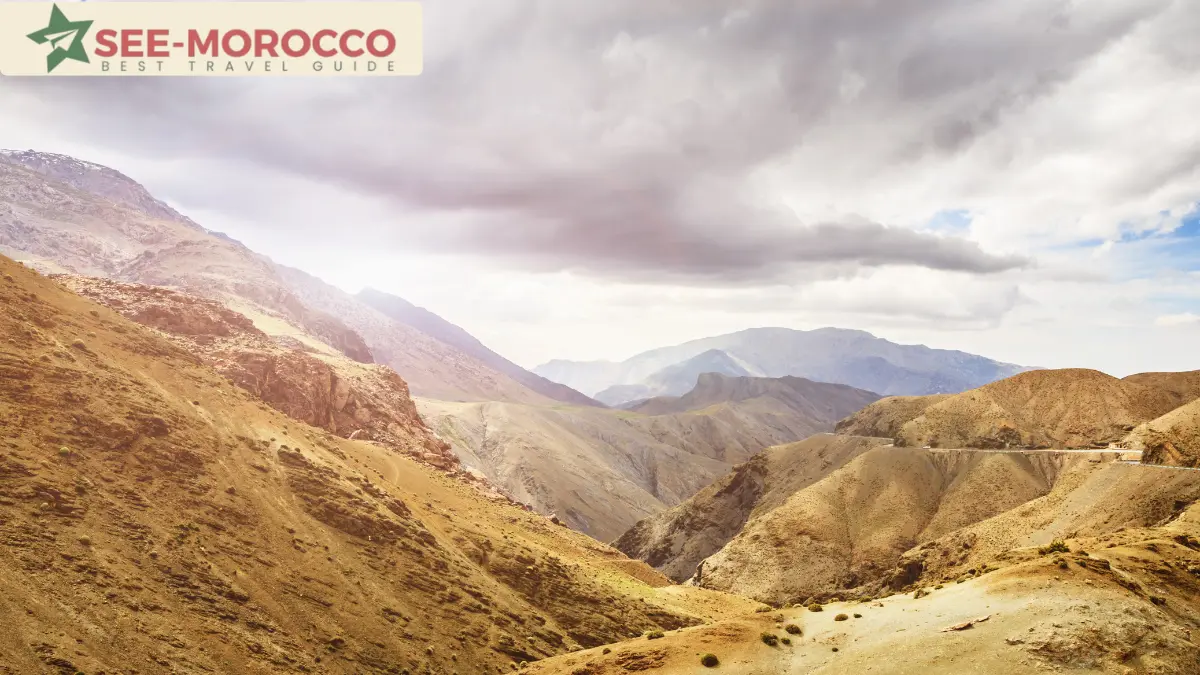
We ended the day at a viewpoint over the valley. As the sun dropped, the light moved across the palm groves and the river below, and that was the moment the long drive felt worth it.
Practical Tips for Visiting Errachidia
How to get there: By road from Ouarzazate via Tinghir (around 300 km; we took about 5 hours with the Todra Gorge detour), or from Fez and Midelt to the north via the Ziz Valley road. Errachidia also has a small regional airport, Moulay Ali Cherif, a few kilometers north of the city, with a limited number of flights.
Best time to visit: We went in winter, and the mild daytime temperatures made walking around and stopping at viewpoints comfortable. Summer in the Ziz Valley gets very hot, so spring, autumn, or winter are better choices.
What to do with a day: One day is enough to drive through the palm groves, stop in town, and catch a sunset from a viewpoint. With more time, add the Source Bleue de Meski or the fossil workshops in Erfoud.
Where it fits in a wider trip: Errachidia sits on the Ziz Valley corridor, so it works as a stop between Ouarzazate/Todra Gorge and Merzouga, or as the link between the south and Fez.
Frequently Asked Questions About Visiting Errachidia
Is Errachidia worth visiting on a Morocco trip? Yes, if you’re already driving between Ouarzazate/Todra Gorge and the Sahara or Fez. The draw is the drive through the Ziz Valley’s palm oasis and the calm of the town, not big attractions.
How far is Errachidia from Ouarzazate? Around 300 km by road via Tinghir. With a detour into Todra Gorge, it took us about 5 hours.
What is the Ziz Valley known for? Its palm oasis along the Oued Ziz, mud-brick ksour villages, and date farming.
Is one day enough to see Errachidia? A day is enough to drive through, see the palm groves, and watch a sunset from a viewpoint. Add half a day for the Source Bleue de Meski or Erfoud.
What’s the best time of year to visit? Winter, spring, and autumn. Summer temperatures in the Ziz Valley climb high.
Does Errachidia have an airport? Yes, Moulay Ali Cherif Airport, a few kilometers north of the city, with a limited number of flights. Most visitors arrive by road.
How far is Source Bleue de Meski from Errachidia? About 16–20 km from the city center. It’s usually visited as a short add-on stop, not a day trip on its own.
How far is Erfoud from Errachidia? About 75–80 km south on the N13. Erfoud is known for its fossil workshops and is a common stop on the way to Merzouga.
Final Thoughts
Errachidia won’t headline a Morocco itinerary. What it gave us was a green break on a long route: palm groves after hours of rock, a slower pace than Ouarzazate, and a sunset over the Ziz Valley that made the drive worth it.