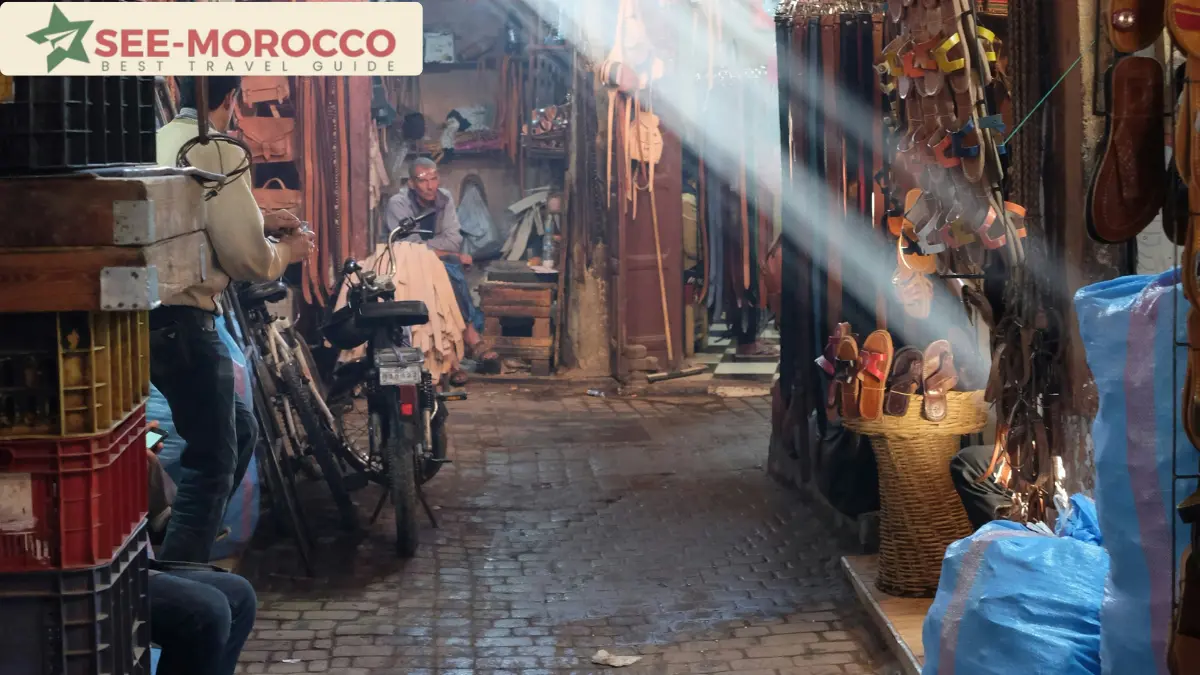
I’ll be straight with you before we start: I’m from Ouarzazate, the gateway to the Sahara. I haven’t traveled Morocco as a backpacker on a tight budget myself — I live here. But I’ve watched a lot of travelers come through, and I’ve seen exactly where they save money and where they get quietly overcharged. That’s the angle of this guide.
Most “Morocco on a budget” articles online are written by people who spent ten days here and now talk like locals. The prices they quote are often outdated, the tips are recycled, and the warnings miss the real traps. I’ll give you what I actually know, including a few things Moroccan travel blogs won’t tell you.
What Morocco on a budget actually costs in 2026
The honest number, based on current prices: doing Morocco on a budget means around 300–500 MAD per day (roughly $30–$50), excluding flights. A mid-range trip sits closer to 700–1,200 MAD per day.
One thing to know going in: prices in Morocco have gone up noticeably since 2024, especially for accommodation in the big tourist cities because of the World Cup that Morocco is co-hosting with Spain and Portugal. So 2026 is genuinely a better year to come than 2028 or 2029 will be. That’s not marketing — it’s just what’s happening to the market.
Here’s a rough daily breakdown for a budget trip:
| Category | Daily cost (MAD) | Notes |
|---|---|---|
| Hostel dorm or basic guesthouse | 100–250 | Cheaper outside Marrakech and Fes |
| Three meals (mix of street food and small restaurants) | 80–150 | Tagine in a popular neighborhood: ~25 MAD. The same dish in a tourist zone: 100 MAD |
| Local transport (petit taxi, shared grand taxi) | 30–60 | Inside cities |
| Sightseeing entries and small extras | 50–100 | Most medinas are free to walk |
That’s around 260–560 MAD a day. Intercity travel and any desert tour sit on top of that.
The two-price system nobody warns you about
This is the most important thing in this article, so I’m putting it early.
There’s a quiet two-price system in Morocco. I know a shop owner personally — in a small area with no nearby gas station, so he sells fuel from a barrel on the side. The margin is fair. The problem is he has one price for Moroccans and a higher one for tourists. And it’s not just the fuel — it’s everything else on his shelves.
I’m not telling you this to scare you. I’m telling you because most travelers never realize it’s happening. The “broken” taxi meter in Marrakech is rarely actually broken. The bottle of water in a tourist area is rarely the real price. The “special price for you, my friend” in the souk is almost never special. None of this is malicious in the way Western travelers sometimes read it — it’s just how the market behaves when foreigners are involved. Locals haggle for everything too.
How you protect yourself: before you buy anything that doesn’t have a printed price, ask a Moroccan you trust — your riad host, a waiter, a young shopkeeper who speaks English — what it should cost. Once you know the real price, every conversation changes.
Getting around without getting fleeced
Morocco’s transport network is one of the best things about traveling here on a budget. You don’t need to rent anything to see the whole country.
CTM and Supratours buses
These are the two big intercity bus companies, and they’re genuinely good. Air-conditioned, assigned seating, on time, safe. Some sample fares in 2026:
- Tangier → Chefchaouen: ~50 MAD (2.5 hours)
- Marrakech → Casablanca: 90–130 MAD (3 hours)
- Marrakech → Essaouira: 70–80 MAD (2.5 hours)
- Ouarzazate → Rabat: ~180 MAD (the one I know well — about 8 hours)
Bring 5–10 MAD in coins for the luggage handler. They’ll give you a small paper receipt — don’t lose it, you need it to get your bag back. Book CTM online or at the station the day before during peak season.
Grand taxis (the shared kind)
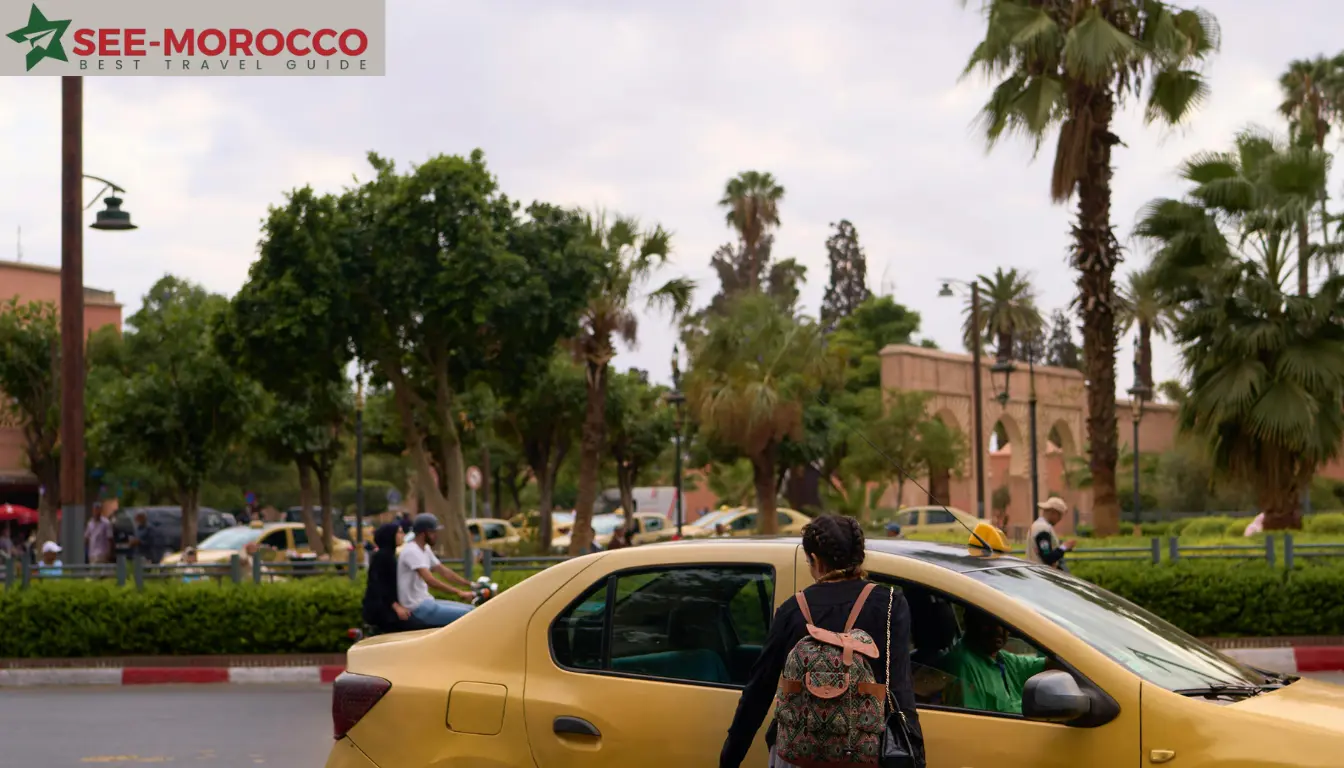
A grand taxi is a cream-colored sedan, usually a Mercedes from the 1980s, that fits six passengers — two in front, four in the back. Yes, it’s tight. They follow fixed routes between towns and leave when full.
Prices are set by the government per distance, but you’ll be quoted “per seat.” A few examples:
- Casablanca → Rabat: 40–60 MAD per seat
- Marrakech → Essaouira: 80–120 MAD per seat
- Fes → Meknes: 30–50 MAD per seat
If you privatize the whole car (no waiting, more space), expect to pay roughly five to six times the per-seat price.
Trains
The ONCF train network connects Tangier, Rabat, Casablanca, Marrakech, and Fes, and the experience is comfortable. Fes → Rabat is around 90 MAD in second class. Book in advance on the ONCF website for the high-speed Al Boraq train between Tangier and Casablanca — it’s worth it.
Car rental: read this before you book
Prices depend heavily on the car and the season. Recent visitor reports put a basic economy car at around 350–600 MAD a day in summer.
If you see a price much below 250 MAD per day, treat it with suspicion. The common scam is to rent you a car, then claim damage at return — damage that was already there. Before you drive off the lot, film a slow walk-around video of the entire car: every panel, every wheel, the windshield, the interior. Open the doors. Show the timestamp. Keep that video until your deposit is back in your account.
The other thing nobody mentions: Moroccan roads outside cities can be narrow, and other drivers behave in ways that take getting used to. If it’s your first trip and you don’t need a car, take CTM and grand taxis. You’ll see more and stress less.
Where to sleep cheap
Morocco has more affordable beds than almost any country I’ve seen. The options:
- Hostel dorm bed: 100–150 MAD in cities like Marrakech, Fes, and Chefchaouen.
- Private room in a small guesthouse: 200–300 MAD. Often includes breakfast.
- Basic riad room: from 300 MAD. A riad is a traditional Moroccan house built around an interior courtyard, and even the cheapest ones feel like staying somewhere with character rather than a hotel room.
- Mid-range riad in Chefchaouen or Essaouira: usually cheaper than the equivalent in Marrakech or Fes.
Ouarzazate, my hometown, doesn’t really have hostels — but private guesthouse rooms start around 150 MAD, which is the same price as a dorm bed elsewhere. Worth knowing if you’re heading toward the desert.
Book the first two nights of your trip before you arrive. After that, walk into places — you can almost always negotiate the listed price down 10–20% if it’s not peak season, especially if you’re staying more than one night.
Eating well for very little
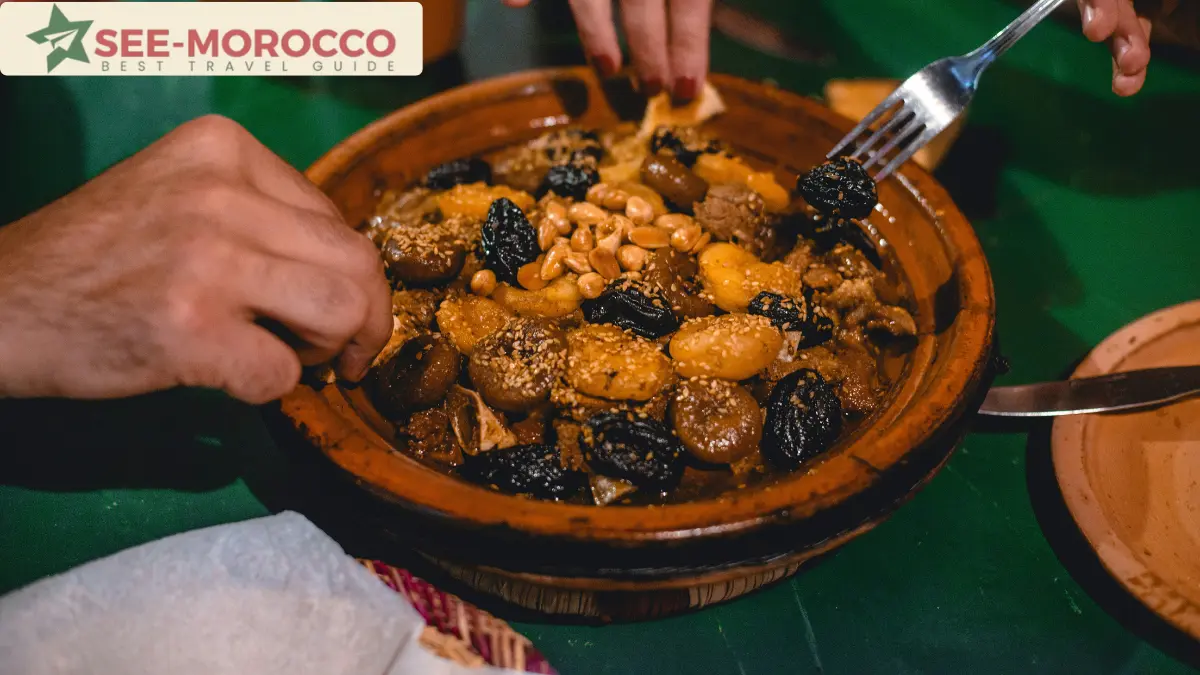
Food is where Morocco really shows off for budget travelers. The trick is knowing where the locals eat.
Real prices I can quote you:
- A plate of chicken tagine in a popular neighborhood: around 25 MAD
- The same tagine in a tourist street: 80–100 MAD
- A plate of couscous (the traditional Friday meal): around 100 MAD in tourist restaurants, less in popular neighborhoods
- A msemen with cheese or honey from a street cart: 5–10 MAD
That tagine price gap — 25 MAD vs 100 MAD for the same dish — is the single biggest budget lever in Morocco. The food itself is identical. You’re paying for the location and the menu in English.
Rules of thumb for finding the real prices:
- If the restaurant has photos of every dish on a stand outside, you’re paying tourist rates.
- If older Moroccan men are eating there at lunch, the food is good and the price is fair.
- Markets are everywhere — buy bread, olives, cheese, and oranges and make a picnic for under 30 MAD.
The Sahara on a budget
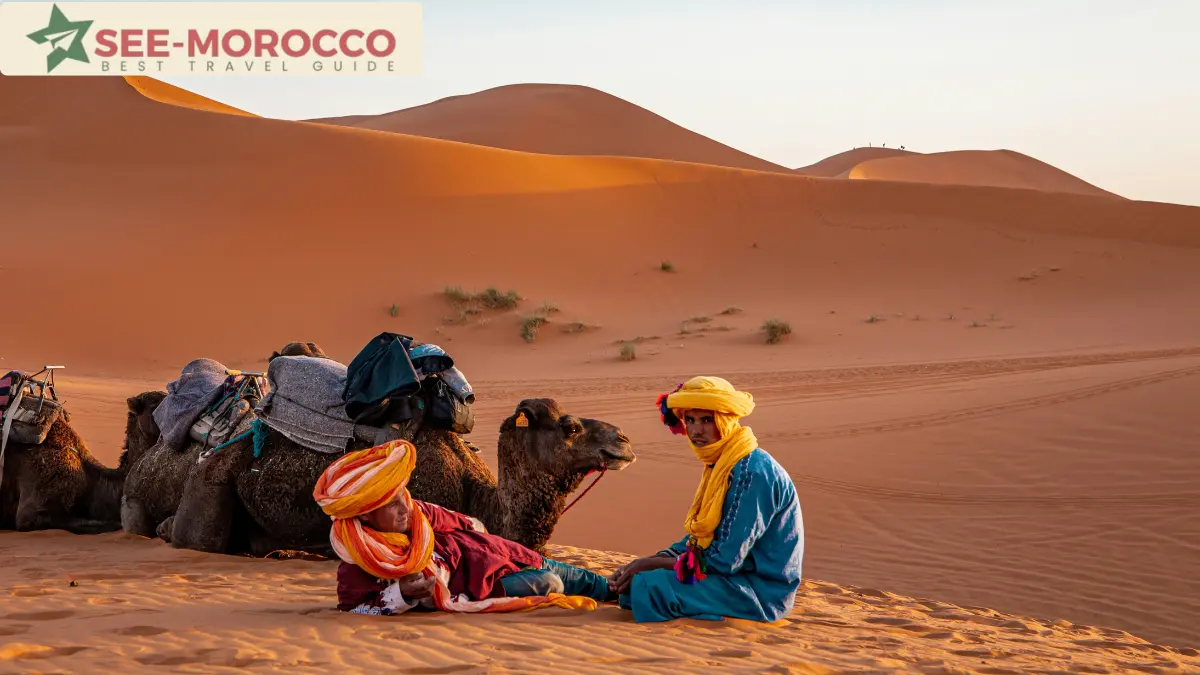
This is the part of the country I know best. A few honest things:
A 3-day group desert tour from Marrakech to Merzouga and back runs about 140–375 euros per person (roughly 1,500–4,000 MAD), depending on group size and camp quality. Budget camps with shared bathrooms and basic Berber tents cost 400–600 MAD per night including dinner and breakfast. The luxury versions with private bathrooms run 800–1,200 MAD a night.
Practical tips from someone who lives near the dunes:
- Group tours are dramatically cheaper than private tours, and the experience in the desert itself is the same. The difference is comfort during the long drive.
- Going from Marrakech is the expensive way. If you can get yourself to Ouarzazate by CTM bus first (around 80–100 MAD), then book a 2-day tour from there, you’ll cut the price significantly and skip a full day of driving. If you want to see how this fits into a full week, I put together a 7-day Morocco itinerary that builds the trip around Ouarzazate as a hub.
- Christmas, New Year and the spring holidays are when desert camp prices go up the most because that’s when temperatures are bearable. Summer is much cheaper but genuinely brutal at midday.
Touristy things that are worth haggling for
A horse carriage (kouchi) ride in Marrakech is technically a tourist trap, but locals use them too. The first price you’ll be quoted is around 300 MAD for an hour. After honest negotiation, the real price is 200–250 MAD. Don’t pay the opening number. Walk away once; they’ll call you back.
Same logic applies to:
- Henna in Jemaa el-Fnaa (agree on a price before she touches your hand)
- Souk purchases (start at 30% of the asking price, settle around 50–60%)
- “Guides” who attach themselves to you in the medina (politely refuse from the first second)
Free things that don’t feel free
The best moments in Morocco often cost nothing:
- Walking the Fes medina at sunrise before the shops open
- The view from the Spanish Mosque overlooking Chefchaouen
- The terrace of any café on Jemaa el-Fnaa at dusk (just buy a mint tea, around 15 MAD)
- The beach at Essaouira when the wind is up and the kitesurfers are out
- The Hassan II Mosque exterior in Casablanca at sunset (the interior tour costs 130 MAD and is worth it)
A note about 2026 specifically
If you’re reading this in 2026, you’re in a small window. Prices are still close to historical norms but already trending up because of pre-World Cup infrastructure spending.Hotel prices in Marrakech, Casablanca and Rabat are rising, and with the 2030 World Cup ahead, that’s unlikely to reverse soon.. That doesn’t mean Morocco will become expensive — but the era of $20 nights in a beautiful riad is closing.
Come now if you can.
A short, honest conclusion
Morocco is one of the easiest countries in the world to travel cheaply, if you’re willing to do two things: eat where Moroccans eat, and ask before you pay. Most overspending here doesn’t come from luxury — it comes from not knowing the real price of things. Now you do.
If you have specific budget questions about a region or a kind of trip, leave a comment. I’ll answer honestly.
Travel Morocco on a budget the way locals actually do, and you’ll spend less and see more than the tourists who don’t.
Frequently asked questions
How much money do I really need per day in Morocco?
If you’re staying in hostel dorms, eating where Moroccans eat, and using buses and grand taxis, you can do Morocco on a budget comfortably for 300–500 MAD per day ($30–$50). That includes a bed, three meals, and local transport. Add roughly 100–200 MAD per day if you want private rooms instead of dorms, or if you plan one tagine meal a day at a sit-down restaurant rather than street food.
Is Morocco still cheap in 2026?
For Western and European travelers, yes — Morocco remains one of the better-value destinations in the Mediterranean region. But it’s noticeably more expensive than it was in 2023. Accommodation prices in the major tourist cities have risen noticeably since 2024, and they’re projected to keep climbing through 2030 because of the FIFA World Cup that Morocco is co-hosting with Spain and Portugal. The cheap end of the market still exists; the luxury and mid-range ends are catching up to European prices fast.
What’s the cheapest way to travel between Moroccan cities?
For distances over two hours, CTM and Supratours buses are unbeatable on the combination of price, comfort, and reliability. Tangier to Chefchaouen is around 50 MAD. Marrakech to Casablanca is 90–130 MAD. For shorter trips between nearby towns, shared grand taxis are slightly cheaper and faster but much less comfortable — they leave when six passengers are inside, and “six” is interpreted generously.
How do I avoid paying tourist prices in Morocco?
The single most effective thing you can do is ask a Moroccan you trust — your riad host, a waiter, a younger shopkeeper — what something should cost before you buy it. Beyond that: never accept the first price in a souk, never get into a petit taxi without seeing the meter running (or agreeing on a price first), eat at places where you see older Moroccan men sitting at lunch, and treat any restaurant with a photo menu as paying-tourist territory.
Can I do the Sahara on a budget?
Yes, and the biggest budget lever is where you start. A 3-day group tour from Marrakech to Merzouga and back costs around 1,500–4,000 MAD (roughly 140–375 euros) per person. But if you take a CTM bus from Marrakech to Ouarzazate first (around 80–100 MAD), then book a 2-day desert tour from Ouarzazate, you’ll often pay less than half what the same experience costs starting from Marrakech. You also skip a full day of driving each way.
Is it cheaper to book Morocco tours online or in person?
In person, almost always — if you have the time. Walk-in prices at tour agencies in Marrakech, Fes, and Ouarzazate are usually lower than what you see on Viator or GetYourGuide, because there’s no platform commission. The trade-off is risk: online platforms have reviews and refund policies; walk-in agencies don’t. If it’s your first trip and you’re tight on time, the platform premium is worth it.
Do I need cash in Morocco, or can I use cards?
You need cash for almost everything outside hotels, mid-range restaurants, and supermarkets in major cities. Taxis, grand taxis, street food, small guesthouses, souks, and most cafés are cash-only. ATMs are widely available in cities; withdraw in chunks of 1,000–2,000 MAD to minimize per-transaction fees, and keep some smaller bills (20s and 50s) on you for taxis and tips — drivers rarely have change for a 200.
How much should I tip in Morocco?
Tipping is expected but small. Round up the taxi fare. Leave 5–10 MAD at a café, 10–20 MAD at a sit-down restaurant. Hotel porters: 10–20 MAD. Tour guides and drivers on multi-day desert trips: 100–200 MAD per traveler at the end is generous and appreciated. Don’t tip in foreign currency — it forces the recipient into a bad exchange.