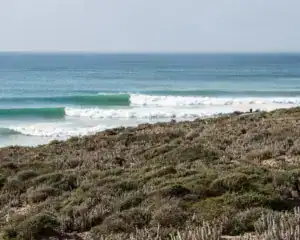
Off the beaten path Morocco has more to offer than most travellers ever discover — and this guide covers 12 specific places with real directions.
But Morocco is a country of 700,000 square kilometers. The tourist trail covers perhaps 2% of it. What’s in the other 98%?
This guide answers that question with specifics. Not vague recommendations to “explore the Atlas Mountains” or “discover hidden oases” — actual places, with actual directions, actual prices, and honest assessments of why they’re worth the detour.
1. Meknes — The Imperial City Nobody Visits
Of Morocco’s four imperial cities — Fes, Marrakech, Meknes, Rabat — Meknes is the one tourists consistently skip. This is a mistake I’ve never understood.
Sultan Moulay Ismail spent 50 years building Meknes into one of the most ambitious cities in the world. The walls stretch 40 kilometers. The royal stables housed 12,000 horses. The grain silos could feed an army for 20 years. The man was building something to rival Versailles, and he almost succeeded.
Today, Meknes has everything Fes and Marrakech have — UNESCO medina, working souks, extraordinary architecture, good food — with a fraction of the tourist infrastructure. This means lower prices, less hassle, and the rare sensation of exploring a medieval city without navigating around selfie sticks.
What to see: Bab Mansour gate (one of the most impressive in North Africa), the Heri es-Souani granaries and stables, Moulay Ismail’s mausoleum (non-Muslims can enter the outer courtyards), the medina itself.
Getting there: 1 hour from Fes by train (45 MAD), 3 hours from Casablanca. Day trip possible but overnight is better.
2. Tetouan — The Andalusian City
Tetouan is 45 minutes from Tangier and receives almost none of Tangier’s tourist traffic. This is strange, because Tetouan’s medina — a UNESCO World Heritage site — is arguably more intact and more authentic than Fes’s.
The city was the capital of the Spanish Protectorate until 1956. Spanish architecture overlays Andalusian foundations overlays Berber origins. The result is a city that feels genuinely different from anywhere else in Morocco — whitewashed walls with Moorish tiles, Spanish colonial buildings, Arabic calligraphy on Iberian-styled doorways.
The old Jewish quarter (mellah) is one of the best-preserved in Morocco. The Royal School of Arts and Crafts (École des Arts et Métiers) has trained artisans here for over a century — you can watch students learning the same zellige and stucco techniques used by their grandparents.
What nobody tells you: The Thursday market outside the city walls is one of the most genuinely local souks I’ve seen anywhere in Morocco. Women from surrounding Berber villages bring produce, dried herbs, and handwoven textiles. It’s not set up for tourists because tourists don’t come.
Getting there: Grand taxi from Tangier, 25 MAD per seat, 45 minutes.
3. Asilah — The Atlantic Art Town
Asilah is 45km south of Tangier on the Atlantic coast. It’s not entirely unknown — some travelers find it — but it receives a fraction of Essaouira’s visitors for a comparable experience.
The medina is enclosed in 15th-century Portuguese ramparts and is genuinely beautiful: whitewashed walls, blue and green painted doors, bougainvillea spilling over every surface. Every August, the Asilah Arts Festival transforms the medina walls into an open-air gallery — local and international artists paint murals directly onto the walls, some of which stay for years.
The beach south of the medina is clean, uncrowded, and backed by dunes rather than hotels. The fish market at the port in the morning is chaotic and excellent — buy whatever looks freshest and take it to one of the restaurants nearby that will cook it for 20-30 MAD.
What to eat: Grilled fish and seafood at the port restaurants. Order by pointing at the catch, not from the menu.
Getting there: Train from Tangier (35 minutes, 35 MAD) or grand taxi (30 MAD per seat).
4. Taza — The Forgotten Imperial City
Taza is Morocco’s oldest imperial city. It sits in a gap in the Rif Mountains 120km west of Fes, controlling the pass between northern and eastern Morocco. Every Moroccan dynasty that mattered passed through or fought over Taza. Almost no tourists come here.
The medina is perched on a plateau above the modern town with views in every direction. The Grand Mosque dates from the 12th century — one of the oldest in Morocco. The underground cave system at Friouato, 20km from Taza, is the deepest explored cave in Africa at over 270 meters.
Why it’s worth it: Taza is what Fes was before it became a tourist destination. The medina is a working city, not a museum. Craftsmen, merchants, and schoolchildren occupy the same streets as visitors. No one is trying to sell you anything.
Getting there: Train from Fes (1h30, 55 MAD) or from Oujda (2h30). The cave at Friouato requires a taxi from Taza (grand taxi, negotiate 60-80 MAD return).
5. Sidi Ifni — The Forgotten Spanish Enclave
Sidi Ifni is a town 75km south of Tiznit on the Atlantic coast that Spain held as an enclave until 1969 — 13 years after Moroccan independence. The Spanish left behind an extraordinary legacy: art deco architecture in varying states of beautiful decay.
The town hall, the former Spanish consulate, the old market — all are pure 1930s Spanish colonial architecture, slowly being reclaimed by salt air and Atlantic wind. The overall effect is simultaneously melancholy and stunning, like a small piece of Havana transplanted to the Moroccan coast.
The beach is wild and largely empty. The surf is powerful and best left to experienced surfers. The sunsets, with nothing between you and South America, are exceptional.
Practical note: Sidi Ifni is genuinely remote. Accommodation is basic — several guesthouses in the 150-250 MAD range. The seafood at the port restaurants is very good and very cheap (grilled fish with salad and bread, 40-60 MAD).
Getting there: Bus from Agadir (3 hours, 50 MAD) or from Tiznit (1 hour, 20 MAD).
6. Moulay Idriss Zerhoun — The Forbidden City That Isn’t
Until 2005, non-Muslims were forbidden to spend the night in Moulay Idriss. The town contains the tomb of Moulay Idriss I, founder of the first Moroccan dynasty and one of the most revered saints in Moroccan Islam.
The prohibition is gone but the atmosphere remains. Moulay Idriss is a pilgrimage town — thousands of Moroccans come here throughout the year, and in August during the annual moussem (religious festival), the population multiplies several times over. It’s one of the few places in Morocco where you’ll find almost no other tourists and genuine local religious life happening openly.
The town climbs a hillside in two neighborhoods divided by a valley. The views over the Roman ruins of Volubilis 5km away are extraordinary. The streets are narrow enough that donkeys genuinely are the only practical transport.
Getting there: Grand taxi from Meknes, 15 MAD per seat, 30 minutes. Visit Volubilis on the same trip — it’s 4km away.
7. Taroudant — Marrakech Without the Crowds
Taroudant is sometimes called “Little Marrakech” — a comparison that does it a disservice. It’s smaller, yes. It has a medina and souks and red earthen walls. But it has none of Marrakech’s performative tourism.
The souks in Taroudant sell to Moroccans. The prices are Moroccan prices. The craftsmen aren’t positioned for maximum tourist visibility — they’re just working. The weekly Berber market (Tuesday and Thursday) brings in traders from surrounding villages. The argan oil sold here is genuine — the town sits in argan country.
The walls encircling the old city are some of the best-preserved earthen ramparts in Morocco. Rent a bicycle (20-30 MAD per hour from shops near the main square) and ride around the entire perimeter — 7km, spectacular views, almost no other cyclists.
Getting there: Bus from Agadir (1.5 hours, 40 MAD) or grand taxi (35 MAD per seat).
8. Tafraout — Pink Granite in the Anti-Atlas
Tafraout is a small town in the Anti-Atlas mountains, 170km from Agadir, surrounded by pink granite formations that turn deep rose at sunset. The surrounding valley is the center of almond cultivation in Morocco — in February, the almond blossom transforms the entire landscape.
The “Painted Rocks” — enormous granite boulders painted blue and orange by Belgian artist Jean Vérame in 1984 — are either a fascinating artistic intervention or a desecration of natural landscape, depending on your perspective. Worth seeing and forming your own opinion.
The souks here sell Berber silver jewelry made locally — not the mass-produced tourist jewelry of Marrakech, but handworked pieces made by artisans in the region. Prices are negotiable and fair.
What few visitors do: Trek between villages in the surrounding valley. Local guides charge 200-300 MAD for a half-day walk through the almond groves and Berber villages. It’s one of the best walking experiences I know of in Morocco.
Getting there: Bus from Agadir (3.5 hours, 60 MAD) or shared taxi. The road in is spectacular — high mountain passes with views over the Anti-Atlas.
9. Beni Mellal — Gateway to the Atlas Waterfalls
Beni Mellal is a working Moroccan city that most tourists pass through without stopping. This is a mistake — the Cascades d’Ouzoud are 23km away and the Gorges de l’Oued el-Abid nearby are among the most dramatic landscapes in Morocco.
The waterfalls at Ouzoud are well-known (covered in our full Ouzoud guide), but the gorges downstream are not. The canyon drops 1,000 meters in places, and the road along the rim gives views that rival anything in the Atlas.
The town itself is genuine Moroccan city life — no tourist infrastructure, no harassment, local restaurants selling harira and msemen for 10-15 MAD, markets selling produce rather than souvenirs.
Getting there: Bus from Marrakech (2.5 hours, 60 MAD). From Beni Mellal to Ouzoud: grand taxi, 25 MAD per seat.
10. Mirleft — The Surfer’s Secret
Mirleft is a small town between Tiznit and Sidi Ifni on the Atlantic coast, 30km from either. It has three things: dramatic cliffs, empty beaches, and a handful of guesthouses run by Europeans who arrived intending to stay a week and never left.
The beaches — Plage Maison Blanche, Plage de l’Aiguille, Plage du Phare — are accessible by dirt track and separated by clifftops. They’re not entirely unknown but they’re rarely crowded. The surf is powerful and generally better suited to intermediate surfers than beginners.
The town itself is tiny — a main street, a few cafes, a basic souk. The guesthouses (200-400 MAD for a double room) are the social center. Most serve dinner family-style. The conversations at these dinner tables — between travelers, expats, and locals — are some of the best I’ve had in Morocco.
Getting there: Bus from Tiznit (1 hour, 20 MAD) or from Agadir (2.5 hours, 50 MAD). From the town, taxis take you to the individual beaches.
11. The Ziz Valley — The Most Beautiful Drive in Morocco
Between Midelt and Er Rachidia on the N13, the Ziz River cuts through the Middle Atlas in a canyon lined with date palms, mud-brick villages, and occasional kasbahs. This is, in my assessment, the most beautiful continuous drive in Morocco — and almost no tourists take it.
Most travelers driving south to the Sahara take the N9 via Ouarzazate and the Dadès valley. The Ziz Valley route is faster, shorter, and passes through landscapes that are equally dramatic and completely different.
The market town of Erfoud at the south end of the valley is the base for the Erg Chebbi dunes — better known as Merzouga. The town itself is unremarkable but the drive to get there is not.
Practical note: This is a drive, not a destination. Rent a car or join a tour that uses this route. It’s not accessible by public transport in any meaningful way.
12. Dakhla — The Edge of the Map
Dakhla is 1,700km south of Casablanca, on a peninsula jutting into a turquoise lagoon in the Western Sahara. It requires commitment to reach — a 20-hour drive south from Marrakech, or a 2h30 flight from Casablanca on Royal Air Maroc.
The lagoon is one of the best kitesurfing and windsurfing spots on earth — the water is flat, the wind is constant, and the conditions are nearly perfect for beginners and experts alike. Beyond the water sports, the town is quiet, cheap, and offers the genuine feeling of being at the edge of the world.
The landscape around Dakhla — where Saharan sand dunes meet the Atlantic ocean — is unlike anything else in Morocco or, arguably, anywhere.
This is not for everyone. It’s for travelers who’ve done the north, done the Sahara, and want to find where the map runs out.
Getting there: Royal Air Maroc flies Casablanca-Dakhla several times weekly, typically 600-1,200 MAD each way. The drive is an adventure in itself — two days minimum, on good desert roads with military checkpoints.
How to Plan an Off-the-Beaten-Path Morocco Trip
Transport reality: Most of these destinations require either a rental car or a combination of buses and grand taxis. Morocco’s bus network (CTM is the reliable option) covers almost everywhere; grand taxis fill the gaps. Neither is glamorous. Both are authentic.
Accommodation: Outside of major cities, accommodation in Morocco is often basic — clean rooms, shared bathrooms, no air conditioning. The trade-off is price (100-300 MAD for a double room in most places listed here) and experience. Staying in a family guesthouse in Moulay Idriss or a riad in Tetouan is more interesting than a hotel in Marrakech.
Timing: Most of these destinations are better between October and April. Summer heat is serious everywhere south of Casablanca.
Language: Arabic and Tamazight are the primary languages in rural areas. French is widely spoken in cities. English is rare outside of tourist infrastructure. Learning a dozen words of Darija (Moroccan Arabic) — greetings, thank you, numbers — transforms how locals respond to you.
The best off the beaten path Morocco experiences happen in cities like Meknes and Tetouan that most visitors skip entirely.
FAQ — Off the Beaten Path Morocco
What are the most underrated cities in Morocco?
Meknes, Tetouan, and Taroudant are consistently the most underrated. All three offer experiences comparable to the major tourist cities with a fraction of the crowds and prices.
Is it safe to travel off the beaten path in Morocco?
Yes. Morocco’s safety situation is broadly good throughout the country, including remote areas. The main practical consideration for remote travel is logistics — transport connections, accommodation availability, and medical facilities. None of these are dangerous; they require planning.
Do I need a guide for off-the-beaten-path travel in Morocco?
Not always. The cities on this list — Meknes, Tetouan, Taroudant — are navigable independently. For specific activities like trekking in Tafraout or exploring the cave at Friouato, a local guide adds genuine value and isn’t expensive (150-300 MAD for a half-day).
When is the best time to visit remote areas of Morocco?
October to April for most of the country. The Anti-Atlas and south can be visited in May and September. Avoid July and August in inland and southern areas — temperatures regularly exceed 40°C.
How much does off-the-beaten-path travel cost in Morocco?
Significantly less than the tourist trail. Accommodation in the places listed here runs 100-300 MAD per night. Transport between cities by bus or grand taxi is typically 20-80 MAD. Meals at local restaurants cost 30-60 MAD. Daily budget of €30-40 covers comfortable independent travel in most of these areas.
Visited any of these places and have something to add? Leave a comment — local knowledge from travellers who’ve been there is always more valuable than what I can write from here.