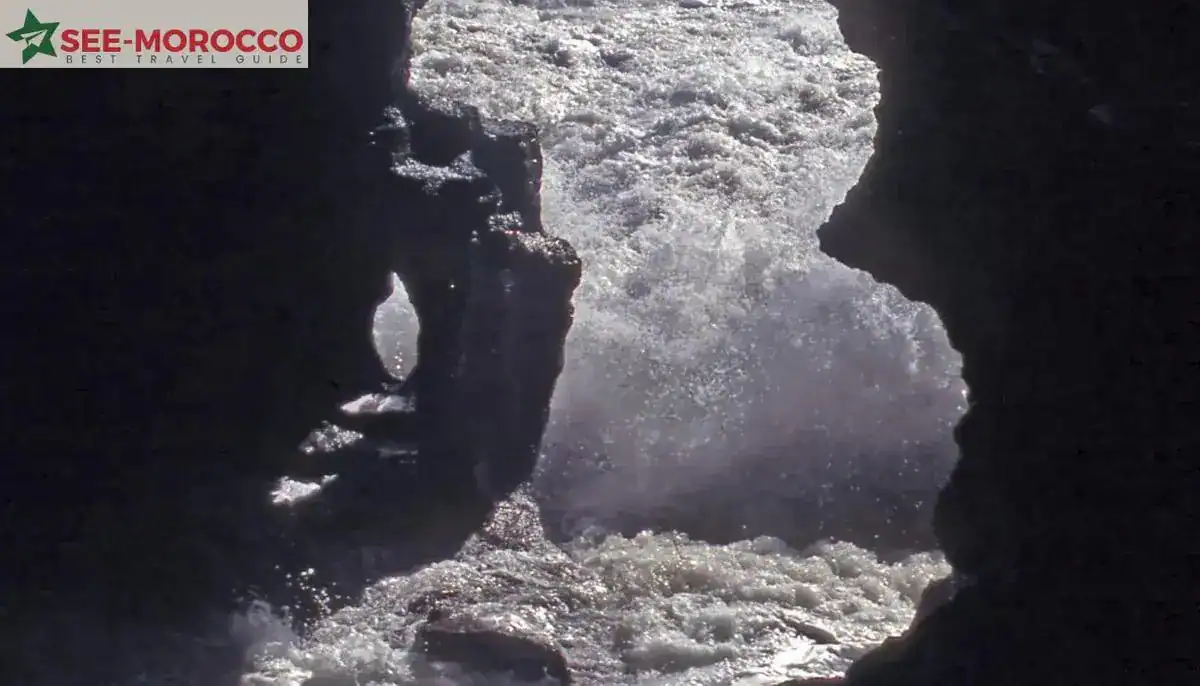
The Caves of Hercules, on the Atlantic coast about 14 km west of Tangier, are one of northern Morocco’s best-known sights, and one of the most oversold.
This guide is researched, not based on a personal visit. I’ve cross-checked prices and practical details against recent sources and visitor reports, and I flag anything that changes often.
Set your expectations first. This is not a vast cave system with dramatic formations. It’s a small sea cave, partly natural and partly enlarged by people cutting millstones out of the rock over centuries, with one famous feature: an opening onto the ocean whose outline looks like a map of Africa. A few kilometres north stands the Cap Spartel lighthouse, at the northwestern corner of Africa. Together they make a solid half-day out of Tangier.
What the Caves of Hercules Actually Are
The Caves of Hercules are a sea cave with two openings: one on the land side, where visitors enter, and one facing the Atlantic, the famous Africa-shaped window.
The cave is part natural and part man-made. For centuries, local Amazigh (Berber) communities cut circular millstones out of its walls, which enlarged the cave well beyond its natural size. The round scars left by that work are still visible on the rock. Sources also describe evidence of much older human presence here, going back to the Neolithic, but the millstone quarrying is what shaped the cave you see today.
The Hercules name is legend layered on top. In one version, Hercules defeated the giant Antaeus nearby and married his widow, Tinge, whose name is said to live on in Tangier (Tingis in Latin). In another, he rested here during his Twelve Labours. There is no physical evidence for any of it, and there doesn’t need to be: the legend is part of why the place feels the way it does.
The Africa-Shaped Opening
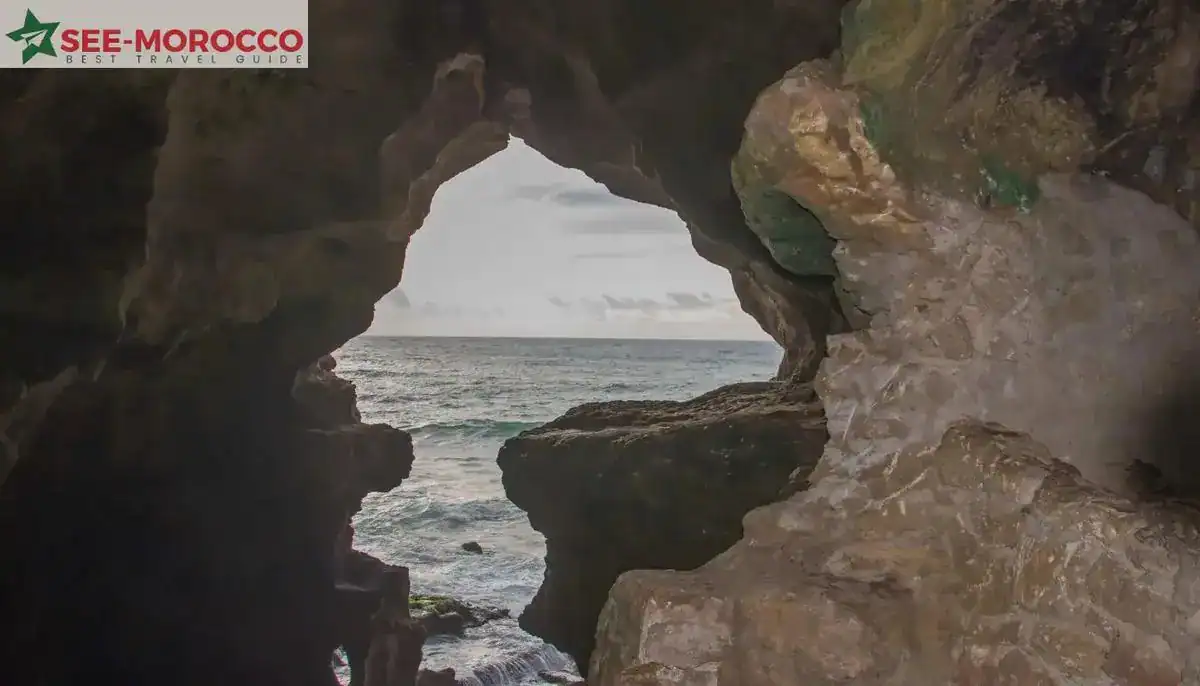
The seaward opening is the reason most people come.
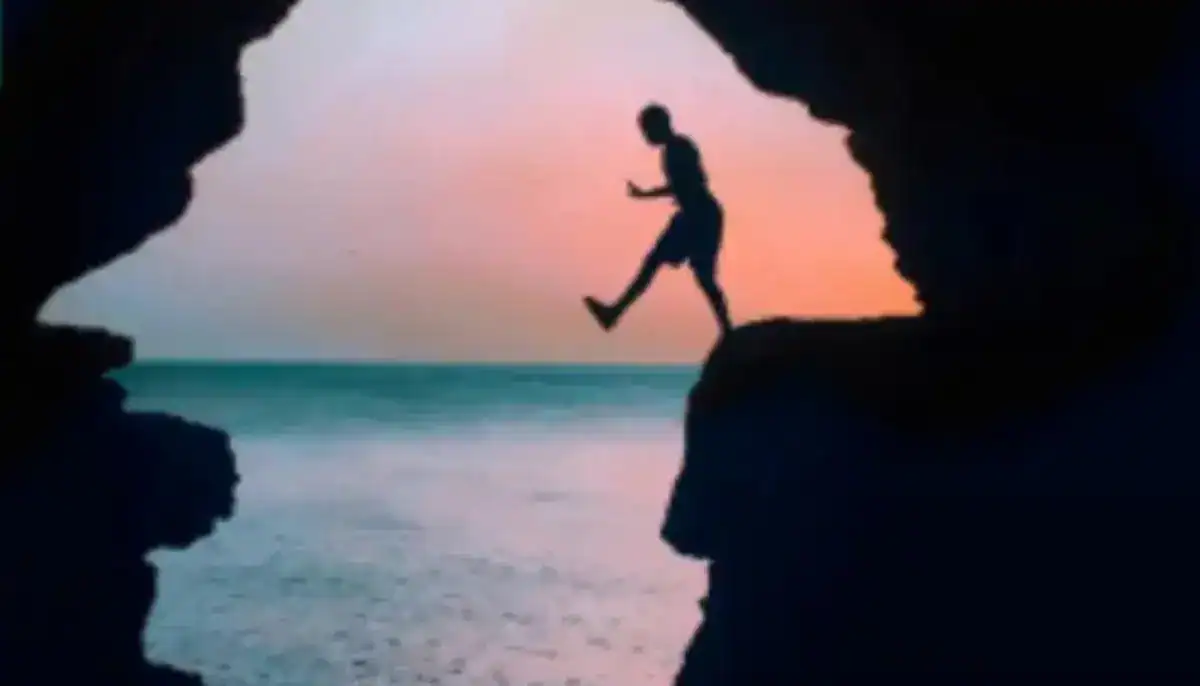
Seen from inside the cave, the rock frames the Atlantic in a shape that resembles a mirror image of the African continent. Some sources attribute the cut of this opening to the Phoenicians. That claim is repeated often but hard to verify, so treat it as tradition rather than fact.
How striking the shape looks depends on the light and on the sea. Calm, clear days show the outline best; rough seas and spray change the view. It’s the cave’s most photographed spot, so expect to wait your turn at busy times.
Cap Spartel Lighthouse
Cap Spartel is the northwestern tip of Africa, at the Atlantic entrance to the Strait of Gibraltar. Its lighthouse was first lit on 15 October 1864.
Its history is unusual. In 1865, Morocco and ten foreign powers (the United States, Austria, Belgium, Spain, France, Great Britain, Italy, the Netherlands, Portugal and Sweden) signed a convention in Tangier to run and maintain the lighthouse jointly (text of the 1865 convention). An international commission managed it for nearly a century, until the agreement was ended in 1958.
The cave and the cape are separate stops a few kilometres apart, and most taxis and tours combine them.
My recommendation: treat the cave as a short stop and give the cape equal time. The cave is the famous photo; the cape is the geography.
Practical Information
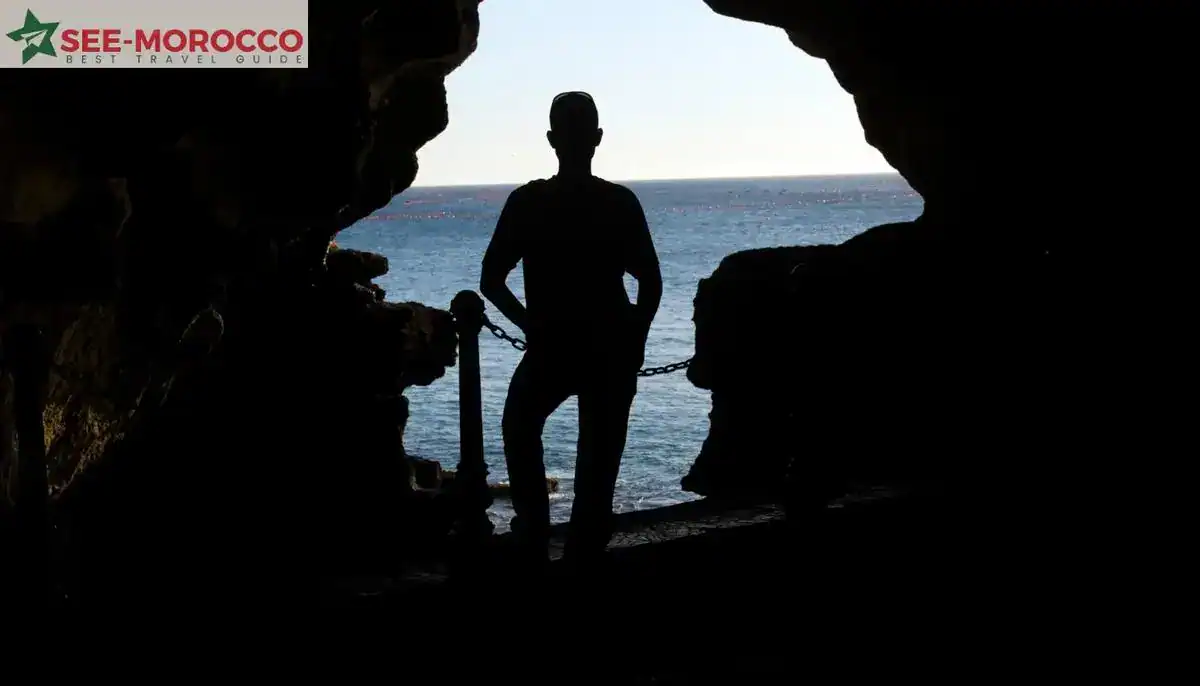
Location: about 14 km west of Tangier city centre, on the Atlantic coast south of Cap Spartel.
Getting there:
- By car: around 25 minutes from Tangier.
- Grand taxi: the usual option. Agree the price and the waiting time before you leave, since the driver normally waits while you visit.
- Petit taxi: city-only; they don’t go this far.
- Tour: most Tangier half-day tours combine the cave and Cap Spartel.
Entrance fee: prices have gone up. Recent visitor reports put the foreigner ticket at around 80 MAD, with a lower rate for Moroccans; older guides still list 10–30 MAD. Bring cash and check the price at the booth.
Opening hours: generally open daily during daylight hours. There’s no official website with current hours, so confirm locally, especially during Ramadan.
Time needed: the cave itself is small, 15–30 minutes. Allow 1.5–2 hours for the cave plus Cap Spartel.
What to wear: shoes with grip. The rock floor is uneven and can be wet.
Guides: not included in the ticket. People offering to guide you at the entrance are unofficial; agree a price first if you want one.
The Cave in Context
The cave makes more sense once you see it as a workplace before it became a legend. The rock here was soft enough to cut and hard enough to grind grain, so people quarried millstones from it over a long period. The circular marks are the clearest trace of that work.
Add the location, at the Atlantic mouth of the strait the ancient world called the Pillars of Hercules, and it’s easy to see how a quarried sea cave became a mythological landmark.
Combining It with a Day in Tangier
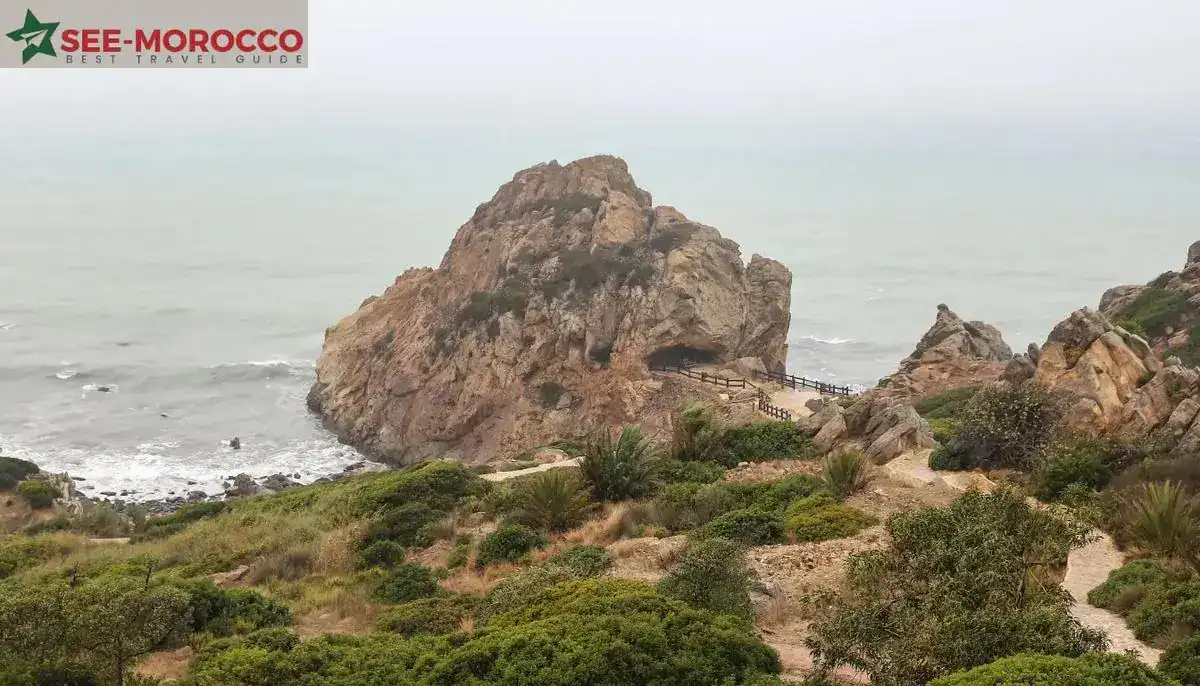
- Morning: Caves of Hercules and Cap Spartel. Earlier in the day is usually quieter than the late-morning tour rush.
- On the way back: the road runs through the wooded area known as the Diplomatic Forest (Forêt Diplomatique).
- Midday: Café Hafa, the clifftop café above the Strait, open since 1921 and long associated with writers and musicians who passed through Tangier.
- Afternoon: the Kasbah and medina.
Is Hercules Cave Worth Visiting?
Yes, with the right expectations.
If you have more than one day in Tangier, the cave and Cap Spartel make a good half-day. The Africa-shaped opening is genuinely striking, and the cape adds the geography the cave alone doesn’t give you.
If you have only one day, prioritise the medina, the Kasbah and Café Hafa. Several recent visitors feel the ticket price is high for a short visit, which is fair: you’re paying mostly for one view.
FAQ: Caves of Hercules
Why is it called the Caves of Hercules?
Legend links the cave to Hercules, either as a place where he rested during his Twelve Labours or through the story of his fight with the giant Antaeus, whose widow Tinge is said to have given Tangier its name. It’s mythology, not history.
How much is the entrance fee?
Recent visitor reports put it at around 80 MAD for foreign visitors, with a lower price for Moroccans. Prices change, so check at the booth and bring cash.
Are the Caves of Hercules open every day?
They’re generally open daily in daylight hours, but there’s no official schedule online. Hours can change during Ramadan, so confirm locally.
How far are the Caves of Hercules from Tangier?
About 14 km west of the city centre, roughly 25 minutes by car or taxi.
Are the Caves of Hercules and Cap Spartel the same place?
No. They’re a few kilometres apart. Cap Spartel is the cape with the 1864 lighthouse; the cave is further south along the Atlantic coast. Most taxis and tours combine both.
What is the Africa-shaped opening?
The cave’s seaward opening. Seen from inside, its outline resembles a mirror image of the African continent. Some sources say the Phoenicians cut it, but that’s tradition rather than proven fact.
How long do you need at the Caves of Hercules?
15–30 minutes for the cave. Allow 1.5–2 hours to add Cap Spartel.
Is it suitable for children?
Generally yes, with supervision. The floor is uneven and can be slippery.
Planning a day in Tangier? Ask in the comments and I’ll help you fit the cave and Cap Spartel in.