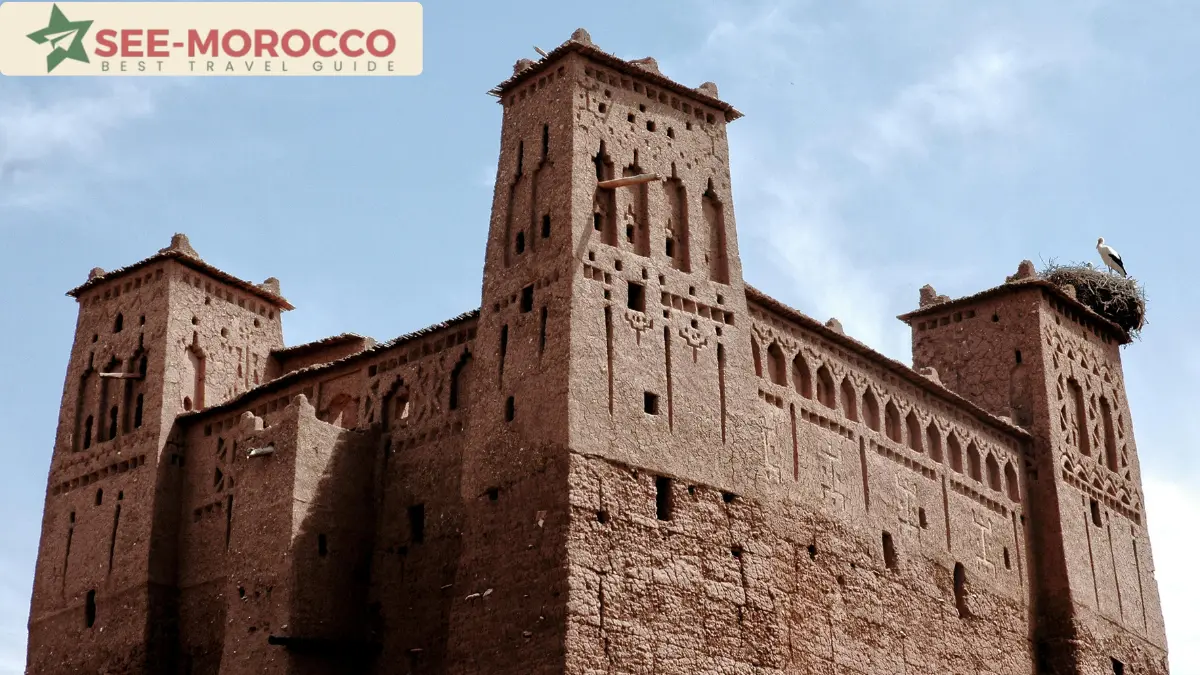
The kasbahs of Morocco are clustered in the south — and I live right in the middle of them, in Ouarzazate. If there’s one place with the right to talk about kasbah Morocco, it’s here. The road south of the Atlas is lined with them: fortified earthen castles rising out of palm groves and red rock, some restored, many slowly melting back into the ground they were built from.
This is the honest guide to the kasbahs of Morocco — what they actually are, which ones are worth your time, and how to reach them. Not a list of clichés. A local’s run-down of the real thing.
First: What Is a Kasbah, Exactly?
People mix this up constantly, so let’s be clear.
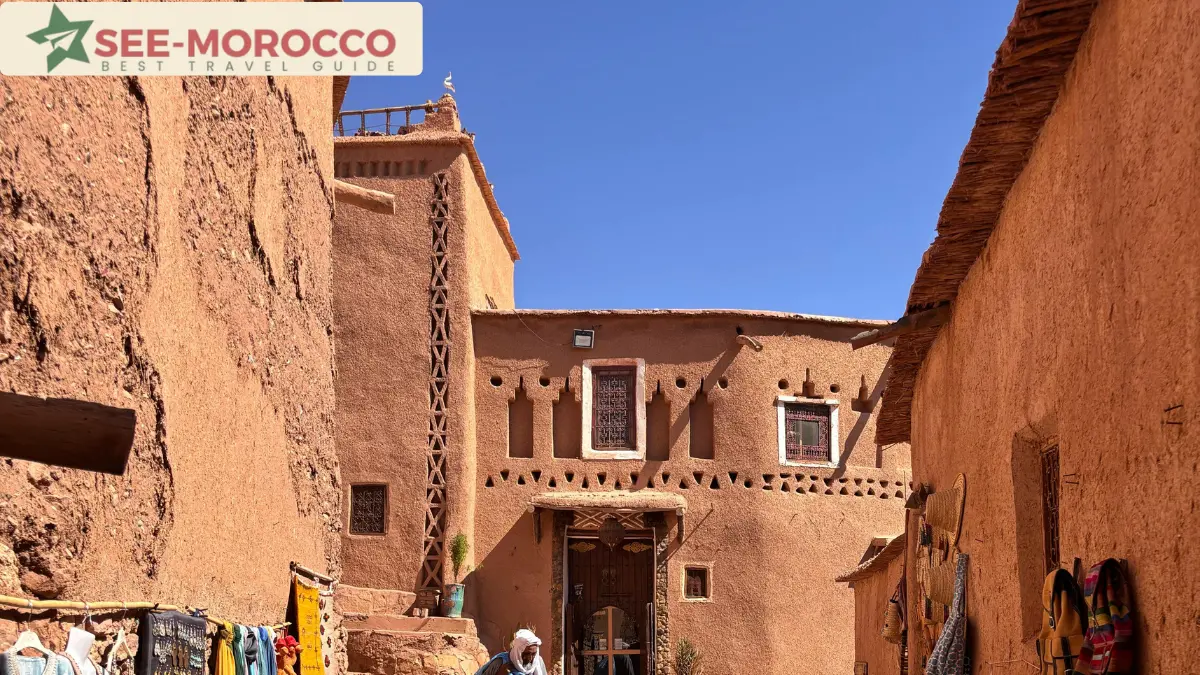
A kasbah is a fortified house or citadel — traditionally the fortified home of a local leader or family, built from rammed earth and mud-brick, with high walls and corner towers. One building, one stronghold.
A ksar (plural ksour) is bigger: a whole fortified village of many homes behind shared walls. Aït Benhaddou, Morocco’s most famous example, is technically a ksar, not a single kasbah — even though everyone calls it one.
Both are built the same way: layers of earth, clay, straw, and stone, shaped by hand. It’s a building method perfectly suited to the desert south — cool inside in summer, and made entirely from what the land provides. The downside is that earth doesn’t last forever. Without constant maintenance, a kasbah erodes. That’s why so many in the south are half-ruined, and why the restored ones matter.
The Famous Kasbah Morocco Sites
Aït Benhaddou — The One Everyone Knows
The most famous of them all, about 30 km from Ouarzazate. A UNESCO World Heritage Site and a film legend (Gladiator, Game of Thrones, Lawrence of Arabia all shot here). If you only visit one, make it this. Full Aït Benhaddou guide here.
Taourirt Kasbah — In the Heart of Ouarzazate
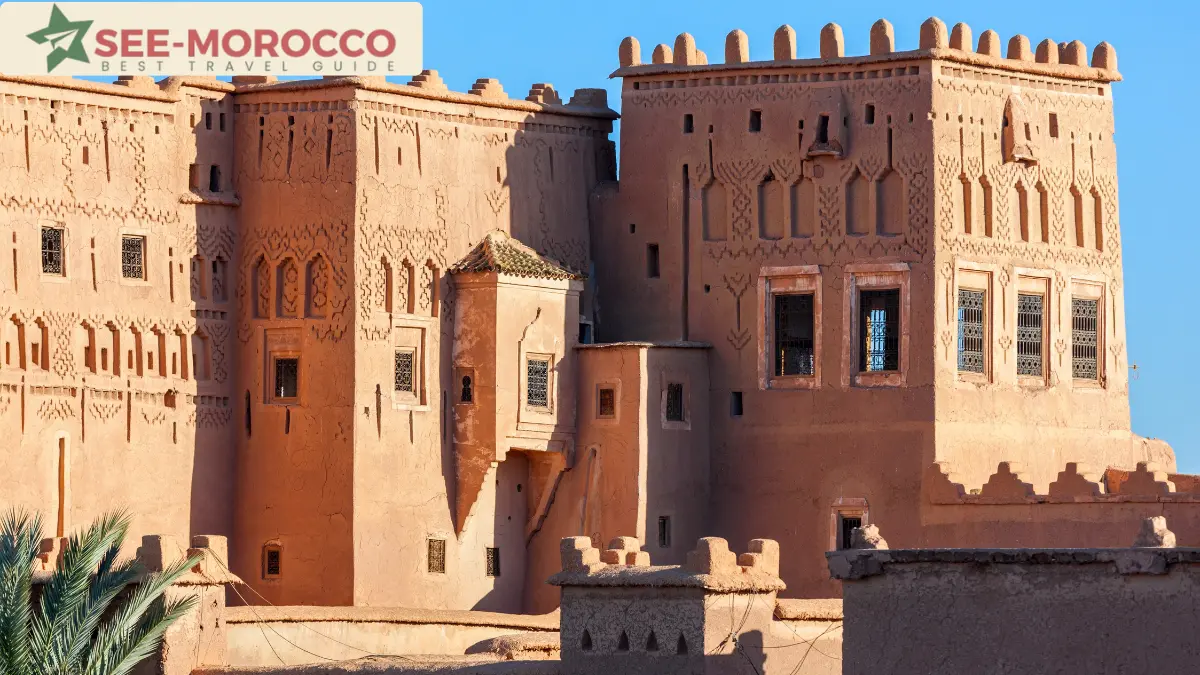
This is the one in my own town, and it’s underrated. The Taourirt Kasbah was once one of the residences of the Glaoui family, the powerful lords who controlled the south in the early 20th century. It’s right in Ouarzazate itself, easy to reach, and far less crowded than Aït Benhaddou. Wandering its maze of rooms and passages gives you a real sense of how a great kasbah actually functioned.
Telouet Kasbah — The Hidden Glaoui Palace
Off the old road over the Atlas, Telouet is the crumbling former seat of the Glaoui dynasty. I haven’t been inside myself, but its ruined exterior is known for hiding rooms of zellij tilework and painted cedar ceilings. It sits on a detour off the Tizi n’Tichka pass.
Kasbah of the Udayas — Rabat
Up north and completely different: a walled kasbah quarter above the sea in Rabat, with blue-and-white painted lanes and Andalusian gardens. This is the urban, coastal face of the kasbah — older, and built more for a city than the desert frontier.
Skoura and the Valley of a Thousand Kasbahs
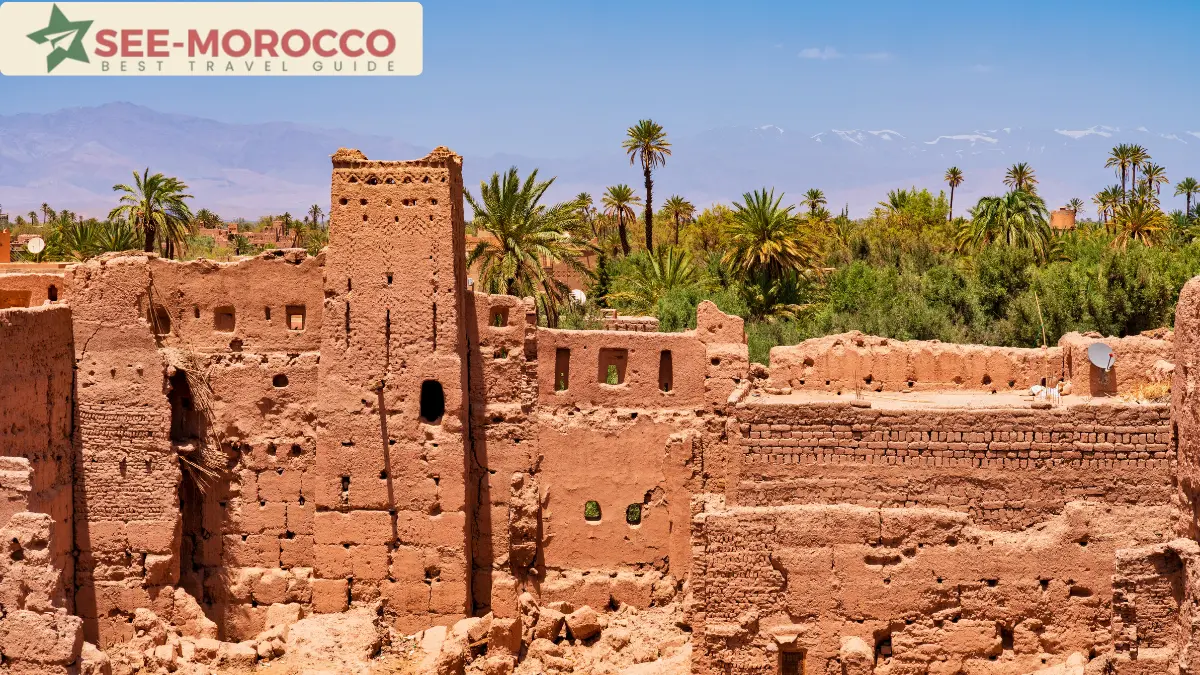
Between Ouarzazate and the Dades, the Skoura oasis and the road beyond it are dotted with so many earthen kasbahs that the route earned the name “the Valley of a Thousand Kasbahs.” Some are restored guesthouses now; many are simply standing in the palms. This is the place to feel the density of them rather than visit a single monument.
Where the Kasbahs Are: The Geography
Most of the great kasbah Morocco sites are in the south, along the old caravan routes between the Sahara and Marrakech. The hub is Ouarzazate, which is why it’s nicknamed the gateway to the desert.
The classic kasbah route runs like this: cross the Atlas from Marrakech over the Tizi n’Tichka, drop into Telouet, continue to Aït Benhaddou, reach Ouarzazate and its Taourirt Kasbah, then follow the valley east through Skoura toward the Dades and Todra gorges, or south toward Zagora and the desert.
You can see the headline kasbahs in a single busy day from Ouarzazate, but giving them two or three days — and staying in a restored kasbah guesthouse along the way — is far better.
How to Visit the Kasbahs
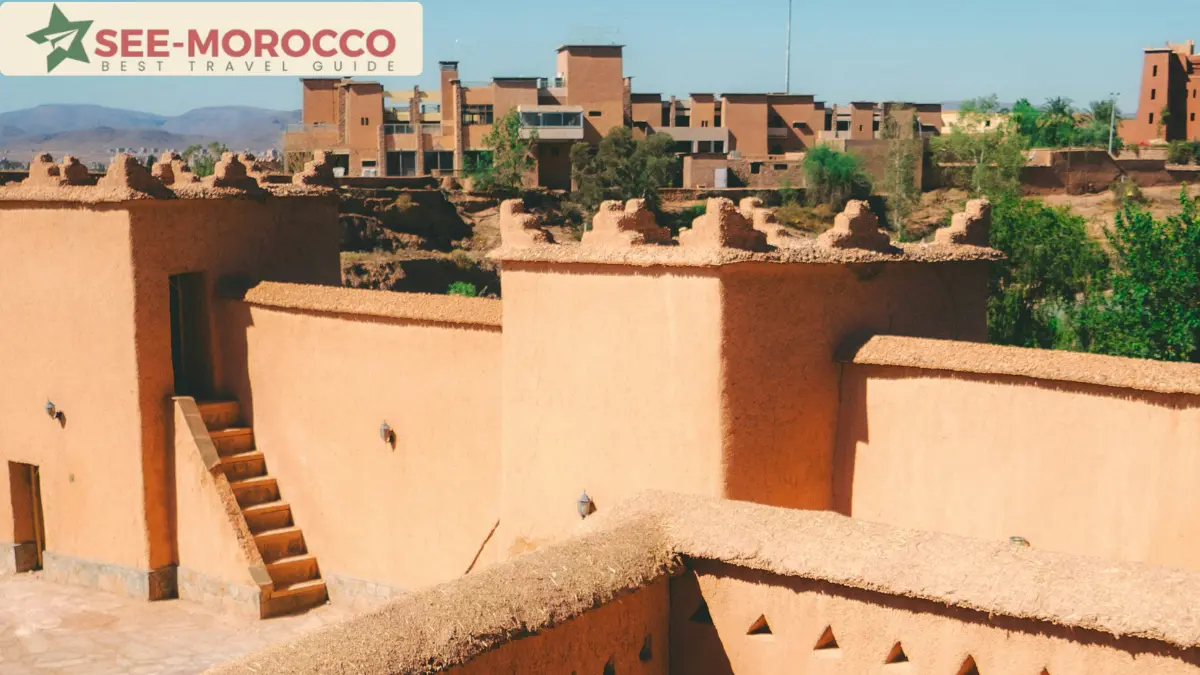
Base yourself in Ouarzazate. It’s the natural centre for the southern kasbahs and well connected to Marrakech.
Getting there:
- From Marrakech: around 4 hours over the Tizi n’Tichka pass — one of Morocco’s great drives.
- Self-drive is ideal here, because the best kasbahs are spread along the valley and a car lets you stop freely.
- Organised tours from Marrakech almost always include Aït Benhaddou and Ouarzazate; deeper kasbah routes (Telouet, Skoura) need either a private tour or your own car.
Practical notes:
- Entrance fees are small — typically 20–60 MAD for the restored kasbahs you can go inside. Carry cash.
- Restored kasbahs (Taourirt, Telouet) have set visiting areas; the ruined ones along the valley you simply admire from the road or on foot.
- Sunrise and late afternoon are best — the earthen walls glow, and the midday heat in the south is serious. More on desert conditions here.
- Wear proper shoes; floors and stairs inside old kasbahs are uneven.
Why the Kasbahs Matter
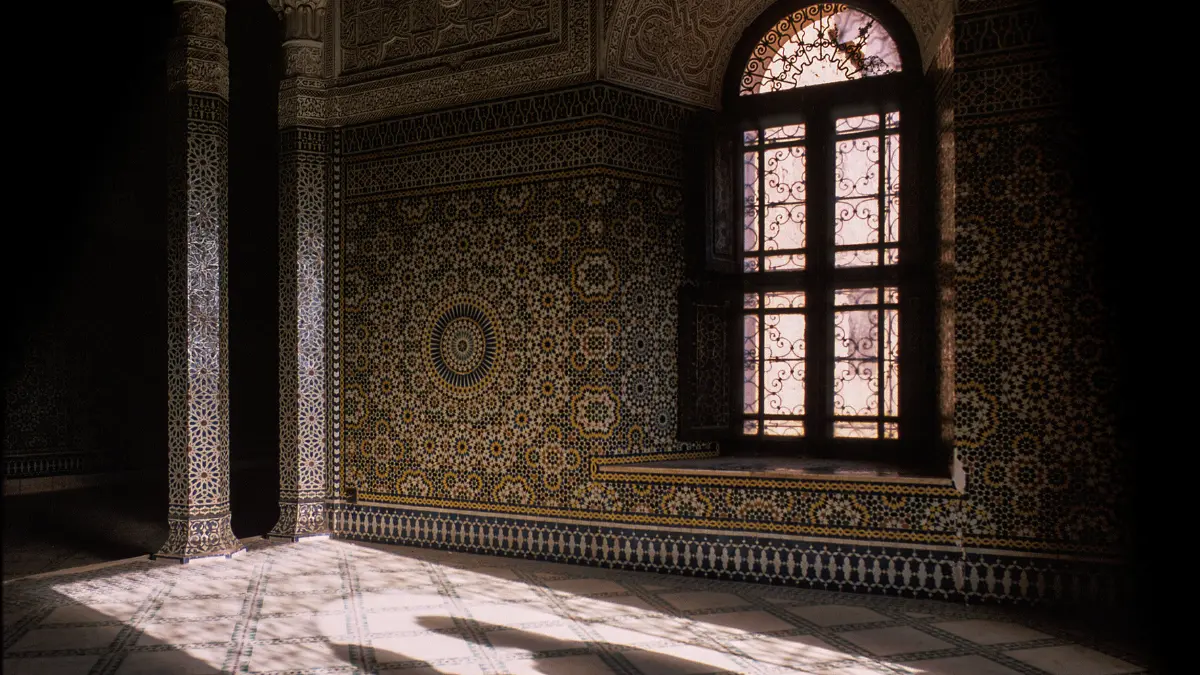
It’s easy to photograph a kasbah and move on. But these buildings are the physical record of how the south actually worked: fortified family seats controlling water, trade routes, and the passes between the desert and the cities.
The Glaoui kasbahs — Telouet and Taourirt — are a story in themselves: a single family that rose to rule almost the entire Moroccan south from these earthen castles, before the dynasty collapsed in the 1950s. Standing in Telouet’s decaying throne rooms, you’re standing in real, recent history, not a film set.
And the slow erosion of the unrestored kasbahs is part of the honesty of the place. Earth returns to earth. What you’re seeing won’t look the same in fifty years — which is its own reason to see it now.
Is It Worth Visiting the Kasbahs?
Without question — if the south is in your plans at all.
The kasbahs are the single most distinctive thing about southern Morocco, and Ouarzazate is the best base to reach them. Aït Benhaddou for the icon, Taourirt for the easy in-town visit, Telouet for the haunting Glaoui palace, and the valley road for the sheer density of them.
Come for one famous kasbah; you’ll end up remembering the whole earthen landscape they belong to.
FAQ — Kasbahs in Morocco
What is a kasbah in Morocco? A kasbah is a fortified earthen building or citadel, traditionally the walled home of a local leader, built from rammed earth and mud-brick with corner towers. A larger fortified village of many homes is called a ksar.
What is the most famous kasbah in Morocco? Aït Benhaddou, near Ouarzazate, is the most famous — a UNESCO World Heritage Site and a celebrated film location, though it’s technically a ksar (a fortified village) rather than a single kasbah.
Where are the kasbahs in Morocco? Most of the great kasbahs are in the south, along the old caravan routes between Marrakech and the Sahara. Ouarzazate is the main base, with kasbahs spread along the valley toward the Dades, Todra, and Zagora.
What is the difference between a kasbah and a ksar? A kasbah is a single fortified house or citadel. A ksar is a whole fortified village of many dwellings behind shared walls. Aït Benhaddou is a ksar; the Taourirt Kasbah in Ouarzazate is a true kasbah.
How do I visit the kasbahs of Morocco? Base yourself in Ouarzazate, about 4 hours from Marrakech over the Atlas. Self-driving is best for reaching the spread-out kasbahs, though tours cover the main ones (Aït Benhaddou, Ouarzazate). Entrance fees are small.
What is the Valley of a Thousand Kasbahs? It’s the nickname for the Dades Valley region east of Ouarzazate, around Skoura, where earthen kasbahs are scattered densely through the palm oases — some restored as guesthouses, many standing as ruins.
Are the kasbahs worth visiting? Yes, especially if you’re travelling in southern Morocco. They’re the region’s most distinctive sight. Aït Benhaddou and the Glaoui kasbahs of Taourirt and Telouet are the highlights.
Planning a kasbah route through the south? Leave a comment below — I answer every one personally.