Tangier at a glance: Tangier is a port city in northern Morocco, Africa, on the Strait of Gibraltar, where the Atlantic meets the Mediterranean. At its narrowest point the strait is about 14 km wide, and the Spanish coast is visible on clear days. Tangier is connected to Casablanca by Africa’s first high-speed train, and to Spain by ferry.
This guide is researched, not based on a personal stay. I’ve checked prices, hours and routes against official sources and recent visitor reports, and I flag anything that changes often.
Tangier gets misunderstood more than most Moroccan cities. Visitors expect the intensity of Marrakech or the medieval density of Fes and find something harder to label: a port city shaped by centuries of outside influence, from Phoenician and Roman to Andalusian, Portuguese, Spanish, French and British, and by a twentieth century unlike anywhere else in the country.
Spanish is widely understood, the cafés lean Mediterranean, and Europe is visible across the water. That mix is the reason to come.
Why Tangier Is Worth Your Time
From 1923 to 1956, Tangier was an International Zone governed by several foreign powers at once. That period drew writers, artists, smugglers and spies, and gave the city a reputation it still trades on. Paul Bowles lived here for decades; William Burroughs wrote much of Naked Lunch here.
Today’s Tangier is a different, more prosperous city. Since the 2000s, major investment has brought the Tanger Med port, a new marina and the Al Boraq high-speed line to Casablanca, opened in 2018. The old medina and Kasbah are still there, and the view from the Kasbah walls over the Strait is still the city’s signature
The Medina
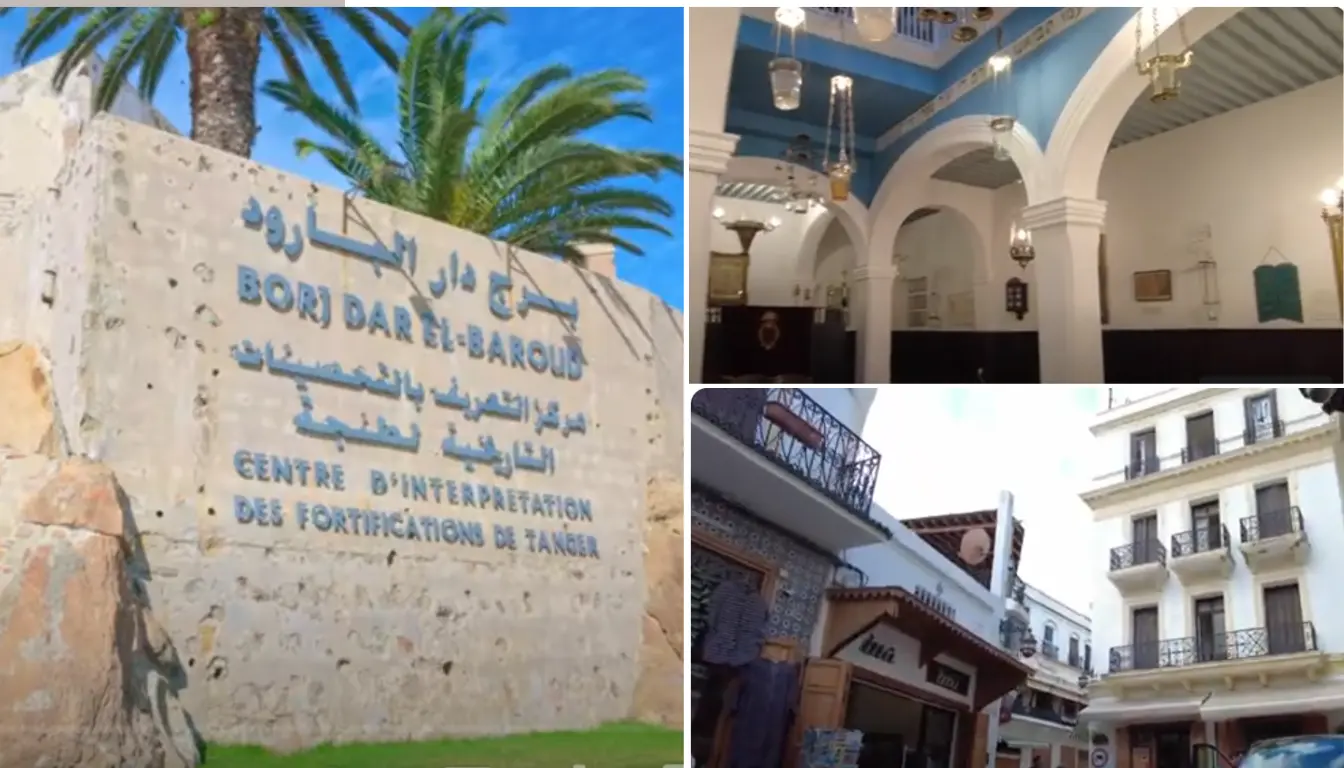
Tangier’s medina is smaller and less overwhelming than those of Fes or Marrakech, which is one of its advantages. The streets climb toward the Kasbah at the top of the old city.
What to look for:
- Petit Socco: the small square at the heart of the medina, the social centre of the International Zone years. Today it’s a handful of cafés and a good place to sit and watch the street.
- Grand Socco (Place du 9 Avril 1947): the main gateway between the medina and the new town, and the departure point for many grand taxis.
- Rue de la Marine: runs along the medina’s northern edge with views over the port.
What to skip: anyone offering to guide you at the medina entrance. The medina is small enough to explore alone, and unofficial guides usually end the tour at a shop that pays them commission.
The Kasbah
The Kasbah sits at the highest point of the medina, behind its own walls. Inside is the Kasbah Museum in the former sultan’s palace (Dar el-Makhzen), with archaeological finds including Roman mosaics, plus a mosque and a residential quarter.
The main draw is the view. From the northern edge of the Kasbah you look out over the Strait of Gibraltar to the Spanish coast, which is visible on clear days.
Practical details:
- The usual way in is through Bab el-Assa, uphill from the medina
- Morning and late afternoon have the softest light
- The museum charges a small entry fee; check the current price at the door
Cap Spartel and the Caves of Hercules
About 14 km west of the city, Cap Spartel marks the northwestern corner of Africa, at the Atlantic entrance to the Strait. Its lighthouse was first lit in 1864 and was run for nearly a century by an international commission set up under an 1865 convention between Morocco and ten foreign powers.
A few kilometres south along the coast are the Caves of Hercules, a sea cave enlarged over centuries by Amazigh (Berber) millstone quarrying, famous for a seaward opening shaped like a map of Africa. Recent visitor reports put the foreigner ticket at around 80 MAD. For the full picture, see my Caves of Hercules guide.
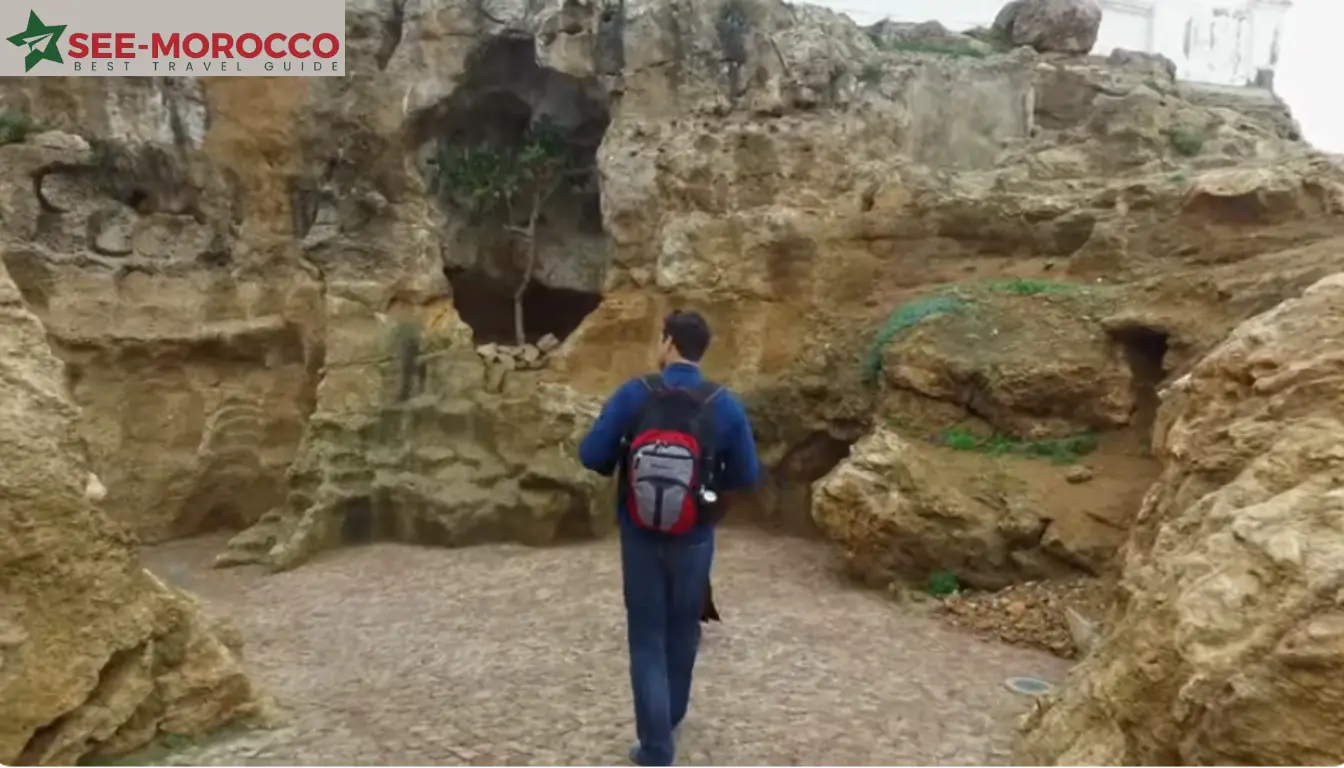
Honest assessment: the cave itself takes 15–30 minutes. It’s interesting rather than spectacular. Combined with the cape, it makes a good half-day.
Getting there: petit taxis are city-only. Take a grand taxi and agree the price and waiting time before you leave, or join a half-day tour.
The American Legation Museum
This is one of Tangier’s most rewarding stops. The building was given to the United States by the Sultan of Morocco in 1821 and served as the American diplomatic mission for 140 years. It’s the only US National Historic Landmark outside the United States.
Inside: paintings, maps, historical documents, a wing dedicated to Paul Bowles, and a quiet courtyard in the middle of the medina.
Practical details (official):
- Address: 8 Rue d’Amérique, in the medina
- Hours: Monday–Friday 10am–5pm, Saturday–Sunday 10am–3pm; closed on Moroccan holidays
- Entrance: 50 MAD for non-resident foreigners, 20 MAD for Moroccans and residents
- Allow about an hour
Eating in Tangier
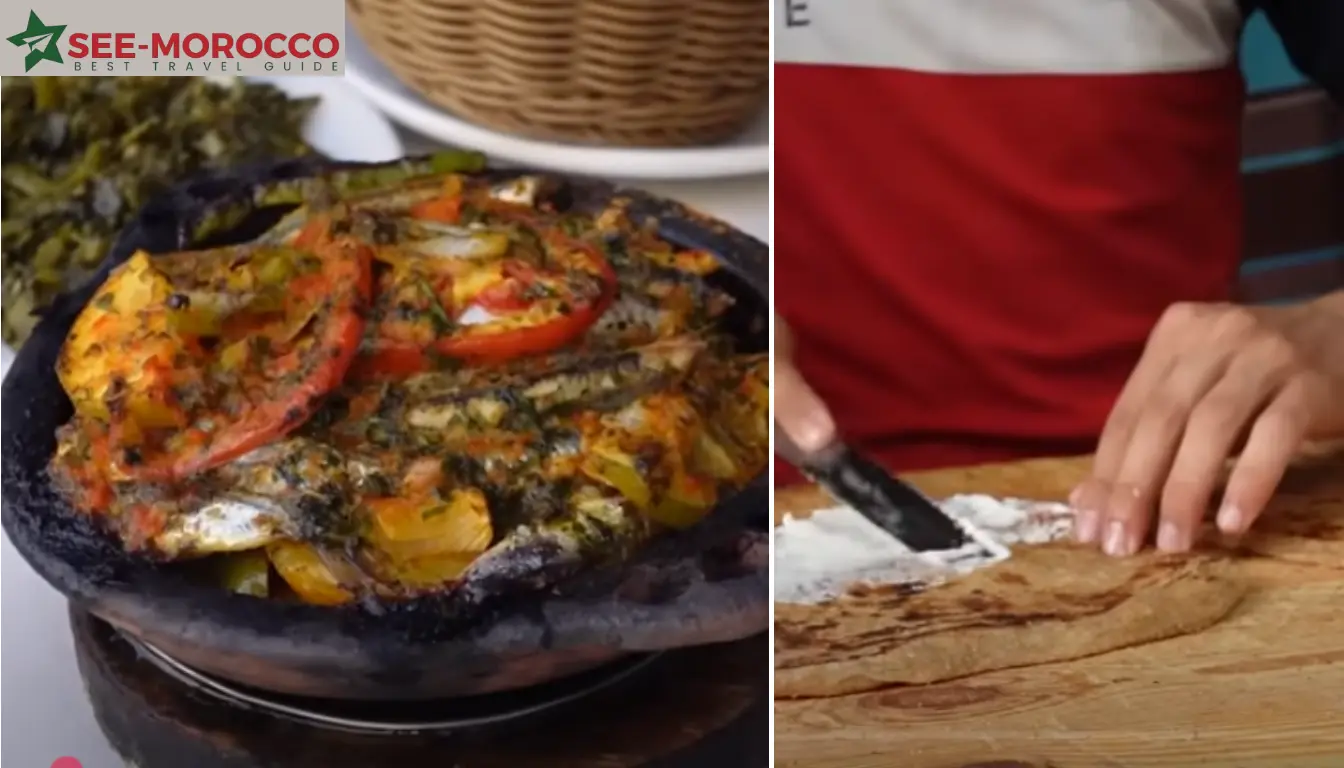
Tangier’s food leans toward the sea. Expect fresh fish, a strong café culture and Spanish touches alongside Moroccan classics.
- Fish restaurants near the port: grilled sardines and other fish of the day. Check the price by weight before ordering.
- Café Hafa: the clifftop café above the Strait, open since 1921 and long associated with the writers and musicians who passed through Tangier. Come for mint tea and the view, not the food.
- Gran Café de Paris (Place de France): the classic café of the new town, known from the International Zone era.
Avoid: restaurants with photo menus on the main tourist streets. You’ll pay tourist prices for average food.
The Beaches
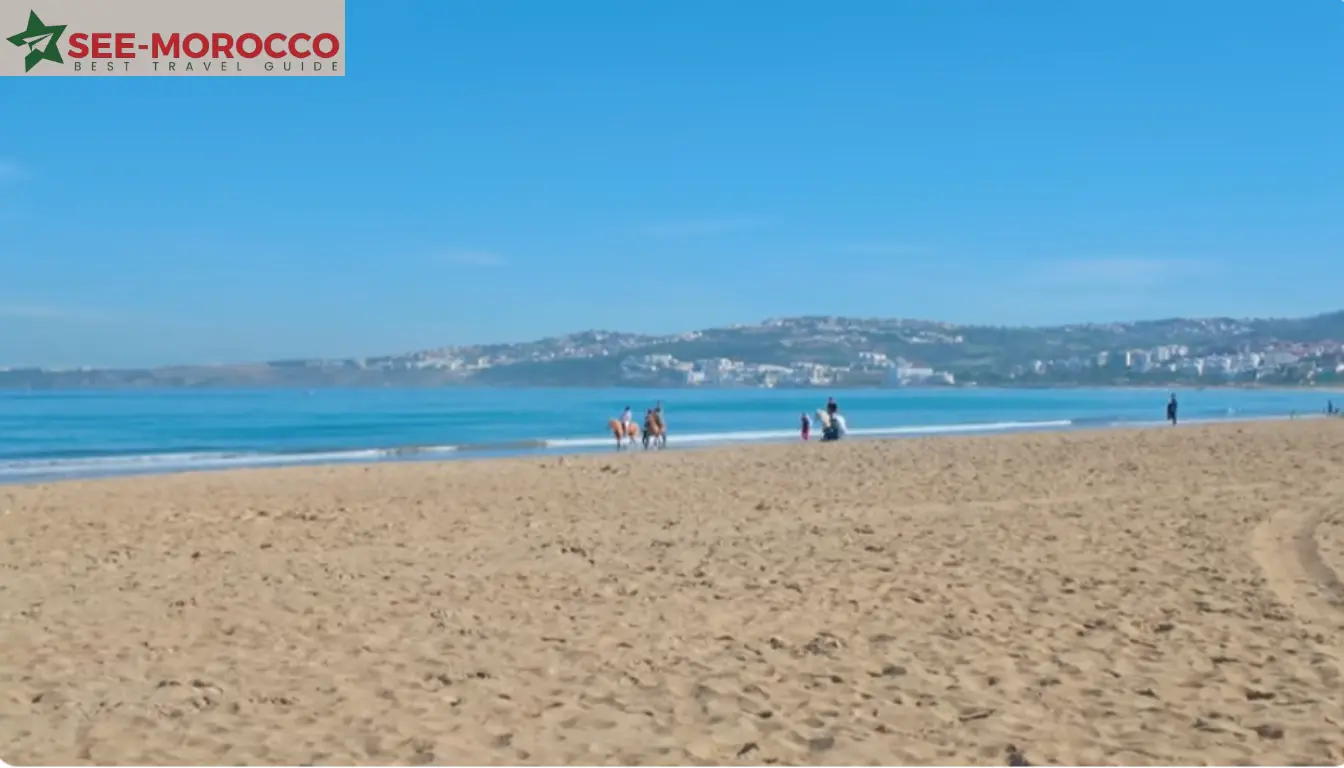
Tangier’s city beaches are urban beaches: convenient, busy on weekends, and not the wild Atlantic coast you’ll find further south.
- Malabata: the long beach along the bay east of the centre, lined with hotels and cafés.
- Merkala: smaller, west of the centre below the cliffs.
Honest take: don’t come to Tangier for the beaches. For beach time, Asilah or the Atlantic coast toward Cap Spartel are better options.
Tangier’s Literary Legacy
- Paul Bowles (1910–1999) lived in Tangier from the late 1940s until his death. The Sheltering Sky (1949) is still one of the best-known novels set in North Africa.
- William Burroughs wrote much of Naked Lunch in Tangier in the 1950s.
- Galerie Delacroix, run by the French Institute, shows contemporary art in the new town.
Getting to Tangier
- High-speed train (Al Boraq): about 2h10 from Casablanca and 1h20 from Rabat. Tanger Ville station is in the city. Book on the official ONCF site.
- Ferry from Tarifa: about 1 hour, arriving at Tanger Ville port, in the city itself.
- Ferry from Algeciras: arrives at Tanger Med, a large port roughly 40 km east of the city, so plan onward transport.
- By plane: Tangier Ibn Battouta Airport is south of the city. Use the official taxi rank and agree the fare before you leave.
Getting Around Tangier
- Petit taxis: the easiest way around the city. Ask for the meter.
- On foot: fine for the medina, Kasbah and new town. The hills are real.
- Grand taxis: for Cap Spartel, the beaches and nearby towns. Agree the price first.
- Car rental: useful for day trips, not needed in the city.
Day Trips from Tangier
- Chefchaouen: the blue town in the Rif, about 2–2.5 hours by road. Buses run from Tangier’s main bus station.
- Tetouan: about an hour away, with a UNESCO-listed medina and a strong Andalusian and Spanish character. Fewer tourists than Fes or Marrakech.
- Asilah: a small Atlantic town with Portuguese ramparts, white houses and murals, under an hour south by train or road.
Practical Information
- Best time to visit: spring (April–June) and autumn (September–October). Summer is busy; winter is mild but can be wet and windy.
- How long: two days covers the medina, Kasbah, Cap Spartel and the American Legation. Add a third for a day trip.
- Currency: Moroccan dirham (MAD). ATMs are easy to find in the new town.
- Languages: Darija (Moroccan Arabic) first. Spanish is widely understood here, more than elsewhere in Morocco; French is common; English in hotels and tourist businesses.
- Safety: Tangier is generally safe. The main hassle is touts, not crime. A polite, firm “la, shukran” (no, thank you) and walking on usually works.
Where to Stay in Tangier
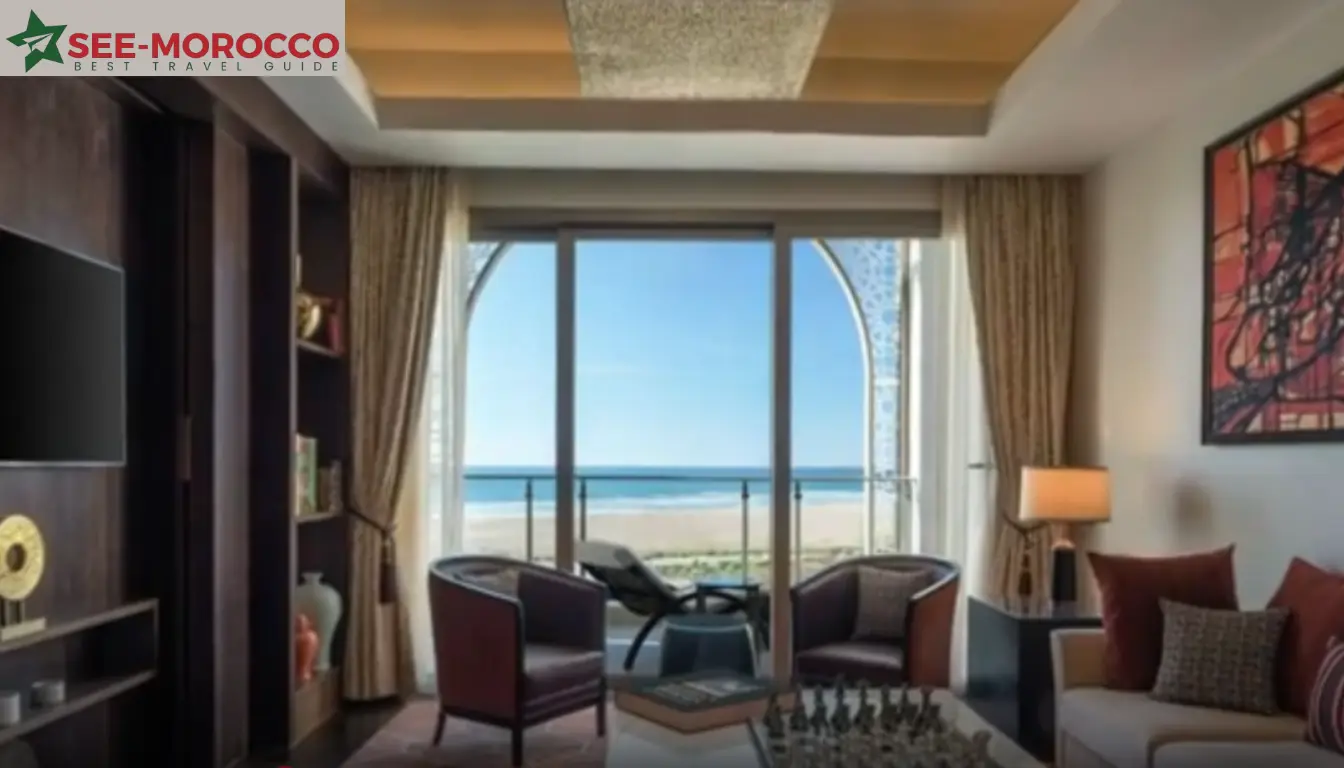
Choose the area first; the right hotel depends on it.
- Medina and Kasbah: riads and guesthouses inside the old walls. Best for atmosphere and walking to the sights. Expect stairs and no car access.
- Ville Nouvelle (new town): hotels around Boulevard Pasteur and Place de France. Easier access by taxi, more restaurants and cafés. El Minzah, a historic hotel from 1930, is here.
- Malabata / seafront: newer, larger hotels along the bay. Good for families and beach time, further from the medina.
My recommendation: for a first visit of two or three nights, stay in the medina or Kasbah if you’re fine with stairs; otherwise the new town, close to Place de France.
FAQ: Tangier, Morocco
Where is Tangier?
Tangier is in northern Morocco, in Africa, on the Strait of Gibraltar, where the Atlantic Ocean meets the Mediterranean Sea.
Is Tangier in Morocco or Spain?
Tangier is in Morocco. It sits across the Strait of Gibraltar from Spain, about an hour by fast ferry from Tarifa.
Is Tangier worth visiting?
Yes, especially if you’ve already seen Marrakech and Fes and want a different side of Morocco: the Kasbah views, the International Zone history and a more Mediterranean atmosphere.
How many days do you need in Tangier?
Two days for the main sights; three if you want a day trip to Chefchaouen, Tetouan or Asilah.
Is Tangier safe for tourists?
Generally yes. Expect touts in the medina rather than serious crime, and use normal city awareness.
What is Tangier famous for?
Its position on the Strait of Gibraltar facing Europe, its International Zone history (1923–1956), its writers, especially Paul Bowles and William Burroughs, and Cap Spartel, the northwestern corner of Africa.
Can you see Spain from Tangier?
Yes, on clear days the Spanish coast is visible from the Kasbah, Café Hafa and Cap Spartel.
What language is spoken in Tangier?
Darija (Moroccan Arabic) first. Spanish is widely understood, French is common, and English is spoken in hotels and tourist businesses.
How do you get from Tangier to Marrakech?
By train: Al Boraq to Casablanca (about 2h10), then a regular train to Marrakech (about 3 hours). Allow 5–6 hours in total with the connection.
Planning a trip to Tangier? Ask in the comments and I’ll help you plan your days.