Most travelers skip Rabat. They fly into Casablanca, take the train to Marrakech, and consider that the itinerary. Rabat, sitting between those two cities on the Atlantic coast, gets treated as a transit point.
This is a mistake. I came from Marrakech by train and bus, and I spent time at the Hassan Tower, the Mohammed V Mausoleum, Chellah, the Kasbah des Oudayas, and the old medina. The tourists I met there — most of whom had also arrived with low expectations — kept saying the same thing: they hadn’t expected Rabat to be this good.
What Rabat Morocco Actually Is
Rabat Morocco has been the country’s capital since 1912. It’s where the King lives, where the government sits, and where the country’s diplomatic corps operates. Unlike Marrakech or Fez, it wasn’t built for tourism — it was built for governance.
That makes it quieter, cleaner, and considerably less pressured than the tourist cities. No one approaches you with offers to show you around. The medina is a place where people actually live and shop, not primarily a tourist market.
The city sits on the Atlantic coast at the mouth of the Bou Regreg river, with the twin city of Salé on the opposite bank.
→ Best cities to visit in Morocco
Hassan Tower and Mohammed V Mausoleum
These two sites together are the reason to come to Rabat Morocco, and they genuinely deliver.
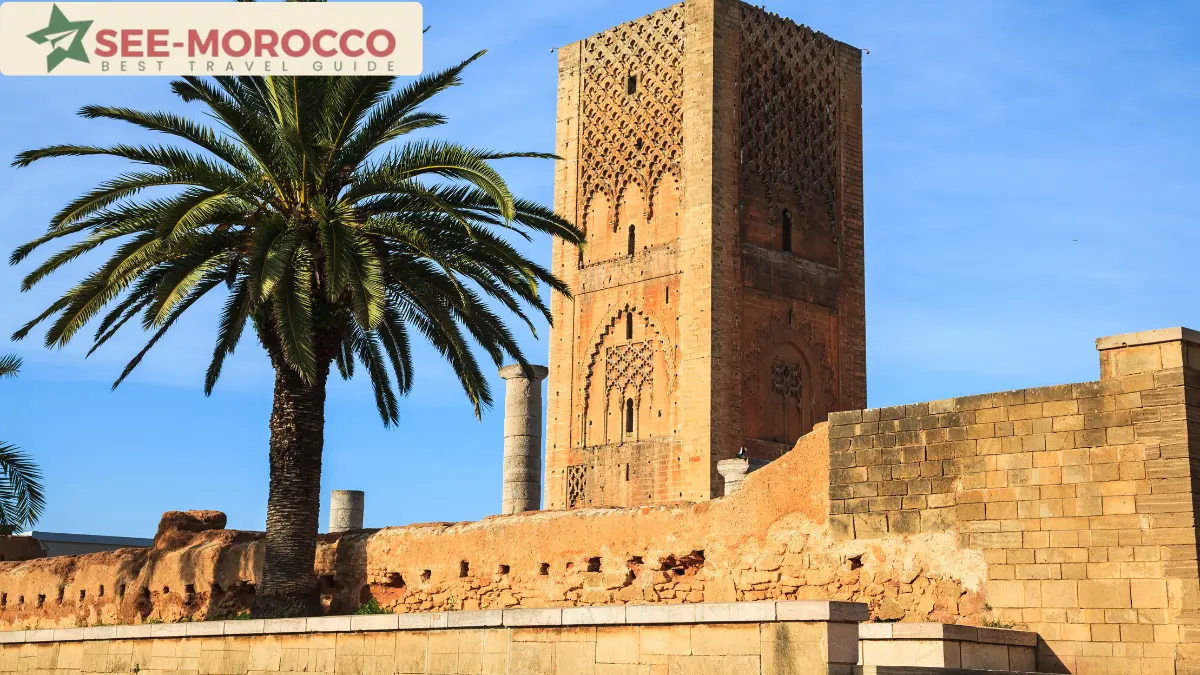
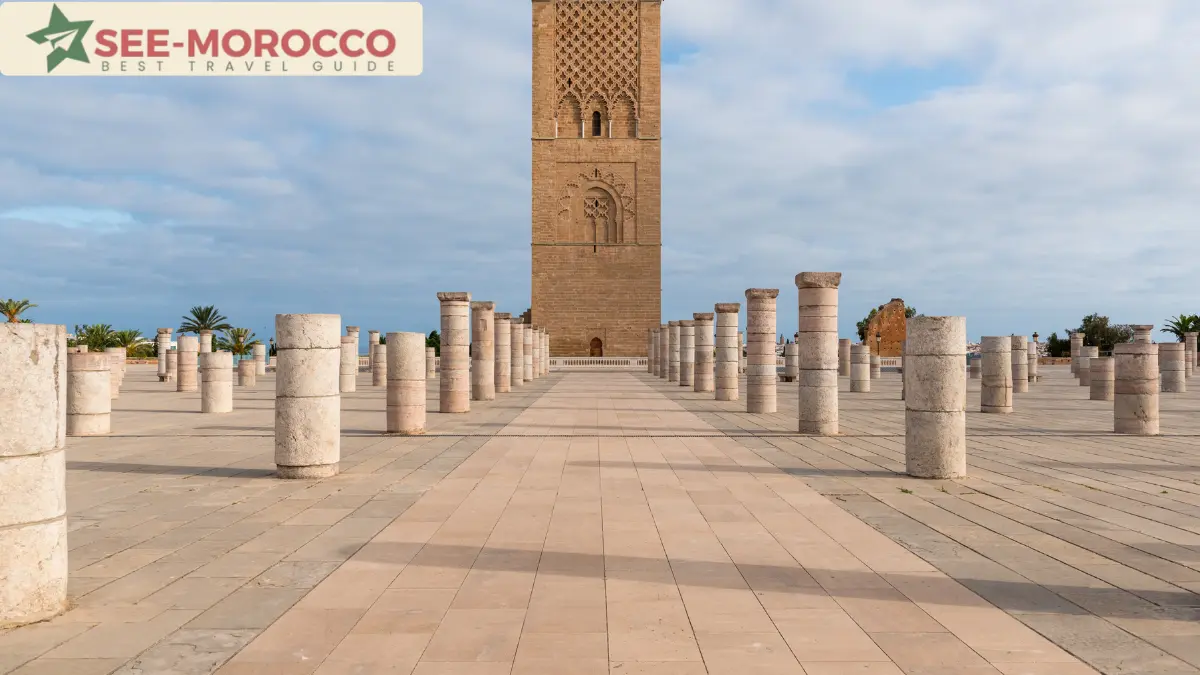
The Hassan Tower is the unfinished minaret of a mosque begun in the 12th century under Sultan Yacoub al-Mansour. Construction stopped when he died in 1199. What remains is a 44-meter tower surrounded by the columns of what would have been one of the largest mosques in the world — 200 columns still standing on the esplanade, each one cut off at the same height, a forest of stone in the open air.
The Mohammed V Mausoleum sits directly across from the tower — built in 1971 to house the tomb of King Mohammed V and his two sons. The craftsmanship is extraordinary: carved plaster, zellige tilework, painted cedar ceilings. Guards in traditional dress stand at the entrance. Non-Muslims can enter and view the marble tomb from a gallery above.
I visited both in the same morning. The tourists around me — a French couple, a group from Japan, several Americans — were more engaged here than I’d seen them anywhere in Morocco. One woman told me it was the most beautiful building she’d seen on the entire trip.
Chellah — The Ruins Outside the Walls
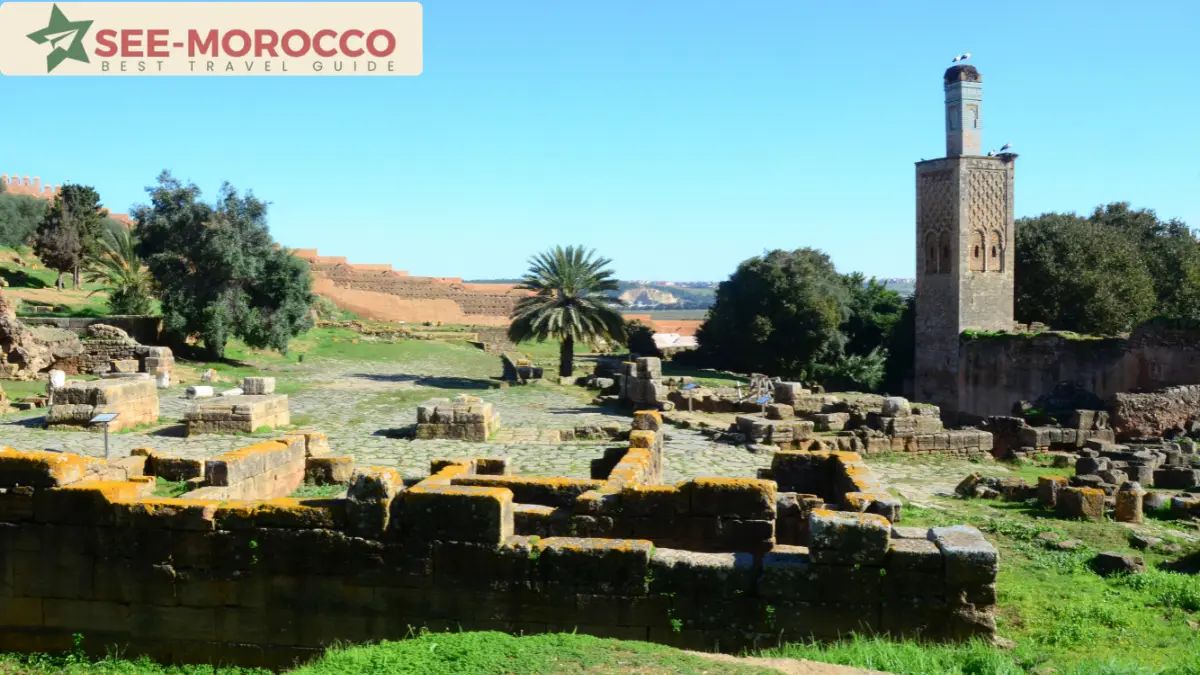
Chellah is a walled necropolis on the southern edge of Rabat Morocco, built on the site of a Roman city (Sala Colonia). The Merinid dynasty converted it into a royal burial ground in the 14th century.
What you find inside: Roman ruins, Merinid tombs, a mosque, gardens, and storks nesting on every minaret and tower. The combination of Roman archaeology and medieval Islamic architecture, all overgrown with gardens and wildlife, is unlike anything else in Morocco.
I walked through Chellah on my own. Entry is 70 MAD. Give it an hour — more if you want to explore the Roman sections carefully.
Kasbah des Oudayas
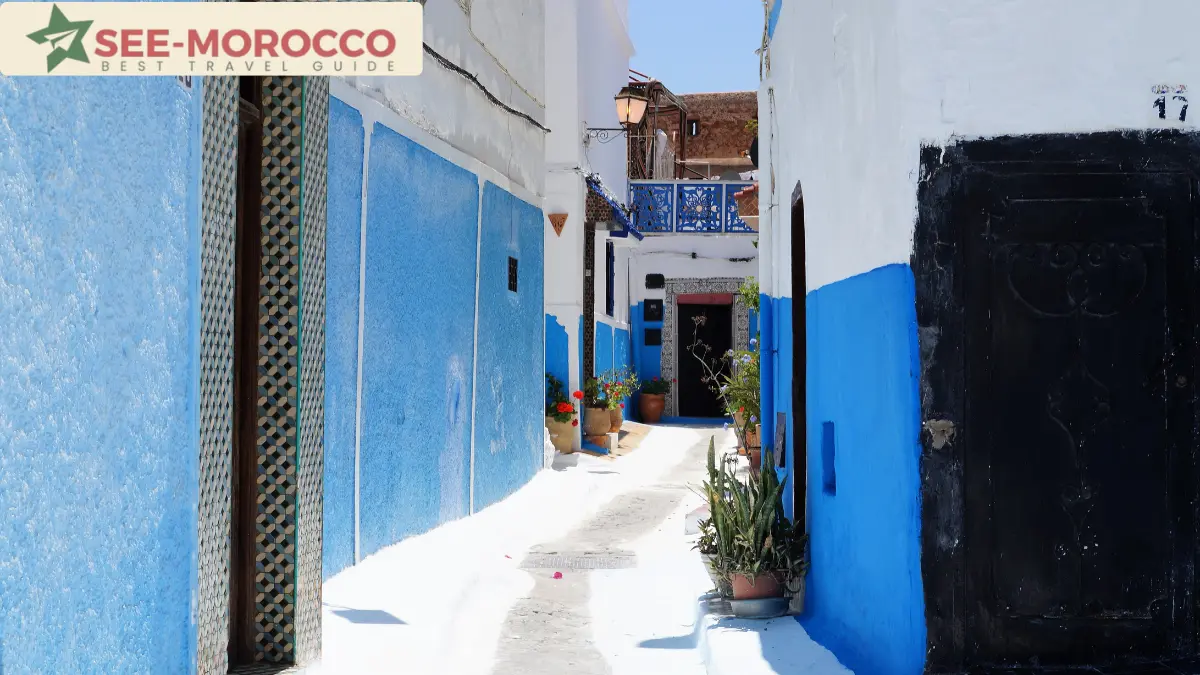
The Kasbah sits at the northwestern tip of Rabat Morocco, where the Bou Regreg river meets the Atlantic. It’s a fortified Almohad citadel — blue and white painted streets, a mosque, the Andalusian Garden, and a platform at the edge with views over the river mouth to Salé and the ocean.
The streets are genuinely blue and white, narrower than they look in photos, and quiet on weekday mornings. The Andalusian Garden inside the walls is shaded, tiled, and peaceful — a good place to stop after the walk up.
The platform view over the river and ocean is worth the climb alone.
The Medina
Rabat Morocco’s medina is smaller and calmer than Marrakech’s or Fez’s. It’s a working neighborhood rather than a tourist destination, which means the souks sell things people actually need — fabric, hardware, food — alongside the craft stalls.
Worth a few hours of wandering. The pressure to buy is low, the streets are navigable, and the food stalls near the medina entrance are good for a cheap lunch.
⚠️ Important note: Some guides list the Royal Palace (Palais Royal) as a visitor attraction with opening hours. The Royal Palace is the official residence of the King of Morocco and is not open to the public. You can see the exterior and the main gate (Bab Ar-Rouah) from outside.
→ Morocco travel guide for first-time visitors
Getting There
From Marrakech: Train to Casablanca, then train to Rabat — total journey around 4-5 hours. Comfortable and reliable.
From Casablanca: Direct train, about 1 hour. The Al Boraq high-speed train also serves this route.
From Fez: Direct train, about 2.5 hours.
Getting around Rabat Morocco: Trams (Line 1 and Line 2) cover the main tourist areas well. Petit taxis are cheap and easy for shorter distances.
→ 10 days in Morocco itinerary
How Long to Spend
One full day covers the main sites: Hassan Tower + Mausoleum in the morning, Chellah after lunch, Kasbah des Oudayas in the late afternoon (the light is better then).
Two days lets you add the medina properly and a half-day in Salé across the river.
Most people treat Rabat Morocco as a stop between Casablanca and Fez — which works, but a dedicated day is better than a rushed transit.
FAQ
Is Rabat Morocco worth visiting? Yes — particularly if you want to see a Moroccan city that isn’t designed primarily for tourists. The Hassan Tower, Mausoleum, and Chellah are genuinely impressive sites.
How do I get from Marrakech to Rabat? Train to Casablanca, then train to Rabat Morocco. Total about 4-5 hours. Book ONCF tickets in advance for the best prices.
Is the Royal Palace in Rabat open to visitors? No. The Royal Palace is the King’s official residence and is not open to the public. You can see the exterior and the main gate from outside.
How many days do you need in Rabat Morocco? One full day covers the main sites. Two days is comfortable and allows for Salé across the river.
Is Rabat safe for tourists? Yes. It’s one of Morocco’s safest cities for visitors — less hustle than Marrakech, significant police presence in tourist areas.
What is Rabat Morocco known for? The Hassan Tower, Mohammed V Mausoleum, Chellah necropolis, and Kasbah des Oudayas. Also as Morocco’s political capital and royal city.