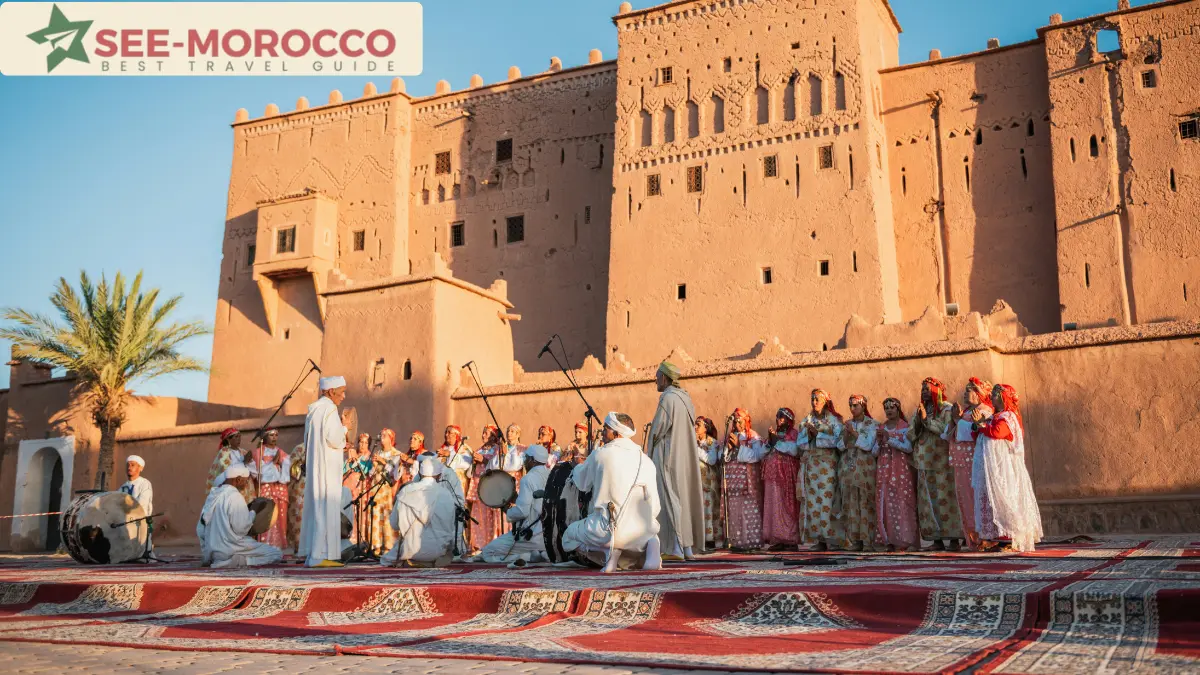
The best way to understand Moroccan dance isn’t through a stage performance or a folklore show — it’s at a wedding, late at night, when the music picks up and the whole courtyard turns into one moving circle. I’ve attended a lot of weddings, in both Ouarzazate and Marrakech, and the dancing at each one tells you something different about the region you’re in.
Moroccan Dance in Ouarzazate: The Ahwach Circle
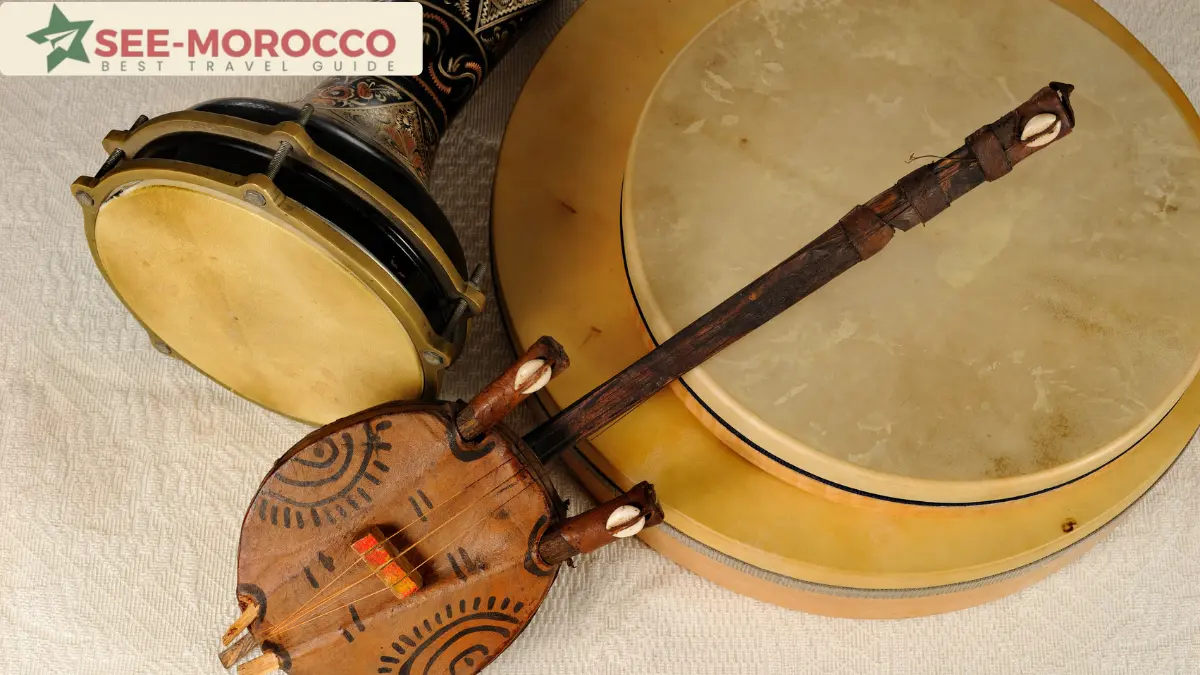
In Ouarzazate and the surrounding Amazigh (Berber) communities, the dance you’ll see at almost every wedding is Ahwach — a collective, circular dance built around rhythm more than choreography. Men and women dance together in the same circle, moving in sync to the beat of the bendir (a large hand-held frame drum) and the taarija (a smaller, higher-pitched hand drum), often joined by clapping and call-and-response singing.
What makes Ahwach distinct is how communal it is. This isn’t a performance a few skilled dancers put on for an audience — it’s something the whole gathering does together, hands linked or arms moving in unison, building in intensity as the night goes on. The rhythm from the bendir and taarija sets the pace, and the dancing genuinely doesn’t start until deep into the night, once the earlier parts of the wedding — the meal, the formalities — are done.
Traditional Amazigh dress is central to these weddings too. Women wear the authentic Amazigh dress and jewelry associated with their specific region, and the styling itself is part of the occasion’s identity, distinct from what you’d see at a wedding further north.
Why the Bride Doesn’t Always Dance
One detail that surprised outsiders I’ve talked to: in my own area near Ouarzazate, it’s not customary for the bride herself to dance. That’s specific to our local tradition — in other parts of the Ouarzazate region, and further out, brides do dance, and it’s a normal, expected part of the celebration. Morocco isn’t one uniform culture even within a single region; customs shift from one community to the next, sometimes within a short drive of each other.
Marrakech: A Different Rhythm
Weddings in Marrakech have a noticeably different feel. Instead of Ahwach’s circular, collective structure, the dancing leans more toward Chaabi — Morocco’s popular wedding music genre, more song-and-dance-performance oriented, with a live band or DJ driving a faster, more urban rhythm than the drum-led Ahwach circles of Ouarzazate.
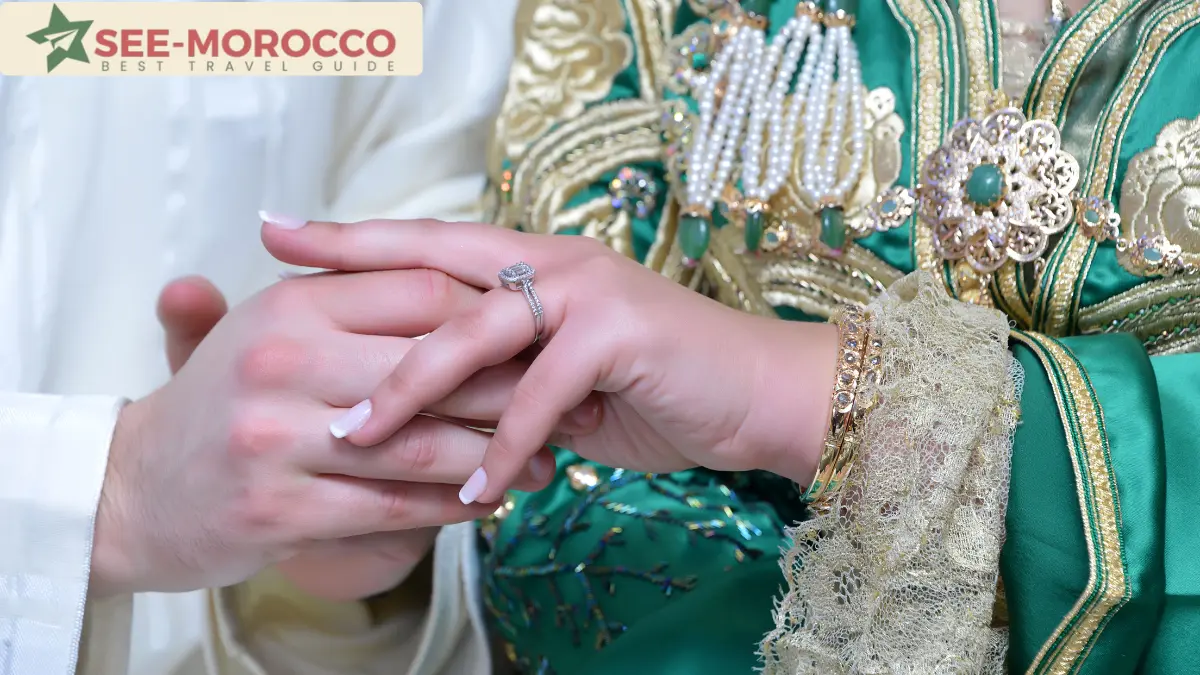
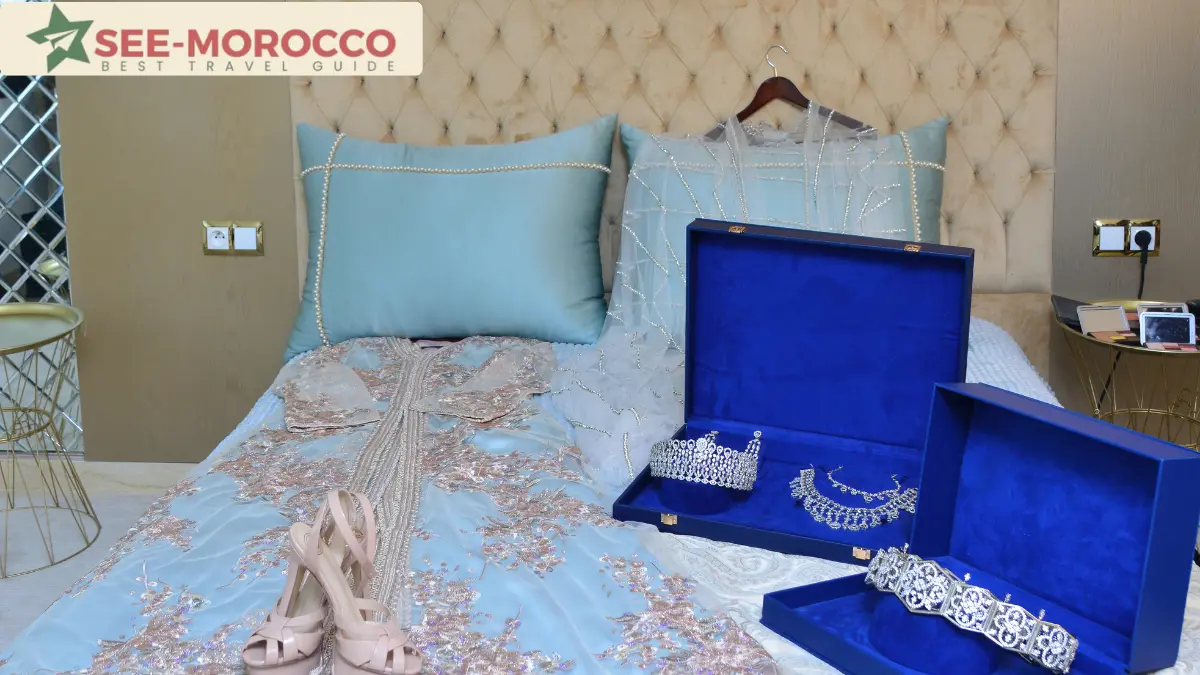
The clothing shifts too. Where Ouarzazate weddings center on authentic Amazigh dress, Marrakech weddings are built around traditional Moroccan garments like the takchita (an elaborate two-piece kaftan, often heavily embroidered and worn with a decorative belt) and the caftan itself. Brides in Marrakech typically change outfits multiple times throughout the night, each one paired with a different moment in the celebration.
What a Wedding Night Actually Looks Like
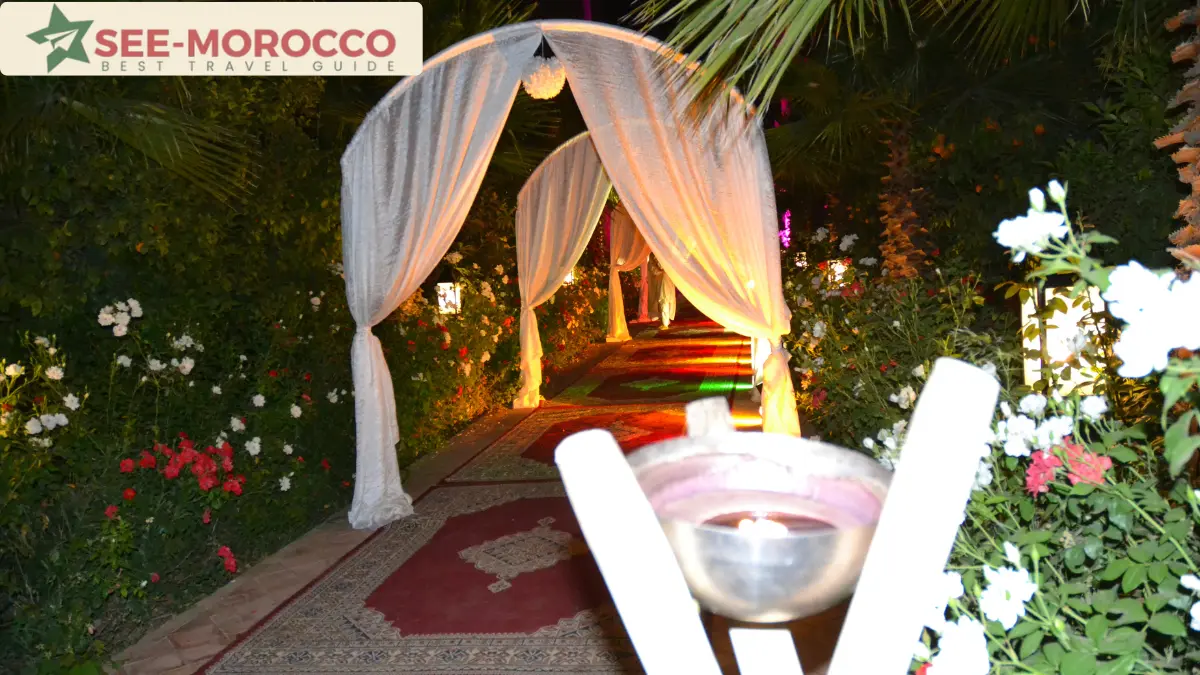
If you’re attending a Moroccan wedding for the first time, here’s roughly how the night unfolds: the earlier hours are for the meal, greetings, and formal parts of the celebration. The real dancing doesn’t start until later at night, once the energy shifts and the music takes over. In Ouarzazate, that means the bendir and taarija start up and the Ahwach circle forms. In Marrakech, it’s more likely a live band or DJ pushing Chaabi rhythms, with guests dancing in smaller groups rather than one unified circle.
Either way, don’t expect a quiet early night. Moroccan weddings, especially in the south, are known for running well past midnight, with the dancing often being the last thing to wind down.
Practical Tips If You’re Invited to a Moroccan Wedding
Expect a long night: Weddings routinely run late, with the dancing portion happening well after dinner. Pace yourself.
Dress respectfully but festively: Moroccan weddings are colorful, formal occasions. If you’re unsure what to wear, ask your host — regional customs vary, as shown by the difference between Ouarzazate and Marrakech.
Don’t be shy about joining in: Ahwach in particular is built around group participation, not watching from the sidelines. If you’re invited into the circle, it’s meant as a welcome, not a spectacle for you to observe.
Regional customs vary — ask before assuming: Whether the bride dances, what music plays, and what’s worn all shift by region and even by family. What’s true in one town isn’t necessarily true one province over. If you’re planning a broader trip and want more on regional differences, our first-time visitor tips guide covers more of this ground.
Frequently Asked Questions About Moroccan Wedding Dance
What is Ahwach dance? Ahwach is a traditional Amazigh (Berber) collective circle dance found in regions like Ouarzazate, performed to the rhythm of hand drums like the bendir and taarija, with men and women dancing together in a communal circle rather than as a staged performance.
Does the bride dance at Moroccan weddings? It depends on the region. In some areas near Ouarzazate, local custom means the bride does not dance. In other parts of the Ouarzazate region and in cities like Marrakech, brides commonly do dance as part of the celebration.
What’s the difference between Ahwach and Chaabi? Ahwach is a rural Amazigh circle dance centered on hand drums and communal participation, typical of areas like Ouarzazate. Chaabi is Morocco’s popular wedding music genre, more common in cities like Marrakech, usually performed by a live band or DJ with a faster, more contemporary rhythm.
What instruments are used in Moroccan wedding dancing? The bendir (a large frame drum) and taarija (a smaller hand drum) are central to Amazigh Ahwach dancing in regions like Ouarzazate. Chaabi music in cities often adds a wider band setup with additional instruments.
What do people wear to Moroccan weddings? It varies by region. In Ouarzazate, authentic Amazigh dress and jewelry are common. In Marrakech, guests and brides often wear the takchita or caftan, traditional Moroccan garments, with brides typically changing outfits several times during the night.
What time does dancing start at a Moroccan wedding? Dancing typically starts late at night, after the meal and formal parts of the celebration are finished. It’s common for weddings to run well past midnight, with dancing continuing until the early hours.
Final Thoughts
Moroccan wedding dance isn’t a single tradition — it changes from region to region, sometimes even within the same province. What stays constant is how central it is to the celebration itself: whether it’s the drum-led Ahwach circle of Ouarzazate or the Chaabi rhythms of a Marrakech wedding, the dancing is where the night really comes alive.