Every Friday in Morocco, somewhere around noon, almost every kitchen starts to smell the same way. That smell is couscous — slow-steaming, butter-touched, mixed with the warmth of cinnamon and saffron. I grew up with it in Ouarzazate, and I can tell you that the couscous you find in restaurants outside Morocco is rarely the real thing.
The kitchen in our home had a specific Friday smell that I can still recognize anywhere — somewhere between buttered semolina, slow-cooked lamb, and saffron drifting out of the couscoussier.
If you want to learn how to cook Moroccan couscous properly, you have to forget the box. The “just add boiling water” method is not how we do it. Real Moroccan couscous is steamed, never boiled. It takes time. And it is worth every minute.
This guide will walk you through the traditional method my family has used for generations — the same one most Moroccan grandmothers still defend with passion.
Why Friday Couscous Matters
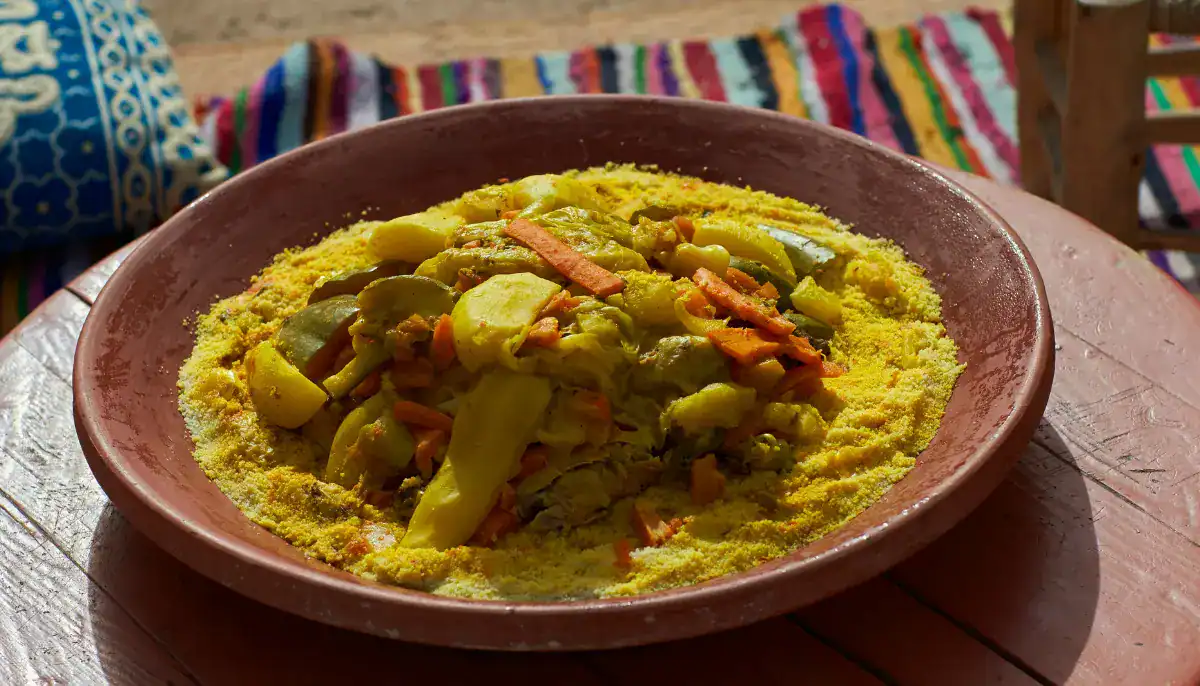
In Morocco, Friday is the day of the week when families gather after the noon prayer. The meal that brings everyone to the table is almost always couscous. Big plate, eaten with the right hand or a spoon, shared by everyone seated around it.
This is not just a meal. It is a habit older than anyone can remember — recognized by UNESCO in 2020 as part of the intangible cultural heritage of Morocco, Algeria, Mauritania, and Tunisia. Even in cities now where life moves fast, people try to keep this small ritual alive. My brother used to drive for an hour from Ouarzazate city center back to our family home in the outskirts almost every Friday just to eat couscous. He used to say no restaurant version came close.
So when you cook authentic Moroccan couscous, you are not just preparing food. You are taking part in something that has held Moroccan families together for centuries.
What Makes Moroccan Couscous Different
People often ask me how Moroccan couscous differs from the Algerian, Tunisian, or French versions. Like much of Moroccan cuisine, it carries layers of cultural and historical influence. The answer is in three things:
The grain itself. Moroccan couscous is usually rolled fine, which is what makes it so light after steaming. The semolina is hand-rolled traditionally, though most of us now use the dried version from the shop. Either way, it is finer than what you usually find in European supermarkets.
The technique. We do not pour boiling water on couscous. We steam it. Three times. Each time it fluffs up more, absorbs flavor better, and becomes lighter. This is the part most foreign recipes skip — and it is the part that matters most.
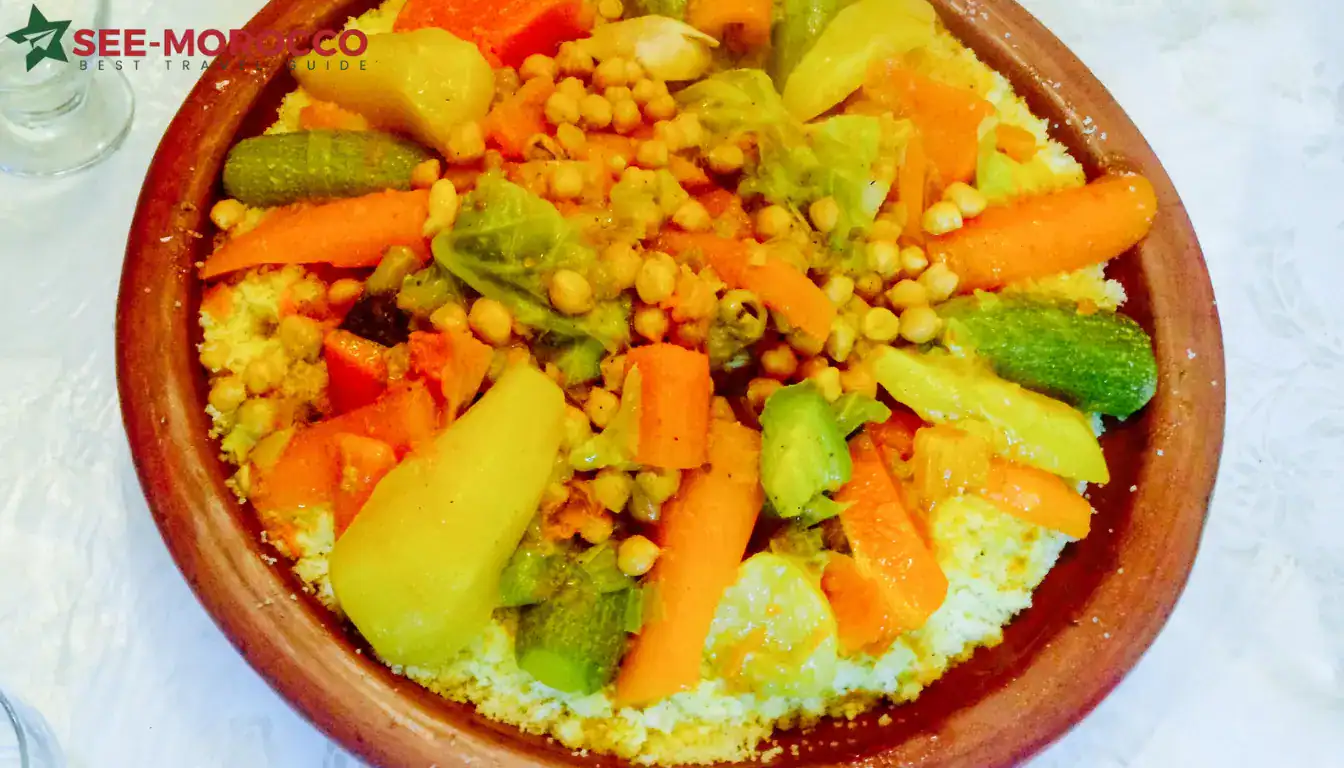
The flavor profile. Moroccan couscous leans warm and slightly sweet. We use ras el hanout, cinnamon, saffron, ginger, and sometimes a touch of honey in the broth. It is layered, not spicy in the chili sense, but deeply aromatic. The vegetables are cooked separately in a broth, then arranged on top of the grain like a small mountain.
Essential Equipment: The Couscoussier
Before you start, you need the right pot. A couscoussier is a two-piece pot: a deep bottom where the broth and meat cook, and a perforated top where the couscous steams.
You can find one in any Moroccan market — including the souks in the medina of Ouarzazate, where you can also browse beautiful traditional Moroccan handicrafts. — for around 150-300 dirhams (roughly $15-30). Outside Morocco, look online for “couscous steamer” or check Middle Eastern grocery stores.
If you really cannot find one, here is what works:
- A large stock pot
- A fine-mesh steamer that fits on top
- A clean kitchen towel to seal the gap between the two
The seal matters. If steam escapes from the sides instead of going through the couscous, the grains will not cook properly. Some Moroccan cooks wrap a strip of fabric soaked in a flour-water paste around the joint. I just use a damp towel and it works fine.
Other useful tools:
- A wide, shallow bowl (called a gsâa) for hand-mixing the grain
- A wooden spoon
- A small bowl for oil and water during the fluffing stage
Ingredients for Traditional Moroccan Couscous
For 4-6 people:
For the couscous:
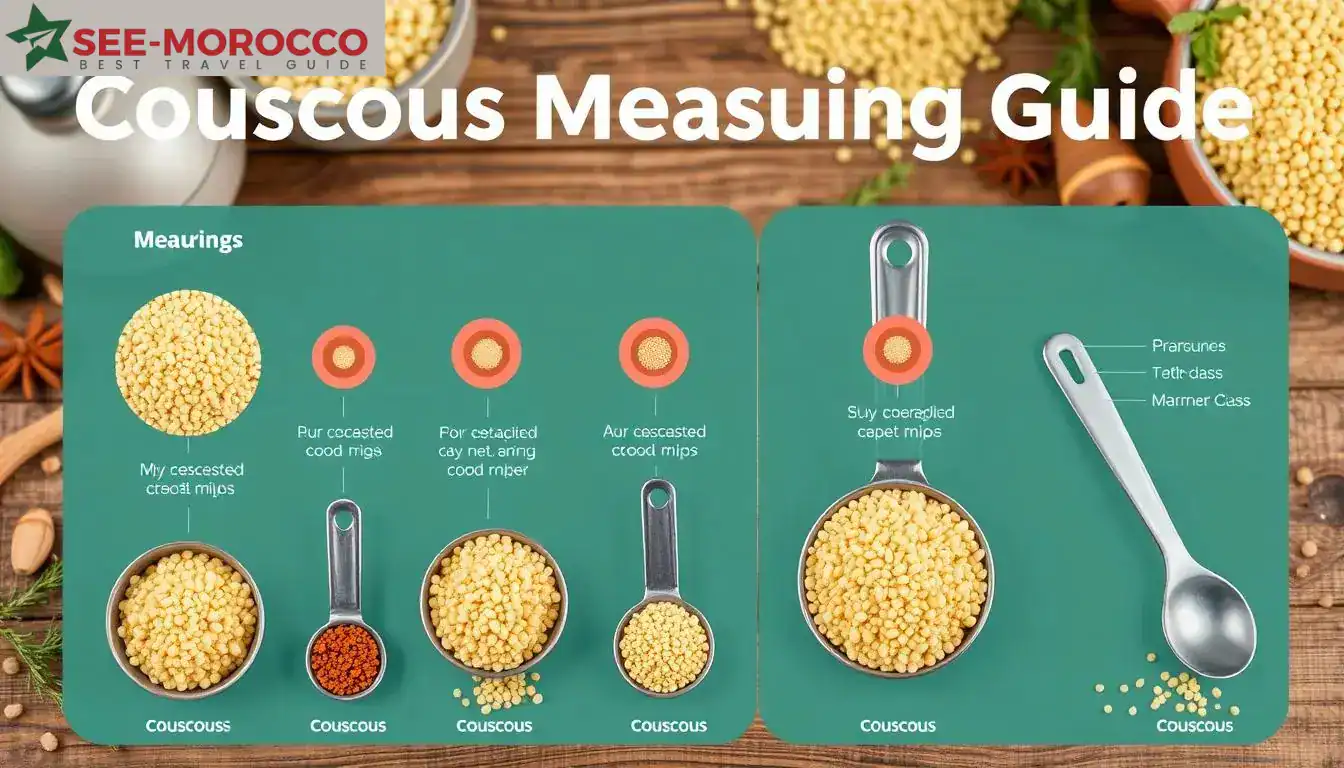
- 500g (about 3 cups) fine couscous grain
- 3 tablespoons olive oil
- 2 tablespoons unsalted butter (or smen, if you can find it)
- Salt to taste
- Warm water for steaming and fluffing
For the broth and vegetables:
- 500g lamb shoulder or chicken thighs (lamb is traditional)
- 2 onions, roughly chopped
- 3 tomatoes, peeled and diced
- 2 carrots, cut into thick chunks
- 1 small turnip, quartered
- 2 zucchinis, cut in half
- 1 small cabbage wedge
- 1 cup cooked chickpeas
- 1 small piece of pumpkin (optional but traditional)
- 3 tablespoons olive oil
- 1 teaspoon ground ginger
- 1 teaspoon ground turmeric
- 1 teaspoon ras el hanout
- A pinch of saffron threads (or 1/2 teaspoon turmeric as backup)
- Salt and black pepper
- A handful of fresh cilantro and parsley, tied together
- 1.5 liters of water
About smen: this is fermented butter, salty and pungent. A small spoonful adds a depth you cannot get from anything else. If you can find it, use it. If not, regular butter works.
How to Cook Moroccan Couscous: Step by Step
This is the heart of the recipe. Read through it once before starting. The whole process takes about 2 to 2.5 hours, but most of that time is hands-off.
Step 1: Prepare the Broth Base
In the bottom of the couscoussier, heat the olive oil over medium heat. Add the meat and let it brown for a few minutes on each side. Toss in the chopped onions and cook until they soften, about 5 minutes.
Add the diced tomatoes, ginger, turmeric, ras el hanout, saffron, salt, and pepper. Stir it all together so the meat gets coated in spice. Pour in the water, add the tied herbs, cover, and let it simmer on low heat for 30 minutes.
You will start to smell something special by minute fifteen. That smell is what Friday means in our house.
Step 2: First Steam of the Couscous
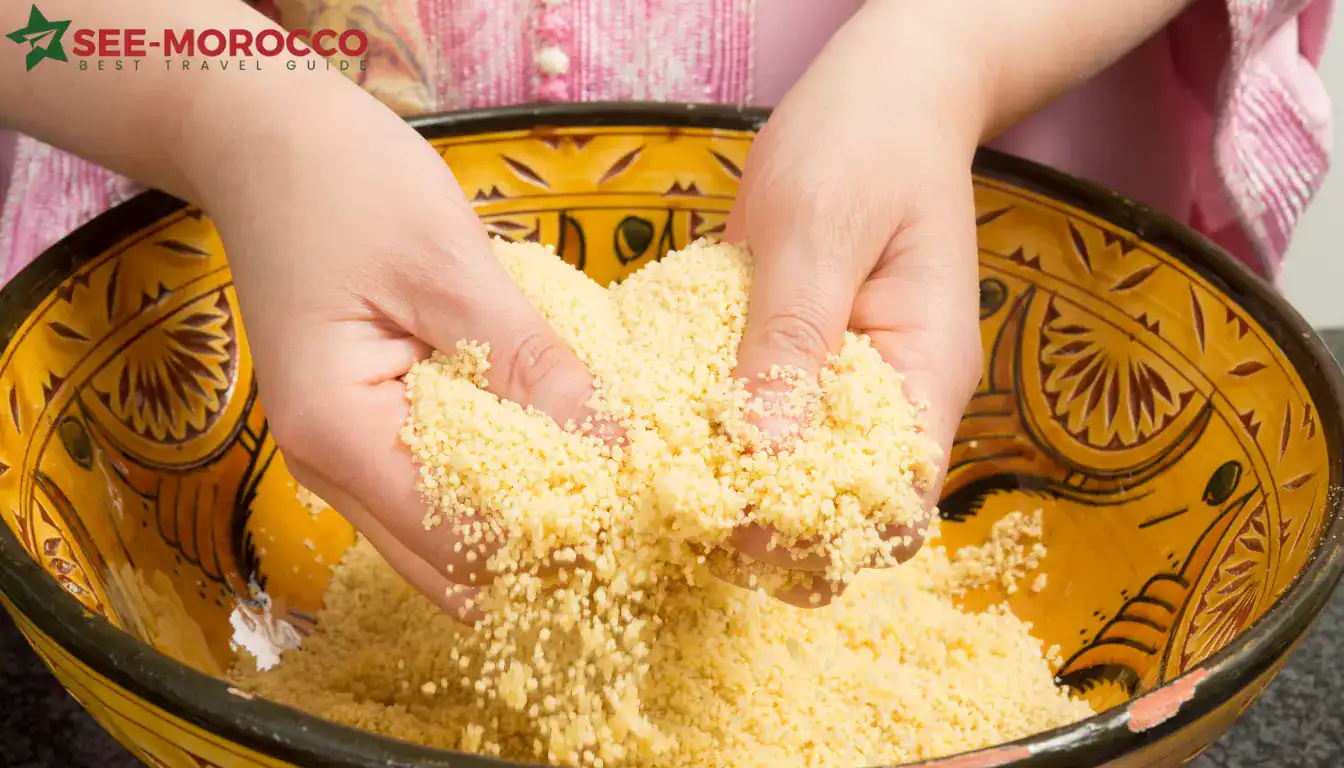
While the broth simmers, pour your couscous into the wide bowl. Add 3 tablespoon of the olive oil and a pinch of salt (the rest goes in after the next steams). Rub the grains between your palms for about 2 minutes — this separates them and coats each one in oil. This step is important. Do not skip it.
Now sprinkle about a cup of warm water over the grains, little by little, while continuing to rub them. The grains should feel damp but not wet. Let them sit for 10 minutes to absorb.
Transfer the couscous to the top section of the couscoussier. Do not pack it down. Place it over the simmering broth and steam, uncovered, for 20 minutes from the moment you see steam rising through the grains.
Step 3: First Fluff and Rest
Tip the steamed couscous back into the bowl. Be careful — it is hot. Use a wooden spoon to break up any clumps, then add another half cup of warm water and a pinch of salt. Rub the grains again to separate them.
Let it rest for 10 minutes. The grains will swell and become tender.
Step 4: Add Vegetables to the Broth
Now is the time to add your harder vegetables to the broth: carrots, turnip, and cabbage. Let them simmer for 15 minutes. Then add the zucchini, pumpkin, and chickpeas. Cook for another 15 minutes.
Taste the broth. Adjust salt. It should taste rich and slightly sweet from the vegetables, with a clear background of spice.
Step 5: Second Steam
Return the couscous to the top of the couscoussier. Steam again for 20 minutes. This second steaming is where the magic really starts. The grains become noticeably lighter, and they begin to absorb the aroma rising from the broth.
Step 6: Third Steam (The One That Matters Most)
Take the couscous out one more time. Add the butter — or smen if you have it — and break it through the grains while they are hot. Add a final splash of warm water if the couscous feels too dry.
Return it to the steamer for the last 15-20 minutes. By now, your kitchen smells like a Moroccan home on a Friday afternoon.
Step 7: Serve
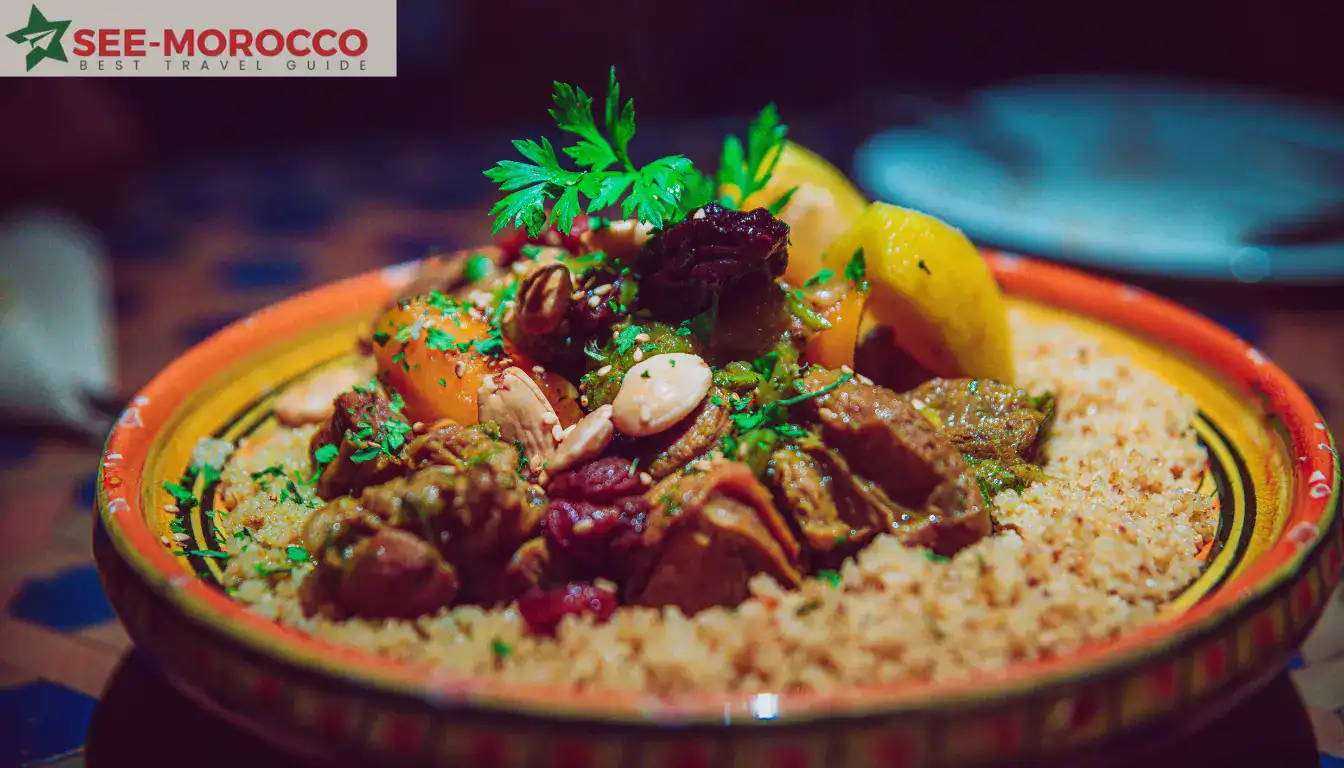
Pile the couscous in a large mound on a wide, shallow plate. Make a small well in the center. Arrange the meat in the middle and the vegetables around it like the petals of a flower. Ladle some of the broth over everything — but not too much. Serve the rest of the broth in a separate bowl, so each person can add more if they want.
Eat together, ideally with your hands or a single spoon, gathered around one plate.
The Three-Steam Technique Explained
If you only remember one thing from this guide, remember this: steam, do not boil.
Each of the three steams does something different:
- First steam: Cooks the grain through and gives it a base shape
- Second steam: Lightens the texture and lets the grain absorb broth aroma
- Third steam: Adds fat (butter or smen), which makes the grain glossy and rich
People sometimes ask if they can shortcut this. You can, but the result will not be Moroccan couscous. It will be something else. Steamed couscous has a texture — light, airy, each grain separate — that pour-and-wait couscous simply cannot match.
Couscous Tfaya: A Sweet and Savory Variation
If you want to try the most special version, try couscous tfaya.
Tfaya is a caramelized onion and raisin topping, perfumed with cinnamon and a touch of honey. It is served over couscous with chicken, especially during Eid, weddings, and special family dinners.
To make a simple tfaya topping:
- 4 large onions, thinly sliced
- 100g raisins, soaked in warm water for 10 minutes
- 2 tablespoons butter
- 1 teaspoon cinnamon
- 1 teaspoon ground ginger
- 2 tablespoons honey
- A pinch of saffron
- Salt to taste
Melt the butter in a pan. Add the onions and cook on low heat for 30-40 minutes, stirring often, until they become soft, golden, and almost jam-like. Add the drained raisins, cinnamon, ginger, saffron, honey, and salt. Cook for another 10 minutes until everything is glossy and dark golden.
Spoon it over the couscous and chicken just before serving. The sweet-savory contrast with the spiced broth is something you will remember.
Common Mistakes to Avoid
Even with a good recipe, a few things tend to go wrong. Here are the ones I see most often:
Skipping the rubbing step. Rubbing the grains with oil before the first steam is what keeps them separate. Skip it, and you get a clumpy, sticky mess.
Boiling instead of steaming. This is the cardinal sin. Boiling makes the grains heavy and pasty. The whole point of Moroccan couscous is the light, fluffy texture that only steam can give.
Letting steam escape from the sides. If your couscoussier does not seal properly, the steam goes around the grains instead of through them. Use a damp towel or flour paste to seal the gap.
Using too much water in the broth. The broth should be flavorful, not diluted. If it tastes weak, simmer it uncovered for a few extra minutes to reduce.
Adding all vegetables at the same time. Different vegetables need different cooking times. Carrots and turnips first, zucchini and pumpkin later. Otherwise some will fall apart while others stay raw.
Forgetting the smen. I know it is hard to find outside Morocco, but if you can get a small jar, do it. Smen is butter that’s salted and left to age, traditionally for months, which is where its strong, almost cheesy flavour comes from. that aging is part of what makes the flavor so distinct. A teaspoon is enough to transform the whole dish.
How to Serve and Eat Moroccan Couscous
In Morocco, couscous is served on a large, shallow communal plate. Everyone sits around it. Traditionally, we eat with the right hand — you take a small portion of couscous from the section closest to you, roll it gently into a ball using your fingers and thumb, and eat it. It is harder than it looks. Even Moroccans who grew up doing it can be messy.
If you are not comfortable with hands, use a spoon. Each person eats from the section directly in front of them. You do not reach across the plate.
Buttermilk (lben) is the traditional drink served with couscous. It is slightly sour, cooling, and balances the richness of the dish. Water also works fine.
After the meal, fresh mint tea is non-negotiable. We pour it from height into small glasses, which creates a foam on top. That foam is a sign of a properly made tea.
You’ll find the best couscous in cities like Marrakech, often served in traditional riads.
Storage and Reheating
Leftover couscous keeps well in the fridge for up to 3 days in an airtight container.
To reheat properly, do not microwave it directly — the grains turn hard and dry. Instead:
- Put the couscous in a heatproof bowl
- Sprinkle a few tablespoons of water over it
- Cover with a damp cloth
- Steam it for 10 minutes over simmering water, or microwave covered for 2 minutes
The broth and vegetables reheat separately, gently on the stove.
Frozen couscous works too, but the texture suffers a little after thawing. Better to refrigerate and finish within a few days.
Frequently Asked Questions
Can I make Moroccan couscous without a couscoussier?
Yes, but you need some kind of steamer setup. A pot with a fine mesh steamer on top, sealed with a damp cloth, works almost as well. What you cannot do is pour boiling water on the grain and expect the same result.
Is Moroccan couscous gluten-free?
No. Traditional couscous is made from semolina, which comes from wheat. There are gluten-free alternatives made from corn or rice, but they are not the traditional product.
How long does it really take?
About 2 to 2.5 hours from start to finish. Most of that is passive — the broth simmers while you handle other things. The active work is maybe 30-40 minutes spread across the cooking time.
Can I use instant couscous?
You can, but you will not get the same texture. Instant couscous is precooked, so it will not respond to steaming the same way. If you have no choice, prepare it according to package instructions and serve it with a proper Moroccan broth on top. It will still be tasty, just not traditional.
What meat is most traditional?
Lamb is the most traditional, especially in rural and southern Morocco. Chicken is common in the north and in everyday cooking. Beef is used too, especially for special occasions. Vegetarian couscous (without meat) exists and is sometimes served during Ramadan.
Why is my couscous sticky?
Three possible reasons: you did not rub it with oil before steaming, you added too much water, or you boiled it instead of steaming. Try again with the three-steam method and a careful hand with the water.
What is the difference between Moroccan and Israeli couscous?
They are not the same product. Israeli couscous (also called pearl couscous) is much larger — about the size of small peas — and is actually a toasted pasta. Moroccan couscous is fine, almost like sand, and is steamed semolina.
Final Thoughts
Cooking authentic Moroccan couscous is not difficult, but it does ask for patience. The three-steam method is slow on purpose. It is what gives the grain its character.
If your first attempt is not perfect, do not worry. My mother Khadija says it took her months to get her couscous exactly right, and her mother — my grandmother Fatima — said the same. Each family has its small variations. In ours, my mother insists on extra ginger and never skips the pumpkin. She says couscous without it is just not the same.
Make this dish a few times. Each time, it will get closer to feeling like home — even if you have never been to Morocco. And if you ever do visit, take time to explore the best tourist attractions in Morocco alongside the food — but find your way to a family table on a Friday afternoon. That is where you will really learn what couscous means here.
Have you tried making Moroccan couscous at home? Drop a comment below and tell me how it went. I read every one.