Agadir is the most straightforward city in Morocco. It was almost entirely destroyed by an earthquake in 1960 and rebuilt from scratch — which means it has wide streets, modern hotels, and none of the medieval medina complexity you find in Marrakech or Fez. What it has instead: reliable sun, a long Atlantic beach, and a marina that works.
I walked the marina waterfront myself. Boats moored alongside café terraces, a promenade with people moving at a resort pace, quad bikes lined up for desert excursions heading south. I spoke to tourists coming back from those rides — the landscape outside the city, semi-arid and wide, is different from anything you see on the beach.
Agadir is not the place to go for Moroccan cultural immersion. It’s the place to go for Moroccan weather.
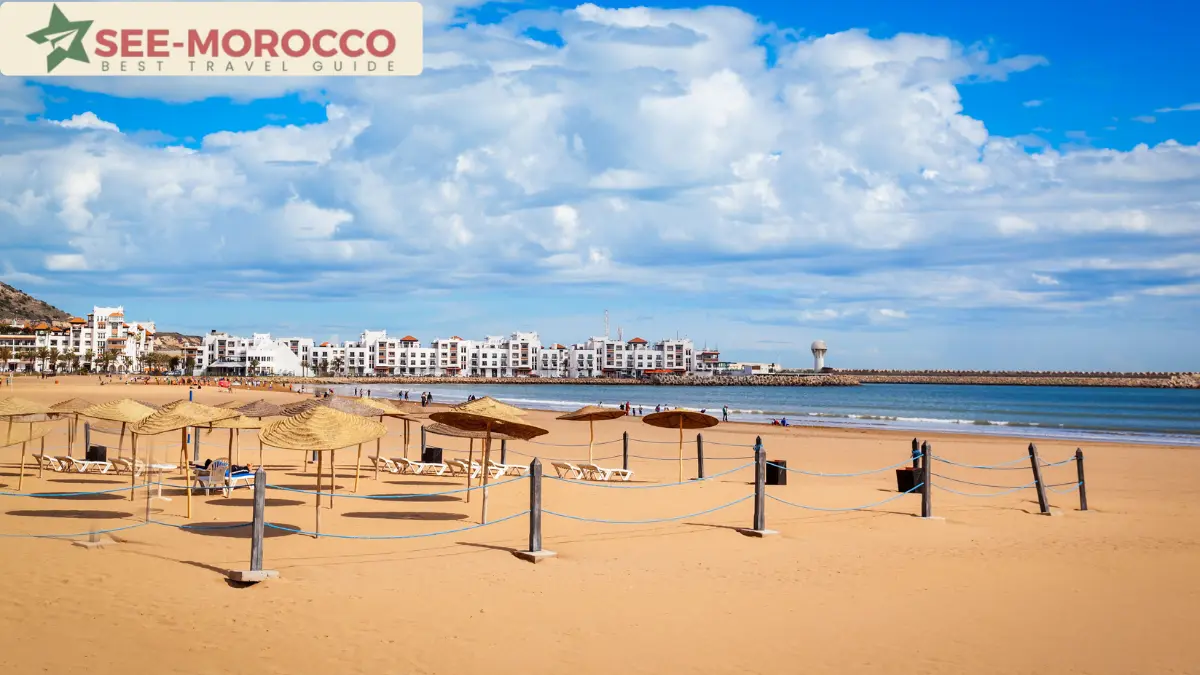
The Beach
Agadir’s beach is the reason most people come. It runs for several kilometers along the bay, backed by hotels and cafés. The sand is clean, the water is calm compared to Essaouira’s wind-driven Atlantic, and the sun is reliable almost year-round.
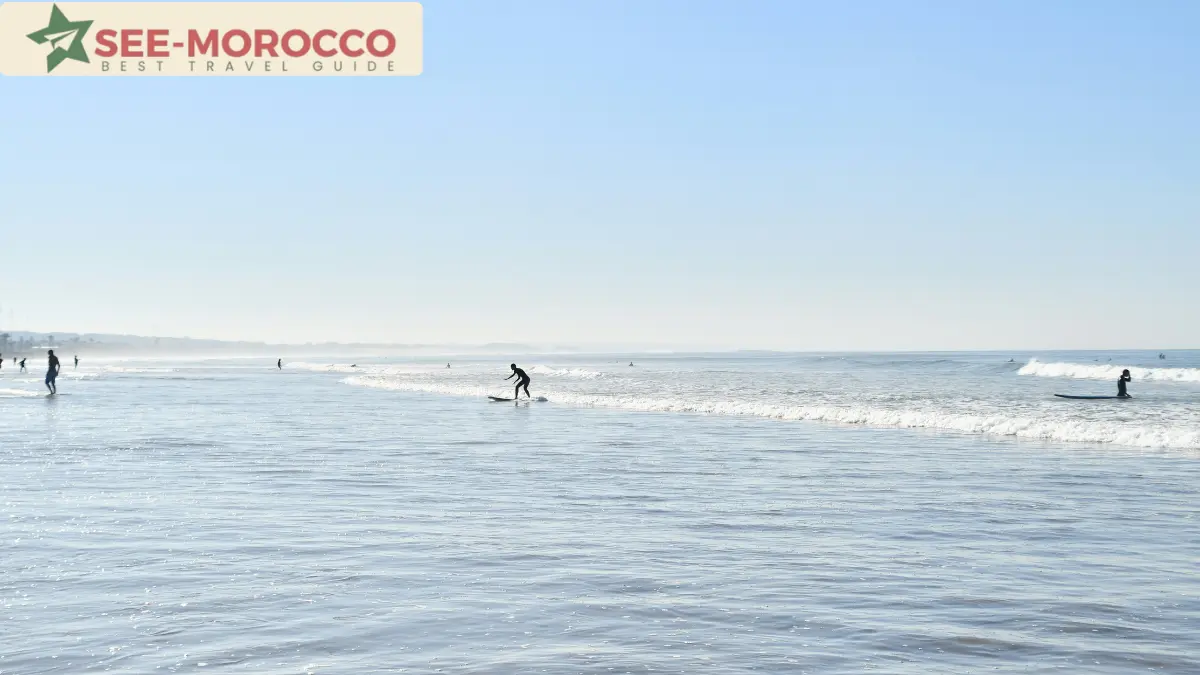
The beach is wide enough that it doesn’t feel crowded even in peak season. Families, couples, and solo travelers all mix without friction. Water sports — surfing, jet skiing, paddleboarding — are available along the strip.
Honest note: the beach is good but not exceptional by international standards. What makes it work is the combination of beach + mild climate + easy resort infrastructure.
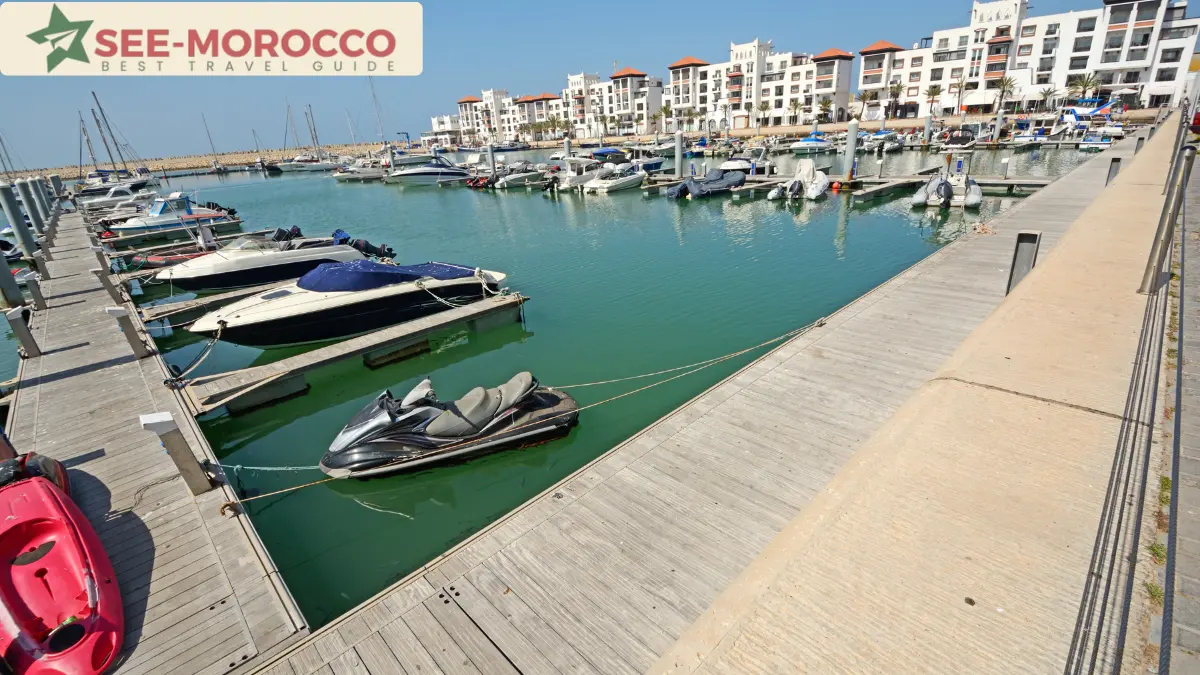
The Marina
The marina is the best part of Agadir that isn’t the beach. Modern, well-maintained, and genuinely pleasant to walk — boats lined up along wooden docks, café terraces facing the water, a mix of international brands and local shops.
When I was there, I watched quad bikes setting off for excursions into the desert south of the city. The tourists who’d just come back looked genuinely satisfied — the landscape outside Agadir, rocky and wide and dramatic, is different from the resort city itself.
The marina also has the best restaurants in Agadir — particularly for fresh fish. The port brings in a serious daily catch.
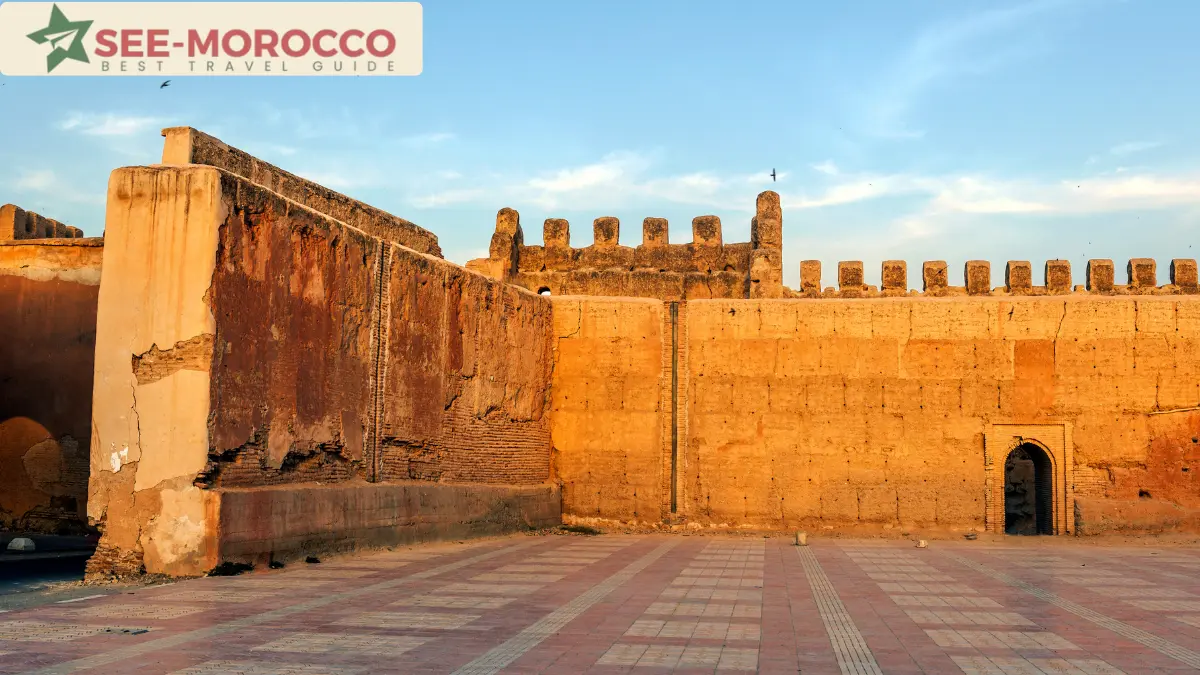
The Kasbah (What It Actually Is)
Every Agadir guide mentions the Kasbah. Here’s the honest version: the Kasbah was largely destroyed in the 1960 earthquake. What remains is a hilltop ruin with walls and an inscription — not a “well-preserved fortified city” as some guides claim.
It’s worth going for the view, which is genuinely good — you can see the entire bay, the beach, and on clear days the mountains inland. But go for the panorama, not the historic site. The walk up takes about 20 minutes.
Souk El Had
Agadir’s main market is one of the largest in Morocco and worth a few hours. Unlike the medina souks of Marrakech and Fez, Souk El Had is organized in a more modern, grid-like layout — easier to navigate and less pressured.
You’ll find fresh produce, spices, argan oil products (Agadir sits at the center of Morocco’s argan-producing region), textiles, and household goods alongside the tourist-facing craft stalls. The argan oil cooperatives around the Souss-Massa region produce some of the best quality in Morocco — worth buying here rather than in Marrakech.
Day Trip: Taroudant
80km from Agadir, about an hour by car or bus — Taroudant is often called “little Marrakech.” I’ve been there myself, traveling through from Ouarzazate.
The comparison to Marrakech is fair in one specific way: the walls and gates. Taroudant has intact ochre-colored ramparts that look and feel similar to Marrakech’s medina walls. Inside, the souks are smaller and considerably less tourist-oriented — you’re shopping where locals shop, not in a dedicated tourist market.
It’s quieter, more authentic, and gives you a sense of a Moroccan market town without the pressure of the big tourist cities. Worth the day trip from Agadir easily.
→ Best cities to visit in Morocco
Paradise Valley
About 60km from Agadir, Paradise Valley is a gorge in the foothills of the Anti-Atlas — green vegetation, natural rock pools, and a completely different landscape from the beach city you left an hour ago.
I haven’t visited Paradise Valley myself, but it’s consistently mentioned by tourists who’ve done the day trip as one of the best things they did near Agadir. The drive through the argan tree landscape is part of the experience.
Surfing Around Agadir
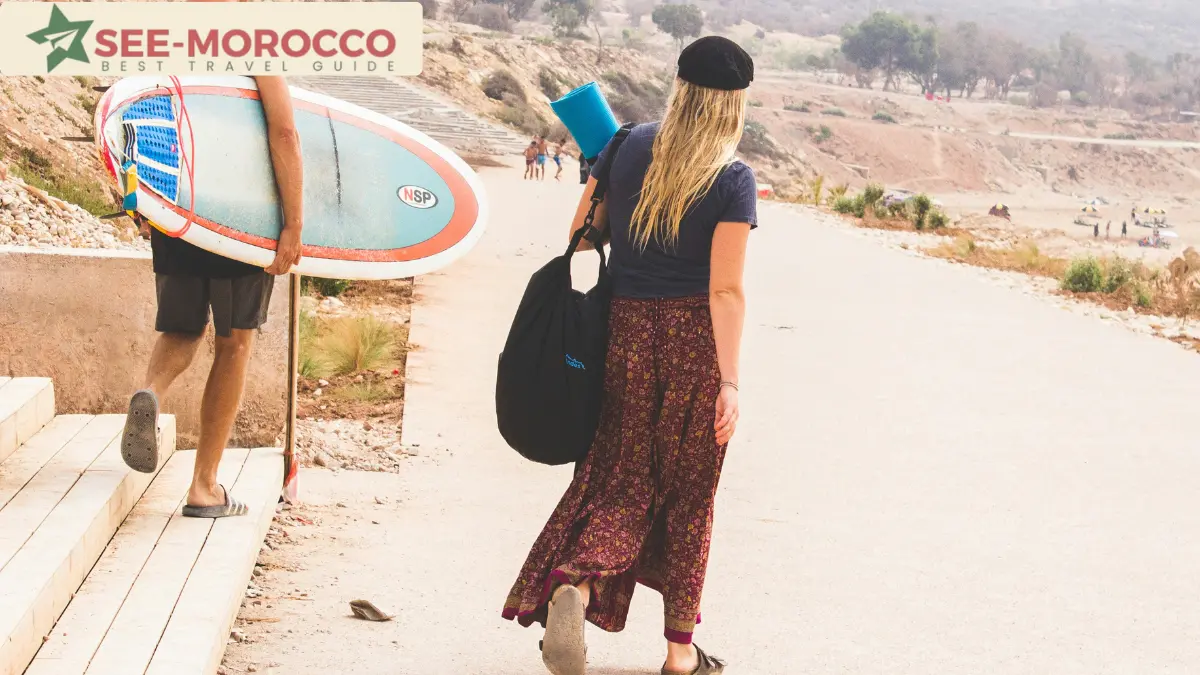
Agadir itself has beach breaks suitable for beginners. The serious surfing is a short drive north:
Taghazout (20km north): Morocco’s most established surf village — consistent waves, surf camps, and a relaxed community feel. Better for intermediate to advanced surfers.
Imsouane (70km north): Famous for one of the longest waves in Morocco. Worth the drive for longboarders.
Practical Notes
Getting there: Direct flights from Europe (Agadir is a major package holiday destination). From Marrakech: ~3 hours by road or CTM bus.
Best time: Year-round. Summer is hot but not extreme (Atlantic breeze helps). Winter is mild and less crowded.
How long: Two to three days is enough. One day if you’re just stopping through. Add a day for Taroudant.
Honest assessment: Agadir is the right choice if you want Morocco’s climate without Morocco’s medina intensity. It’s the wrong choice if you want cultural depth. Both things are true and neither is a criticism.
→ Morocco travel guide for first-time visitors
FAQ
Is Agadir worth visiting? Yes — if you want a beach resort with good weather and easy logistics. No — if you want a deep Moroccan cultural experience. Agadir does one thing very well and doesn’t pretend to be something else.
Is Agadir safe? Yes. It’s one of Morocco’s most tourist-friendly cities, with a well-developed resort infrastructure and lower hustle than Marrakech.
What is Agadir known for? Its beach, its reliable sunshine, the marina, and as a base for surf trips to Taghazout and day trips to Taroudant and Paradise Valley.
Is Agadir better than Marrakech? Different. Agadir is easier, calmer, and more resort-like. Marrakech is more culturally intense. Most visitors who want a Morocco trip choose Marrakech; most who want a beach holiday choose Agadir.
Can you day trip to Taroudant from Agadir? Yes — 80km, about an hour. CTM buses run the route or rent a car. Worth doing for a half or full day.